

Summer dormancy handling
During summer dormancy, keep the pot in bright, shaded, airy conditions and completely dry, only misting the surface very lightly if old heads shrivel severely to prevent root loss.

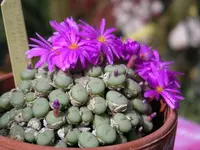
Conophytum minutum, commonly called Mini Buttons, is a tiny succulent from arid regions of South Africa and Namibia. It forms dense cushions of small, paired, button-like leaves. Each pair of leaves swells and shrinks with the seasons, and daisy-like flowers often appear from the center in autumn. The plant stays very compact, which makes it suitable for windowsills and small indoor collections. Its slow growth and strict need for a marked dry rest period can challenge beginners. However, once its seasonal rhythm is understood, it is quite durable. Bright light, fast-draining mineral soil, and careful watering are the main points to remember when learning how to care for Mini Buttons.

Care Difficulty
Hard Care

Light Preference
Partial Shade

Water Requirements
Low Water

Temperature Preference
Tropical / Frost Sensitive

Hardiness Zone
10–11

Soil Texture
Sandy, Rocky, Loamy

Soil pH
Slightly acidic (6.5–7.0), Neutral (7.0)

Soil Drainage
Well-drained

Fertilization
Minimal (feed rarely)
Scan your plant to receive care tips personalized for your specific plant
Available on iOS and Android
This compact South African succulent prefers bright, gentle light that mimics its rocky habitat.
This winter-growing succulent needs very sparing, seasonal watering that respects its dormancy cycle.
This species prefers cool to mild conditions, with a distinct seasonal pattern that avoids both frost and extreme heat.
Humidity is usually not critical for Conophytum minutum as long as air stays dry to moderately dry.
Conophytum minutum needs a very fast-draining, mineral-based mix that dries quickly after watering.
This species is very suitable for container growing due to its compact, clumping habit.
This small succulent has very low nutrient needs, so Mini Buttons should be fertilized lightly during its active period only.
Pruning needs for Conophytum minutum are minimal and focus on hygiene rather than shaping.
Repotting is infrequent, as this species prefers to stay slightly crowded in a shallow container.
Propagation of this species is most reliable by division, with seed used mainly by more advanced growers.
This is a cool-season growing succulent that dislikes hard frost and wet cold conditions.

Plant Health Check
Not sure what's wrong with your plant? Check your plant's health inside the app.
This species opens its small, daisy-like flowers in the evening or at night, which aligns with the activity of its natural pollinators in arid regions of South Africa and Namibia.
Each year the paired leaf bodies dry and form a protective papery sheath while a new pair develops inside, an adaptation that reduces water loss during the harsh dry season.
The tiny, domed leaf pairs have muted, mottled colors that closely resemble surrounding pebbles, helping the plant avoid herbivory in its rocky habitat by blending into the substrate.

Wild populations are highly localized, often restricted to very small rocky outcrops or slopes, which makes habitat disturbance a significant conservation concern for this miniature succulent.
Poor flowering often comes from too-warm summer rest, excess water during dormancy, or inadequate light in the active season. Provide a cool, dry rest period and bright conditions to support bud formation and more reliable flowering.
Keep your plants happy and healthy with plant identification, disease detection, and easy care guidance.

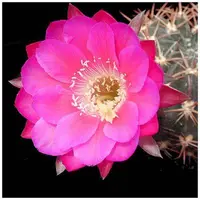
Lobivia obrepanda
Lobivia obrepanda
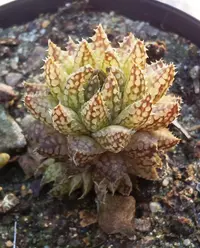
Bonnievale Haworthia
Haworthia reticulata
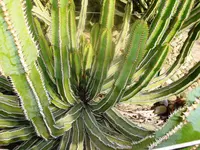
Slender Candelabra Naboom
Euphorbia avasmontana
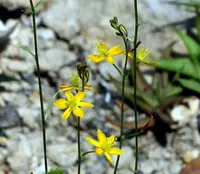
Stone Kopieva
Bulbine mesembryanthemoides
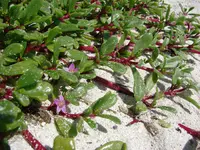
Sesuvium portulacastrum
Sesuvium revolutifolium
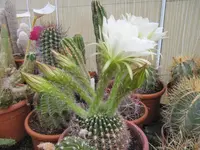
Lobivia mamillosa
Lobivia mamillosa
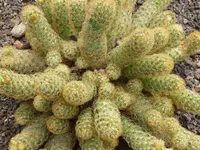 POPULAR
Ladyfinger Cactus
Mammillaria elongata
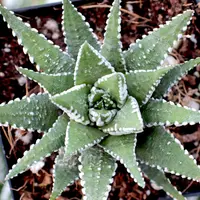
Haworthia
Haworthia 'Big Band'