Use fresh substrate
Prepare small batches of fresh, pasteurized substrate for each flush and discard spent material promptly, since this fungus rapidly depletes nutrients and is prone to contamination in old substrate.

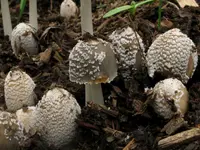
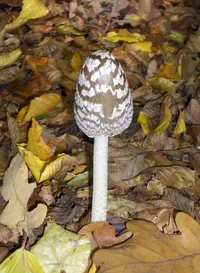
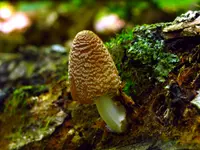
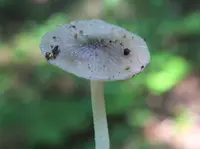
Coprinellus flocculosus, commonly called flocculose inkcap, is a small saprophytic fungus rather than a traditional houseplant. It grows from decaying wood, bark, or rich organic debris, often appearing in clusters after rain. Caps are delicate, gray to brown, and covered with fine, woolly fragments that give a slightly shaggy look. As with many inkcaps, the caps can quickly dissolve into a dark, inky fluid as they mature. This species can be challenging to keep in controlled conditions because it depends on specific decaying substrates and steady moisture. Those who want to learn how to care for flocculose inkcap should focus on providing cool, shaded spots with consistently damp, well-aerated organic material.

Care Difficulty
Hard Care

Light Preference
Partial Shade

Water Requirements
Keep Soil Moist

Temperature Preference
Warm Climate

Hardiness Zone
Unknown

Soil Texture
Organic-rich, Loamy

Soil pH
Acidic (5.5–6.5)

Soil Drainage
Moist but well-drained

Fertilization
Minimal (feed rarely)
Scan your plant to receive care tips personalized for your specific plant
Available on iOS and Android
This small woodland fungus prefers low, gentle light typical of shaded forest floors.
This fungus needs consistently moist, but not waterlogged, substrate to fruit well.
This species prefers cool to mild temperatures and declines in extreme heat or hard frost.
This short-lived fungus tolerates a wide humidity range but fruits best in consistently moist air.
This saprotrophic fungus requires loose, organic-rich substrate rather than standard mineral garden soil.
This species can be grown in shallow containers if the organic substrate stays evenly moist and aerated.
This saprophytic fungus gains nutrients from decaying organic matter and generally does not need additional fertilizer in gardens or containers.
Pruning is not a standard practice for Coprinellus flocculosus, as the short-lived fruiting bodies naturally collapse and decompose.
Transplanting focuses on moving colonized substrate rather than handling individual mushrooms or a root system.
Propagation relies on spreading spores or moving colonized substrate instead of vegetative cuttings or division used for typical plants.
Outdoor colonies are generally hardy in temperate climates and need minimal winter care.

Plant Health Check
Not sure what's wrong with your plant? Check your plant's health inside the app.
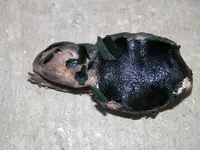
The fruiting bodies start with a woolly, flocculose cap surface but quickly transition to the classic inkcap process of deliquescence, where the gills and cap edges liquefy into a dark spore-rich fluid as part of spore dispersal.
This species is saprotrophic and is most often recorded on decaying hardwood debris, wood chips, and buried wood rather than directly on rich soil, reflecting a strong ecological association with decomposing lignocellulosic material.
Reliable identification depends on microscopy, as the species has ellipsoid to ovoid spores with a distinct germ pore and characteristic veil elements that separate it from similar small Coprinellus species.
This small mushroom is not recommended for eating. It belongs to a complex group with some toxic relatives, and identification is difficult. Treat it as inedible and avoid foraging or tasting, especially for children.
Keep your plants happy and healthy with plant identification, disease detection, and easy care guidance.