
mica cap Identification (Coprinellus micaceus)

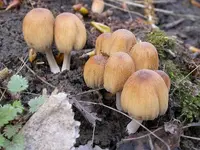
Recognize mica cap by its small, bell-shaped to oval caps, usually 1 to 2 inches (2.5 to 5 cm) wide, densely crowded in clusters, and set on thin white stems.

The cap surface shows fine, glistening granules, and the margin is strongly lined with deep grooves from edge toward center.

Coprinellus micaceus Identification

Check Your Plant ID

Check your plant ID by uploading a clear photo to Botan.

Clear images work best. Avoid photos taken too close or too far away

  • 1 free identification
  • No sign-up
  • 30,000+ plants in database

Check a few visible traits before relying on finer details.

  • Caps are small, bell-shaped to broadly conical, usually about 1-2 inches (2.5-5 cm) across.
  • Many mushrooms grow together in tight clusters, often with stems arising close from one point.
  • Cap surfaces show fine radial grooves, giving a lined look from center to edge.
  • Young caps often carry tiny, grain-like sparkling veil flecks on the surface.
  • Stems are slender, smooth, pale, and fairly even in thickness from top to base.

Use several traits together, since the surface flecks may be faint or missing.

Coprinellus micaceus shows clear age-related changes in cap shape, surface texture, and edge condition.

  • Young plant: Very young mushrooms are egg-shaped to oval, tightly closed, with honey-brown caps often dusted in tiny glistening granules before rain or handling removes them.
  • Mature plant: As the cap expands to about 1-2 inches (2.5-5 cm) wide, it turns bell-shaped with pronounced radial grooves and a paler, thinner margin.
  • Fruiting stage: In older fruiting bodies, the cap edge blackens, softens, and begins dissolving upward into ink-like liquid, while the gills darken from brown to black.

Most visible seasonal change in Coprinellus micaceus is when fruiting bodies appear after warm, wet periods, most often from spring through fall. Dense clusters can show up suddenly on buried wood, stumps, or root zones. In cool weather, clusters are often more frequent and longer-lasting. During dry or cold periods, the mushroom may be absent above ground, leaving no obvious cap display until the next favorable spell.

Several inkcaps can be mistaken for Coprinellus micaceus.

glistening inkcap(Coprinellus radians)

Often grows in clusters on wood and has similar honey-brown, bell-shaped caps. A useful check is the bright orange fuzzy mat at the base, called ozonium, which mica cap lacks.

fairy inkcap(Coprinellus disseminatus)

Also forms dense troops on buried wood with small gray-brown caps. It is usually much smaller, often under 1 inch (2.5 cm) wide, and its cap lacks the shiny granular veil particles.

common inkcap(Coprinopsis atramentaria)

This species also appears in clusters near buried wood and turns black as it ages. Its caps are larger, smooth, and gray to gray-brown, without the mica-like granules.

Coprinellus micaceus is widespread in temperate parts of Europe, Asia, and North America, and it is also recorded in other regions. It is most often found on buried wood, stumps, roots, and wood-chip mulch rather than directly from ordinary soil. That habitat is useful for identification because clustered mushrooms at the base of hardwoods, on old stumps, or from wood-rich urban beds fit this species well. Finding it in lawns usually still points to hidden dead roots or buried wood.

  • Misidentification risk: This mushroom should not be eaten based on appearance alone. Small brown cluster-forming mushrooms can be confused with harmful species, including Galerina marginata, where ingestion is poisonous to humans and pets.
  • Key safety difference: A safety-critical look-alike check is the stem base. Coprinellus micaceus lacks a ring and typically grows in dense clusters on wood; Galerina marginata often has a ring on the stem and does not deliquesce into black ink as it ages.

Not Sure About the ID?

Use Botan to compare a photo and help confirm the species, which can save time when similar plants or fungi are easy to mix up.

FAQ

Look for dense clusters on buried or exposed wood, honey-brown bell-shaped caps, and tiny glittering granules on young caps. The caps are usually 1-3 inches (2.5-7.5 cm) wide and often split into lined edges as they expand.

More Plant Identification Guides

Identify It. Learn More About It.

Use Botan to identify it from a photo, then get species-specific plant details, care information, and common problems.

Botan app identifying a plant from a photo
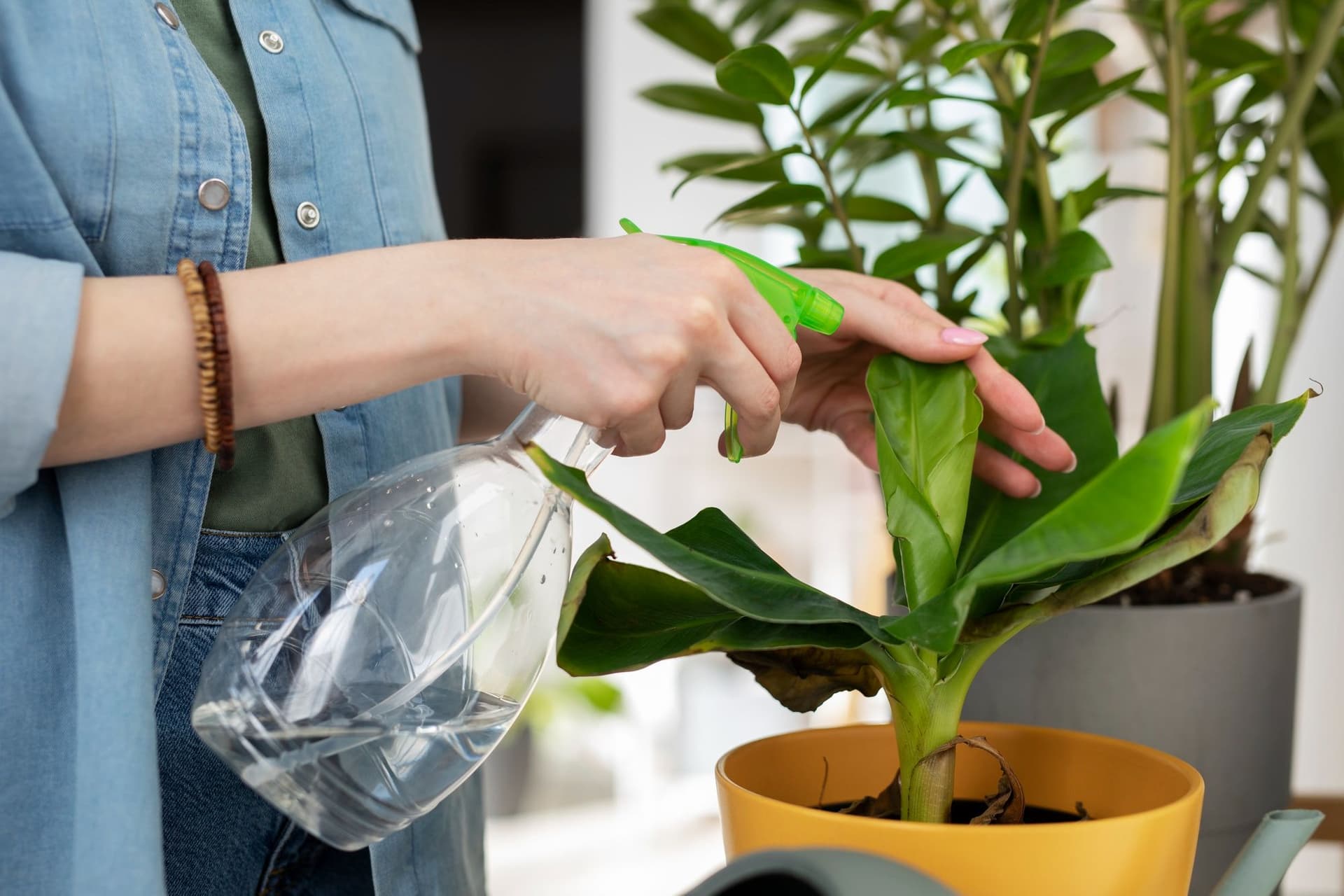
How to Mist Plants – Proper Technique and Common Mistakes

7 min read · 30 Jul 2026

How to Mist Plants – Proper Technique and Common Mistakes

Find out when misting works well and when to avoid it. Here, you’ll find detailed information about compatible and incompatible species, tips on how often to mist plants and do it correctly, and some great alternatives for raising humidity.

Beginner Guides

How to Mist Plants – Proper Technique and Common Mistakes
What Do Plants Need to Grow – 5 Things Every Greenery Can't Live Without

8 min read · 31 Jul 2026

What Do Plants Need to Grow – 5 Things Every Greenery Can't Live Without

To keep plants healthy and thriving, provide the right balance of light, humidity, nutrients, airflow, and quality soil. This guide covers the essentials of year-round plant care.

Beginner Guides
What Do Plants Need to Grow – 5 Things Every Greenery Can't Live Without
Best Time to Water Grass in Summer – Lawn Watering Tips

5 min read · 21 Jul 2026

Best Time to Water Grass in Summer – Lawn Watering Tips

Summer watering is easy to get wrong. This guide explains when to turn on your sprinkler, how much liquid your grass needs each week, and how to tell if you're overwatering or underwatering.

Plant Care
Best Time to Water Grass in Summer – Lawn Watering Tips