Rotate For Even Color
Rotate the pot 90° every 1–2 weeks so all sides receive similar light, which reduces leaning and helps maintain uniform red foliage rather than patchy green reverting leaves.

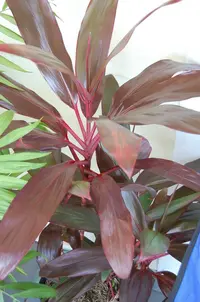
Cordyline fruticosa 'Red Sister' is a tropical evergreen shrub grown mainly for its colorful foliage rather than its flowers. It is commonly called ti plant and is often used as an accent in warm-climate gardens or as a houseplant.
The leaves form upright clumps and show strong pink, red, and burgundy tones that stay vibrant year-round in suitable conditions. In its natural range across Southeast Asia and the Pacific, it grows in warm, humid, partially shaded habitats.
This cultivar responds poorly to cold and dry air but adapts well indoors if temperature and humidity remain stable. Those learning how to care for Ti Plant should note its preference for bright, filtered light, slightly moist but not waterlogged soil, and good drainage.

Care Difficulty
Moderate Care

Light Preference
Bright Indirect Light

Water Requirements
Keep Soil Moist

Temperature Preference
Tropical / Frost Sensitive

Hardiness Zone
10–12

Soil Texture
Loamy, Sandy, Organic-rich

Soil pH
Acidic (5.5–6.5), Slightly acidic (6.5–7.0)

Soil Drainage
Moist but well-drained

Fertilization
Light (every 4–6 weeks)
Scan your plant to receive care tips personalized for your specific plant
Available on iOS and Android
Cordyline fruticosa 'Red Sister' develops strongest color in bright, indirect light with some gentle direct sun.
Cordyline fruticosa 'Red Sister' prefers evenly moist, well-drained soil and does not tolerate waterlogged conditions.
This tropical shrub prefers warm, stable temperatures and is sensitive to cold and frost.
This plant prefers moderately humid air but can adapt to many home conditions if monitored.
Cordyline fruticosa 'Red Sister' grows best in loose, moist, well-aerated soil that never stays waterlogged.
This species is well suited to container growing when the pot supports its upright, top-heavy form.
Cordyline fruticosa 'Red Sister' responds well to modest, consistent feeding during active growth.
Pruning helps maintain the form and foliage quality of Cordyline fruticosa 'Red Sister'.
Container-grown Cordyline fruticosa 'Red Sister' benefits from periodic repotting to maintain root health.
Cordyline fruticosa 'Red Sister' is commonly propagated from stem cuttings rather than seed for reliable color.
Cordyline fruticosa 'Red Sister' is tropical and needs careful management in regions with cool winters.

Plant Health Check
Not sure what's wrong with your plant? Check your plant's health inside the app.
This cultivar is selected for its stable pink and burgundy variegation, which comes from genetic changes affecting leaf pigments rather than viral infection or nutrient issues. The colored streaks and patches are usually consistent from leaf to leaf when the plant is grown in adequate light.
Red Sister does not come from a distinct wild population but from horticultural selection of Cordyline fruticosa. It is propagated almost entirely by vegetative cuttings, so plants in cultivation are essentially clones of the original selection.
The intensity of the pink and red tones is strongly influenced by light levels, with brighter but indirect light encouraging deeper coloration. In low light, foliage tends to shift toward duller green and bronze tones, showing how this cultivar’s pigments respond to changing light conditions.

In parts of Polynesia and other Pacific cultures where Cordyline fruticosa is traditionally cultivated, red-leaved forms similar to Red Sister have long been associated with protection, status, or ritual use, so modern ornamental cultivars continue a cultural preference for vividly colored ti plants even though they are now selected mainly for landscape design.
Brown, crispy edges usually come from low humidity, underwatering, salt buildup, or fluoride/chlorine in tap water. Use filtered water, flush the soil occasionally, and increase humidity with a pebble tray or nearby humidifier.
Keep your plants happy and healthy with plant identification, disease detection, and easy care guidance.