Staggered reseeding
Leave some spent flower heads to dry on the plant in late summer so seeds drop naturally and create a self-sown succession of new plants without formal reseeding.

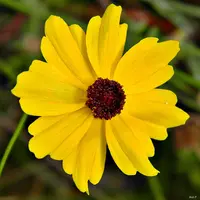
Leavenworth's tickseed (Coreopsis leavenworthii) is a warm-season flowering perennial often grown as an annual in garden settings. It belongs to the aster family and is valued for its long, colorful bloom period.
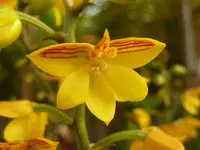
Plants form airy clumps with slender stems topped by bright yellow, daisy-like flowers and fine, narrow leaves. The overall look is light, open, and informal.
This species is native to the southeastern United States, especially Florida, where it grows in roadsides, meadows, and other sunny, seasonally moist sites. It adapts well to average garden soils and is generally easy to grow.
For those learning how to care for Leavenworth's tickseed, it typically prefers full sun, moderately moist but well-drained soil, and benefits from regular deadheading to extend flowering.

Care Difficulty
Easy Care

Light Preference
Full Sun

Water Requirements
Moderate Water

Temperature Preference
Warm Climate

Hardiness Zone
8–11

Soil Texture
Sandy, Loamy, Organic-rich

Soil pH
Acidic (5.5–6.5), Slightly acidic (6.5–7.0)

Soil Drainage
Moist but well-drained

Fertilization
Minimal (feed rarely)
Scan your plant to receive care tips personalized for your specific plant
Available on iOS and Android
This sun-loving wildflower performs best with strong, direct light for most of the day.
This species prefers consistently moist but not saturated soil, especially in its first growing season.
This plant thrives in warm climates and handles summer heat better than cold.
Humidity is not a major factor for this species and typical outdoor ambient levels are sufficient.
Coreopsis leavenworthii prefers lean, well-drained mineral soils that do not stay wet for long.
This species can grow in containers if the potting setup prevents prolonged root wetness.
This species usually grows well in lean soil, so Leavenworth's tickseed needs only light feeding in garden settings.
Coreopsis leavenworthii responds well to light, timely pruning that maintains a compact, floriferous plant.
This plant is most often grown in the ground, so care focuses on transplanting young plants or renewing crowded clumps.
This species is commonly renewed from seed, with division used to maintain desirable forms in garden beds.
This warm-region perennial is only moderately hardy and may need help in colder climates.

Plant Health Check
Not sure what's wrong with your plant? Check your plant's health inside the app.
This species is naturally restricted to the sandy flatwoods, pine rocklands, and coastal scrubs of the southeastern United States, especially peninsular Florida, where it is adapted to well-drained, nutrient-poor soils and high light.
In its native range, it can flower for many months, often from late spring through fall, producing successive waves of yellow daisylike flower heads that support pollinators over an extended period.
Its nectar and pollen are used by a wide range of native bees, small wasps, flies, and butterflies, so using Coreopsis leavenworthii plant care in restoration plantings can help support local insect diversity.

Coreopsis leavenworthii has been designated as Florida’s official state wildflower, reflecting both its ecological importance in native habitats and its cultural value in regional landscaping and conservation programs.
This species is highly attractive to native bees, honeybees, butterflies, and other pollinators. Its long bloom period and nectar-rich flowers make it valuable in wildlife gardens and pollinator strips, especially when planted in sunny, open areas.
Keep your plants happy and healthy with plant identification, disease detection, and easy care guidance.