Use sacrificial logs
Establish the fungus on small, easily replaced wood pieces so you can discard and renew them if contamination or competing fungi appear, instead of disturbing the main display substrate.

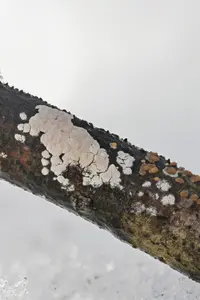
Corticium roseum is a crust-forming fungus rather than a typical leafy plant. It forms thin, smooth, pinkish to rosy patches on dead wood and bark. This species occurs mainly in temperate forests, especially on fallen branches and decaying logs, where it helps break down wood. Its discreet, spreading growth habit makes it easy to overlook in nature. For those who wish to care for Corticium roseum in cultivation, it requires consistently moist, shaded conditions and access to suitable woody material. It is generally not grown as a decorative houseplant and is best appreciated in outdoor or specialized fungal collections.

Care Difficulty
Moderate Care

Light Preference
Partial Shade

Water Requirements
Moderate Water

Temperature Preference
Warm Climate

Hardiness Zone
Unknown

Soil Texture
Loamy

Soil pH
Slightly acidic (6.5–7.0)

Soil Drainage
Well-drained

Fertilization
Minimal (feed rarely)
Scan your plant to receive care tips personalized for your specific plant
Available on iOS and Android
This crust fungus prefers low to moderate light on shaded, decaying wood in forests or sheltered gardens.
This wood-inhabiting fungus depends on consistently moist, but not waterlogged, woody substrate rather than direct watering.
This species is adapted to cool to mild conditions typical of temperate forests.
This crust fungus prefers consistently moist air but tolerates moderate fluctuations.
This wood-inhabiting fungus does not require soil but relies on suitable woody substrate conditions.
This species can be grown in containers if supplied with suitable woody substrate rather than soil.
This wood-decay fungus lives on dead or dying wood and typically does not benefit from added fertilizer.
Corticium roseum does not require conventional pruning, but some management of its woody substrate can limit spread.
This species colonizes dead wood in situ, so care focuses on managing or relocating the infected material rather than container repotting.
Intentional propagation of this saprophytic fungus is uncommon outside research or specialized cultivation.
Corticium roseum is naturally cold tolerant and usually needs no deliberate winter care in outdoor settings.

Plant Health Check
Not sure what's wrong with your plant? Check your plant's health inside the app.
This species forms thin, effused, pink to rosy fruiting bodies that spread as a smooth crust over dead wood rather than producing a typical mushroom cap and stem.
It is a saprotrophic fungus, meaning it feeds on dead organic matter, and is most often found decomposing fallen branches and logs of broadleaf trees, especially beech and other hardwoods in temperate forests.
Corticium roseum belongs to the family Corticiaceae and is a model example of a corticioid fungus, a group characterized by crust-like basidiocarps that are important but often overlooked wood decomposers.
This crust fungus spreads slowly across dead wood and bark surfaces. It does not form invasive, soil-spreading colonies. In gardens, it usually remains confined to the original substrate and is not considered an aggressive spreader.
Keep your plants happy and healthy with plant identification, disease detection, and easy care guidance.