


Spore-friendly setup
Place the culture container above a tray of damp, sterilized leaf litter or wood chips so falling spores can colonize this material and gradually expand the mycelial network.

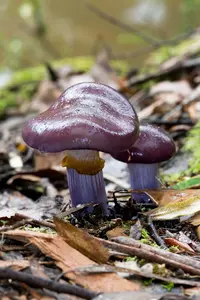
Emperor Cortinar, known scientifically as Cortinarius archeri, is a striking gilled fungus rather than a leafy plant. It produces tall, slender fruiting bodies with a vivid reddish to orange-brown cap and a delicate web-like veil on young specimens.
This mushroom occurs mainly in forests, often forming mycorrhizal associations, which means it lives in close connection with tree roots. Its dependence on specific tree partners and natural forest conditions makes it very difficult to cultivate at home, so practical attempts to care for Emperor Cortinar are rarely successful.
It typically favors cool, moist, undisturbed woodland soils with consistent humidity and dappled light, conditions that are hard to reproduce in containers or gardens.

Care Difficulty
Hard Care

Light Preference
Partial Shade

Water Requirements
Keep Soil Moist

Temperature Preference
Cool Climate

Hardiness Zone
Unknown

Soil Texture
Loamy, Silty, Organic-rich

Soil pH
Acidic (5.5–6.5), Slightly acidic (6.5–7.0)

Soil Drainage
Moist but well-drained

Fertilization
Minimal (feed rarely)
Scan your plant to receive care tips personalized for your specific plant
Available on iOS and Android
This fungus relies on shaded forest conditions rather than direct sun exposure.
This mycorrhizal fungus depends on naturally moist, well-drained forest soil rather than direct watering.
This species prefers cool, temperate forest conditions and is sensitive to extremes.
Humidity management is not relevant for Cortinarius archeri, as it is not suitable for routine cultivation and Emperor Cortinar is not maintained as a household or container-grown organism.
Cortinarius archeri is not realistically cultivated, but soil guidelines can help when studying it in managed outdoor plots.
This species is not suitable for container growing, as its life cycle relies on complex mycorrhizal relationships with tree roots in undisturbed soil systems.
Cortinarius archeri is a wild, mycorrhizal fungus that does not benefit from direct fertilization in cultivation.
Pruning is not applicable for Cortinarius archeri, as it is a wild fungus rather than a managed garden plant.
This species is not suited to normal repotting or transplanting because it relies on symbiosis with living tree roots in soil.
Intentional propagation of Cortinarius archeri is rarely successful and is not used in routine cultivation.
This fungus is naturally cold hardy in its native range and does not need targeted winter care in gardens or containers.

Plant Health Check
Not sure what's wrong with your plant? Check your plant's health inside the app.
Mature fruiting bodies develop vivid red to orange gills that contrast strongly with the usually paler cap, a feature that helps distinguish this species from many brown-gilled relatives in the same genus.
This species forms ectomycorrhizal associations with trees, exchanging mineral nutrients and water from the soil for sugars from the host, and is typically found in undisturbed forest habitats where these symbiotic relationships can persist.
It has a characteristic cortina, a cobweb-like partial veil, whose remnants and spore features under the microscope are critical for separating it from closely related red and orange Cortinarius species in taxonomic studies.

The species is considered rare and poorly documented across much of its range, so reliable records from trained mycologists are important for clarifying its true distribution and conservation status.
This fungus is not considered edible and may be toxic. Identification within Cortinarius is difficult, and some related species are dangerously poisonous. It is safest to avoid consumption and treat it as a non-edible, ornamental curiosity only.
Keep your plants happy and healthy with plant identification, disease detection, and easy care guidance.

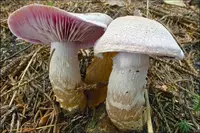
goatcheese webcap
Cortinarius camphoratus
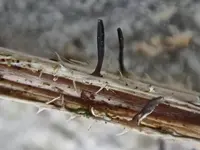
Acrospermum compressum
Acrospermum compressum
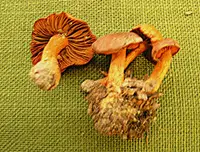
cinnabar webcap
Cortinarius cinnabarinus
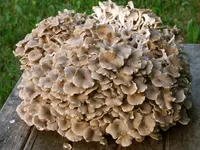
umbrella polypore
Polyporus umbellatus
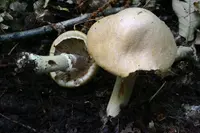
Wrinkled Cortinaria
Cortinarius caperatus
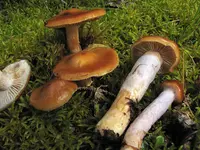
blue-girdled webcap
Cortinarius collinitus
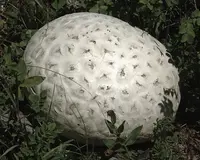
Western Giant Puffball
Calvatia booniana
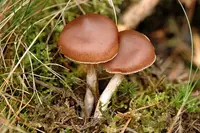
Cortinarius brunneus
Cortinarius brunneus