cinnabar webcap Care (Cortinarius cinnabarinus)

cinnabar webcap

About cinnabar webcap

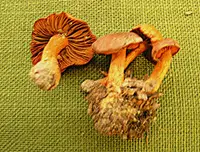
Cinnabar webcap, Cortinarius cinnabarinus, is a small to medium woodland mushroom, not a true plant. It belongs to a large and complex group of ectomycorrhizal fungi that live in partnership with tree roots. The caps are usually vivid orange-red to cinnabar-red, with a fibrous veil that can leave web-like remnants on the stem. It typically occurs in temperate forests, especially under broadleaf trees, in moist leaf litter and humus-rich soils. This species is not suitable for casual home cultivation, since it depends on specific tree partners and natural forest conditions. For most people, how to care for cinnabar webcap is mainly about conserving its habitat rather than trying to grow it indoors or in containers.

Main Plant Requirements

Care Difficulty

Hard Care

Light Preference

Partial Shade

Water Requirements

Keep Soil Moist

Temperature Preference

Cool Climate

Hardiness Zone

Unknown

Soil Texture

Loamy, Silty, Organic-rich

Soil pH

Strongly acidic (4.5–5.5), Acidic (5.5–6.5)

Soil Drainage

Moist but well-drained

Fertilization

Minimal (feed rarely)

Get Personalized Care Plan

Scan your plant to receive care tips personalized for your specific plant

Available on iOS and Android

How to Care for the cinnabar webcap

This woodland fungus favors low to moderate light rather than direct sun exposure.

  • Provide dappled shade or filtered light under trees, similar to a deciduous forest floor, avoiding direct midday sun.
  • Allow brief morning sun up to 1–3 hours, but protect cinnabar webcap from strong afternoon sun, which can dry the substrate and damage fruiting bodies.
  • In summer, choose north or east-facing woodland edges; in autumn, when sun is weaker, slightly more open shade is acceptable without exposing caps directly.

This mycorrhizal fungus depends on consistently moist, not saturated, soil around its tree partners.

  • Aim for evenly moist top 3–5 cm of forest soil; if it feels dry and dusty, recent conditions are likely too dry for Cortinarius cinnabarinus to fruit well.
  • Ensure soil drains freely with plenty of leaf litter; standing water, sour smells, or slimy organic matter indicate chronic overwatering or poor drainage.
  • In cool, wet seasons, rely mostly on rainfall; in hot, dry spells, supplemental moisture is only helpful if applied to the broader tree root zone, not directly onto fruiting bodies.

This species fruits best in cool to mild conditions typical of temperate forests.

  • Optimal fruiting often occurs around 50–65°F (10–18°C), especially in moist autumn periods following rain.
  • Mycelium in soil can tolerate down to about 32°F (0°C), but repeated hard frosts below 25°F (-4°C) reduce visible fruiting until conditions warm.
  • Sustained heat above 77–86°F (25–30°C) with dry soil suppresses fruiting; cooler night temperatures and periodic rainstorms usually trigger new mushrooms.

Humidity management is not a practical tool for cultivating Cortinarius cinnabarinus, which relies on tree-root symbiosis rather than controlled atmospheric moisture.

This ectomycorrhizal fungus cannot be grown in standard potting soil and depends on living tree roots in natural forest substrates.

  • Cortinarius cinnabarinus associates with broadleaf or conifer tree roots in undisturbed, leaf-litter-rich forest floors rather than in artificial mixes.
  • It typically occupies well-drained, humus-rich mineral soil with a loose, crumbly structure that allows fine roots and fungal mycelium to spread.
  • Soils are usually slightly acidic to neutral, roughly pH 5.0–7.0, with continuous inputs of decaying leaves, twigs, and other organic debris.
  • Avoid compacted, waterlogged, fertilized, or heavily disturbed substrates, which disrupt root-fungus contact and can prevent fruiting entirely.

This species is not suitable for container cultivation because it requires complex, long-term symbiosis with living tree roots in open-ground conditions.

This woodland fungus forms mycorrhizal partnerships with trees, so direct fertilizing of Cortinarius cinnabarinus is generally unnecessary and not recommended.

Pruning is not applicable to Cortinarius cinnabarinus, as it is a wild mycorrhizal fungus rather than a cultivated garden plant.

Transplanting this mycorrhizal fungus is rarely successful, as it depends on complex associations with specific tree roots and undisturbed soil.

  • Avoid attempting to lift or move the fungus; its main body is a hidden mycelial network in the soil.
  • If habitat disturbance is unavoidable, keep surrounding tree roots intact and soil structure as undisturbed as possible.
  • Focus on conserving the existing woodland habitat rather than trying to replant fruiting bodies elsewhere.

Intentional propagation of Cortinarius cinnabarinus is not practical for home growers due to its specialized mycorrhizal life cycle.

This woodland species is naturally cold hardy in its native range and requires no dedicated winter care from gardeners.

Care Tips

Spore-friendly site

Leave some mature caps in place to fully open and release spores, and avoid disturbing the leaf litter so new fruiting bodies can establish in the same area over future seasons.

Protect mycelium layer

Mark the fruiting area and restrict foot traffic, digging, or raking there so the underground mycelium network is not compacted or broken, which can sharply reduce future fruiting.

Minimal disturbance harvest

If collecting specimens, cut stems cleanly at the base with a knife rather than pulling them up, and replace any displaced leaf litter to help preserve the mycorrhizal association with nearby tree roots.

Support host trees

Maintain healthy host trees by following good arboricultural practices such as proper mulching and avoiding trunk damage, since the fungus depends on a stable mycorrhizal partnership to fruit reliably.

Microhabitat moisture buffer

Create a stable microhabitat by maintaining a 3–5 cm layer of mixed leaf litter and untreated wood chips, which buffers moisture and temperature swings that can otherwise limit growing cinnabar webcap in marginal sites.

Common Pests and Diseases

Mycophagous springtails

These insects feed on fungal tissue and can graze gills and caps, especially in damp, organic-rich habitats where fruiting bodies appear.

Solution

Limit excess surface moisture and improve drainage in the fruiting area, then carefully remove heavily grazed mushrooms and surrounding debris; for persistent issues, use targeted, mushroom-safe biological controls such as predatory mites rather than broad-spectrum chemicals that could disrupt the fungal microhabitat.

Fungivorous flies

These insects lay eggs in developing fruiting bodies, and the larvae tunnel through the cap and stem, causing internal decay and deformation.

Solution

Harvest mushrooms promptly when mature, remove and discard infested specimens, and use fine mesh or physical barriers over small cultivation patches to reduce egg laying while maintaining airflow and natural light.

Slug and snail grazing

These pests rasp away tissue from caps and stems, often leaving irregular holes, slime trails, and rapid loss of smaller fruiting bodies.

Solution

Hand-pick slugs and snails during damp periods, use physical barriers such as copper tape or rough grit around the fruiting area, and reduce dense ground cover that holds moisture close to the mushrooms while avoiding salt or harsh chemicals that damage soil life.

Bacterial blotch

This disease causes water-soaked, greasy-looking spots on caps that turn darker and may lead to soft, slimy areas on the mushroom surface.

Solution

Reduce overhead wetting and standing water around fruiting bodies, increase air movement, and promptly remove affected mushrooms; in managed settings, disinfect tools and trays and keep irrigation water clean to lower bacterial load.

Competing saprophytic fungi

This disease pressure comes from faster-growing decomposer fungi that colonize nearby organic matter and can overrun the habitat, limiting nutrients and space for fruiting.

Solution

Maintain a stable, suitable host tree association and avoid adding heavy layers of rich organic mulch around the known fruiting zone; if cultivating, remove visibly colonized foreign fungal masses and keep the substrate composition consistent to favor the existing mycorrhizal network while following cautious Cortinarius cinnabarinus care instructions for habitat management.

Interesting Facts

Bright cinnabar pigment

The fruiting bodies have an unusually intense red to orange-red color caused by cinnabarin and related pigments, which make this species stand out even among other red Cortinarius mushrooms in European forests.

Mycorrhizal with hardwoods

This species forms ectomycorrhizae with deciduous trees, especially beech and oak, creating a mutualistic association in which fungal hyphae enhance water and mineral uptake for the tree while receiving sugars from root exudates.

Cap and veil remnants

Young mushrooms show a distinct cobweb-like cortina (a fine veil) that can leave reddish deposits on the stem as the cap expands, a key field character used by mycologists to separate it from similar red webcaps.

FAQs about cinnabar webcap

This species is considered poisonous and must never be eaten. It belongs to a genus with several seriously toxic mushrooms that can damage kidneys. Identification is difficult, so it should always be treated as strictly inedible.

Grow Healthy Plants with Botan Care

Keep your plants happy and healthy with plant identification, disease detection, and easy care guidance.

Botan plant care app — identify plants on mobile

Explore More Plants