Use hardwood trays
Establish the fungus on shallow trays or boxes filled with well-washed, chunked hardwood (oak, beech, maple) so the sclerotia form near the surface and can be harvested with minimal disturbance to the mycelium.

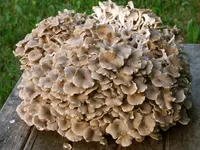
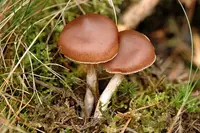
Umbrella polypore, Polyporus umbellatus, is a wood-decaying fungus rather than a leafy plant. It forms dense clusters of many small, umbrella-like caps on short branching stems, all arising from a single underground core.
This species naturally occurs in temperate forests, often at the base of hardwood trees such as oak. In nature it fruits from buried sclerotia, which are compact storage structures that help it survive adverse conditions.
It is valued as an edible and medicinal mushroom in some traditions, but it is not easy to cultivate reliably at home. Those who want to learn how to care for umbrella polypore should understand its need for consistent moisture, shaded conditions, and a suitable woody substrate.

Care Difficulty
Hard Care

Light Preference
Partial Shade

Water Requirements
Keep Soil Moist

Temperature Preference
Cool Climate

Hardiness Zone
4–8

Soil Texture
Loamy, Silty, Organic-rich

Soil pH
Acidic (5.5–6.5), Slightly acidic (6.5–7.0)

Soil Drainage
Moist but well-drained

Fertilization
Minimal (feed rarely)
Scan your plant to receive care tips personalized for your specific plant
Available on iOS and Android
This woodland fungus prefers low to moderate natural light, similar to a shaded forest floor.
This species needs consistently moist but not waterlogged conditions around its underground sclerotia.
This fungus grows best in cool to mild outdoor conditions typical of temperate woodlands.
This wood-decaying fungus prefers consistently moist air rather than dry indoor conditions.
For cultivation, Polyporus umbellatus needs a loose, organic-rich substrate that mimics decaying woodland soil.
This species can be grown in containers filled with colonized substrate rather than conventional potting soil.
This wood-decay fungus grows in nutrient-rich forest soils and usually needs no additional fertilizer in outdoor beds or logs.
Pruning for Polyporus umbellatus is limited to hygiene and harvest management rather than shaping.
This species is normally established in outdoor beds or inoculated logs rather than kept as a potted specimen.
Propagation of Polyporus umbellatus is specialized and usually done by experienced growers rather than casual gardeners.
Established outdoor colonies tolerate normal temperate winters and usually need minimal intervention.

Plant Health Check
Not sure what's wrong with your plant? Check your plant's health inside the app.
This species forms a large, cauliflower-like cluster of many small caps all arising from a common branching base, sometimes reaching several kilograms in total mass in the wild.
It is most often found at the base of living oaks, where it grows as a root parasite and saprobe, contributing to the decay of woody tissues while also depending on the host tree.
The visible mushroom is produced from a hidden underground sclerotium, a dense storage structure that can persist for many years and fruit repeatedly from the same location when conditions are suitable.

Genetic and morphological studies suggest that the complex, umbrella-like branching of its fruiting body evolved as an efficient way to maximize spore-producing surface area close to the forest floor, while still allowing air movement needed for effective spore dispersal in dense woodlands.
This fungus is considered edible when young and fresh, with firm, white flesh. It is highly regarded in some culinary and traditional medicine contexts. Always confirm identification with an expert before consumption, since misidentification risks poisoning.
Keep your plants happy and healthy with plant identification, disease detection, and easy care guidance.