blue-girdled webcap Care (Cortinarius collinitus)

blue-girdled webcap

About blue-girdled webcap

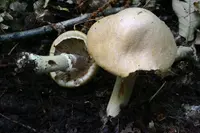
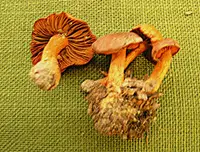
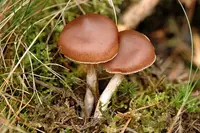
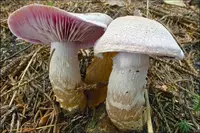
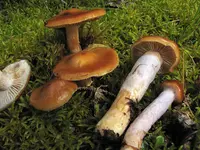
The blue-girdled webcap, Cortinarius collinitus, is a forest mushroom rather than a traditional houseplant. It forms medium-sized caps with slimy, often brownish surfaces and distinctive bluish to violet tones on the stem. The gills start pale and darken with age as spores mature.

This species usually grows on the ground in coniferous and mixed woodlands across Europe and parts of North America, often in mossy or damp areas. It is considered difficult and impractical to cultivate at home because it forms mycorrhizal partnerships, a close root association with trees that is hard to replicate in containers.

Those who want to learn how to care for blue-girdled webcap should understand that it is best appreciated as a wild forest fungus, not as a conventional garden or indoor species.

Main Plant Requirements

Care Difficulty

Hard Care

Light Preference

Partial Shade

Water Requirements

Regular Water

Temperature Preference

Cool Climate

Hardiness Zone

Unknown

Soil Texture

Loamy, Sandy, Organic-rich

Soil pH

Acidic (5.5–6.5), Slightly acidic (6.5–7.0)

Soil Drainage

Moist but well-drained

Fertilization

Minimal (feed rarely)

Get Personalized Care Plan

Scan your plant to receive care tips personalized for your specific plant

Available on iOS and Android

How to Care for the blue-girdled webcap

This woodland fungus prefers cool, shaded conditions rather than open sun.

  • Provide bright, dappled shade under deciduous trees, with no more than 1–2 hours of gentle morning sun and no direct afternoon sun, to mimic forest light.
  • Allow partial shade with filtered light through leaf litter and low vegetation; avoid sites with reflective surfaces that increase light intensity and heat.
  • Excessive sun dries the forest floor and leaf litter, slowing fruiting of blue-girdled webcap, while deep, year-round darkness under dense conifers can reduce mushroom production.

This mycorrhizal fungus depends on consistently moist, well-drained forest soil rather than direct watering.

  • Maintain soil moisture similar to a healthy woodland floor: the top 2–5 cm should feel slightly moist but never waterlogged or cracked dry.
  • Use leaf litter and woody debris as natural mulch to reduce evaporation; in managed woodland, light irrigation is only needed after prolonged drought when the upper soil fully dries.
  • Overwatering that causes standing water or sour, rotten smells indicates poor drainage, while shriveled caps and brittle stems suggest prolonged dryness affecting Cortinarius collinitus fruiting.

This species fruits best in cool to mild conditions typical of temperate woodlands.

  • Aim for an active fruiting range around 50–65°F (10–18°C), common in autumn; mild, stable temperatures support steady mycelium growth in the soil.
  • The underground mycelium usually tolerates down to about 23–28°F (-5 to -2°C) if soil is insulated by leaf litter, but hard, bare-ground freezes can damage surface structures.
  • Prolonged heat above 80°F (27°C) with dry soil sharply reduces fruiting; cooler nights and moderate daytime temperatures in fall typically give the most reliable Cortinarius collinitus displays.

Humidity is not a practical care factor for blue-girdled webcap, as this fungus grows naturally in outdoor forest conditions.

This ectomycorrhizal fungus relies on natural forest soil rather than prepared potting mixes.

  • Occurs in moist, well-drained, humus-rich forest soil with a loose, crumbly structure, often among leaf litter and decaying wood.
  • Prefers slightly acidic conditions around pH 5.0–6.5, commonly under conifers or birch where organic acids accumulate.
  • Avoid compacted, waterlogged, or highly disturbed soil, which reduces oxygen and disrupts the fine fungal mycelium network.
  • Promote suitable habitat by leaving leaf litter, small woody debris, and undisturbed organic layers instead of digging or tilling.

This species is not suitable for container growing because it depends on complex mycorrhizal partnerships with tree roots in undisturbed soil.

This mycorrhizal fungus grows in nutrient-balanced forest soils and normally does not need additional fertilizer.

Cortinarius collinitus is a wild, ground-dwelling fungus and is not managed through pruning.

This species is not suited to container culture, so repotting is not part of Cortinarius collinitus care.

  • If accidentally growing in a pot with a tree seedling, focus on the tree’s needs, not on moving the fungus.
  • Avoid disturbing the forest soil around fruiting bodies; the main organism is an underground mycelial network.
  • Transplanting typically fails because the mycelium depends on stable, long-term association with host tree roots.

This ectomycorrhizal mushroom is not practically propagated at home and is maintained by natural forest processes.

This forest fungus is naturally cold hardy in its native range and needs no dedicated winter care from gardeners.

Care Tips

Substrate pasteurization

Before inoculation, pasteurize woody debris or sawdust at 140–160°F for 60–90 minutes to reduce competing fungi while preserving beneficial microbes that support mycorrhizal establishment.

Host tree selection

Pair this species with compatible young conifers such as pines or spruces in well-drained, low-fertility sites, as the fungus relies on forming mycorrhizae with suitable hosts rather than growing in isolated beds.

Low-disturbance management

Once colonization starts, avoid deep cultivation, heavy raking, or repeated foot traffic over the inoculated zone so the fine mycelial network around feeder roots remains intact.

Careful leaf litter use

Maintain a thin, even layer of leaf litter or conifer needles over the inoculated area to stabilize moisture, but avoid thick, matted layers that can turn anaerobic and slow fungal activity.

Nutrient input control

Do not add lawn fertilizers or rich composts near the host trees, since high nitrogen inputs favor competing saprophytic fungi and grasses and can make caring for blue-girdled webcap much less successful.

Common Pests and Diseases

Fungal gnat larvae

This pest lives in the substrate around cultivated basidiomata and feeds on developing fungal tissue. Symptoms include tunneling, distorted caps, and weakened or collapsing fruiting bodies.

Solution

Reduce excess moisture in the cultivation substrate, remove heavily damaged fruiting bodies, and apply a biological control such as Bacillus thuringiensis israelensis (BTI) or beneficial nematodes targeted at fungus gnat larvae. Covering the substrate surface with a fine mesh or clean sand layer also helps limit egg‑laying by adult gnats.

Mite infestation

These insects are actually tiny arachnids that feed on spores and young fungal tissue, often causing pitting, deformation, or a dusty appearance on caps and stems.

Solution

Discard heavily infested cultures, then lower humidity slightly and increase fresh air exchange to create less favorable conditions for mites. Use clean tools and containers, and if needed apply a targeted acaricide approved for mushroom cultivation or introduce predatory mites from a reputable biological control supplier.

Bacterial blotch

This disease appears as greasy, water‑soaked, sometimes yellow‑brown patches on caps and stipes, often developing under overly wet conditions and poor air circulation.

Solution

Improve ventilation, avoid overhead misting directly onto caps, and remove and discard affected fruiting bodies promptly. Between cropping cycles, clean and disinfect all tools and surfaces, and start new cultures from healthy, uncontaminated material to reduce recurrence.

Competitive mold contamination

This disease is caused by fast‑growing molds that colonize the substrate or casing, forming green, blue, or gray patches and suppressing normal basidioma development.

Solution

Remove and discard contaminated substrate sections as soon as patches appear and avoid disturbing them to limit spore spread. Review sterile technique, lower excessive substrate moisture, and start future batches with fresh, contamination‑free spawn or mycelial inoculum to maintain healthy Cortinarius collinitus care conditions.

Interesting Facts

Slimy yet fibrous cap

The cap surface becomes distinctly slimy in wet weather but dries to a shiny, often streaky surface, while the flesh remains relatively firm and fibrous compared with many other webcaps.

Root-like stem base

Its stem typically ends in a long, rooting extension that penetrates deep into the soil, a feature that helps distinguish it from similar Cortinarius species during field identification.

Blue-banded young stems

Young fruitbodies often show noticeable bluish to violet zones, especially near the top of the stem where the cobweb-like cortina has been, giving rise to the common name blue-girdled webcap.

Botan icon

Did you know?

This species forms obligate ectomycorrhizal partnerships with conifers such as pines and spruces, exchanging mineral nutrients and water from the soil for sugars from the tree roots, and its presence is often used as an indicator of relatively undisturbed, nutrient-poor forest soils.

FAQs about blue-girdled webcap

This mushroom is considered inedible and potentially poisonous. Identification in this genus is difficult, and several related species are dangerously toxic. It should never be eaten or tasted, and foraging should be left to expert mycologists.

Grow Healthy Plants with Botan Care

Keep your plants happy and healthy with plant identification, disease detection, and easy care guidance.

Botan plant care app — identify plants on mobile

Explore More Plants