Green Skinhead Care (Cortinarius austrovenetus)

Green Skinhead

About Green Skinhead

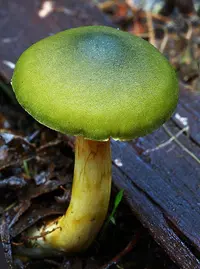
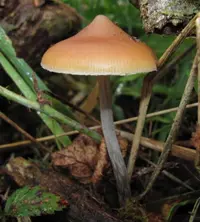
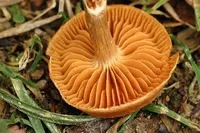
Cortinarius austrovenetus, sometimes called the green skinhead, is a gilled fungus rather than a traditional leafy plant. It forms medium-sized, cup-shaped to flat caps with a smooth, greenish surface and pale to yellowish gills beneath.

This species occurs naturally in southern Australia, usually in eucalypt forests, where it grows on the ground in leaf litter. It associates with tree roots in a mycorrhizal relationship, which makes it difficult to cultivate at home and limits practical guidance on how to care for Green Skinhead.

In nature it favors cool, moist forest conditions with undisturbed, well-drained soil rich in organic matter.


Main Plant Requirements

Care Difficulty

Hard Care

Light Preference

Partial Shade

Water Requirements

Keep Soil Moist

Temperature Preference

Warm Climate

Hardiness Zone

Unknown

Soil Texture

Loamy, Organic-rich

Soil pH

Acidic (5.5–6.5)

Soil Drainage

Moist but well-drained

Fertilization

Minimal (feed rarely)

Get Personalized Care Plan

Scan your plant to receive care tips personalized for your specific plant

Available on iOS and Android

How to Care for the Green Skinhead

This ectomycorrhizal fungus prefers cool, shaded forest conditions with only brief indirect light.

  • Provide dappled or filtered light under trees, with no more than 1–2 hours of weak morning sun and full shade for the rest of the day.
  • Avoid direct midday or afternoon sun; intense exposure can dry the forest litter, damaging the mycelium and preventing Green Skinhead fruiting bodies from forming.
  • In summer, deeper shade and thicker leaf litter help maintain moisture; in cooler seasons, partial canopy openings are acceptable if the ground does not dry out.

This woodland fungus relies on consistently moist, not waterlogged, forest soil around its tree partners.

  • Aim for evenly moist leaf litter and topsoil; if the upper 2–3 cm feel dry and crumbly, conditions are too dry for Cortinarius austrovenetus to fruit well.
  • Avoid standing water or heavy, compacted soil; prolonged saturation leads to anaerobic conditions, which can damage the mycelium network.
  • During hot, dry spells, supplemental moisture in managed habitats should mimic light forest rain, while in cool, wet seasons, ensure excess water can drain away naturally.

This species performs best in mild, cool climates typical of shaded forest floors.

  • Optimal activity occurs around 50–68°F (10–20°C), where soil stays cool and moist under tree canopy and leaf litter.
  • Tolerates lows near 32°F (0°C) in soil without prolonged hard freezes, but repeated frost–thaw cycles can disrupt fruiting.
  • Sustained heat above 77–82°F (25–28°C), especially with dry conditions, reduces growth and fruiting, so deep shade and organic mulch help buffer temperature swings seasonally.

This ectomycorrhizal fungus prefers consistently moist, cool air but is not typically managed for humidity in cultivation.

  • If attempting cultivation, aim for 70–90% humidity in a shaded, sheltered outdoor microclimate.
  • Prolonged dry air causes caps to crack, margins to curl, and fruiting bodies to abort prematurely.
  • Increase local humidity by using thick leaf litter, nearby groundcover, and windbreaks rather than direct misting.

This forest mushroom depends on undisturbed, natural soil conditions rather than prepared mixes.

  • Cortinarius austrovenetus associates with tree roots in moist, crumbly, organic-rich loam containing abundant leaf litter and decaying wood.
  • Soil must drain freely yet stay evenly moist; avoid compacted clay and spots where water pools after rain.
  • Slightly acidic conditions, roughly pH 5.0–6.5, best match its typical eucalypt forest habitat.
  • Improve structure outdoors with layers of leaf litter, wood chips, and coarse bark rather than perlite or sand-based potting blends.

This species is not suited to container growing because it relies on complex soil and tree-root relationships in the ground.

This wild ectomycorrhizal fungus does not benefit from targeted fertilization in garden or container culture.

Cortinarius austrovenetus does not require or benefit from pruning, as it is a wild mushroom rather than a landscaped plant.

This species is not suited to conventional repotting or transplanting, since it forms complex mycorrhizal associations with tree roots in soil.

  • Avoid attempting to grow Cortinarius austrovenetus in pots, as it depends on living host trees for survival.
  • If found in a landscape, leave the surrounding soil undisturbed to protect the delicate fungal mycelium network.
  • Do not dig up or move fruiting bodies; disturbance typically disrupts the underground association and reduces future fruiting.

Deliberate propagation of this ectomycorrhizal fungus is highly specialized and rarely successful in home settings.

No special winter care is practical or required for this wild fungus in temperate climates, as it persists mainly as underground mycelium.

Care Tips

Managed leaf litter

Maintain a thin, loose layer of hardwood leaf litter over the colonized soil to protect the mycelium from drying and mechanical damage, but periodically remove thick, compacted mats so young fruiting bodies can emerge without deforming.

Gentle site marking

Use small, discreet markers or a simple map to record productive fruiting spots instead of flagging tape or stakes that disturb roots and soil, which helps you relocate patches across seasons with minimal impact when growing Green Skinhead.

Low‑impact foraging

Harvest by cutting mushrooms at the base with a clean knife and leaving small, damaged, or very young specimens in place, reducing physical disturbance to the forest floor and preserving spore production.

Spore‑rich redistribution

Place over‑mature caps gill‑side down on nearby suitable soil for several hours before leaving them on site or lightly crumbling them in the same habitat, supporting local spore dispersal without moving soil or host roots.

Controlled foot traffic

Approach known patches along the same narrow path and avoid standing on mossy or root‑dense areas, since repeated compaction can crush fine roots and mycelium, reducing future fruiting.

Common Pests and Diseases

Fungal maggots

These insects are the larvae of fungus gnats or related flies that feed on developing mushroom tissue and gills. Symptoms include small tunnels, soft spots, and rapid collapse of caps.

Solution

Harvest fruiting bodies as soon as caps mature, and avoid leaving decaying mushrooms in place, as this attracts egg‑laying flies. Use fine mesh or netting around known fruiting areas and remove heavily infested mushrooms to reduce the local fly population when growing Green Skinhead in a managed outdoor setting.

Slug and snail grazing

These pests rasp the cap and gill surface, leaving irregular holes, slime trails, and partially eaten fruiting bodies. Damage is often worst in moist, shaded sites with abundant leaf litter.

Solution

Hand‑pick slugs and snails in the evening and remove nearby hiding spots such as boards or dense debris. If the fungus is being encouraged in a garden or research plot, use copper barriers or iron phosphate slug baits placed around, not on, the fruiting zone to limit grazing without directly contaminating mushrooms.

Mite infestation

These insects are tiny arthropods that feed on mushroom tissue and spores, causing pitting, discoloration, and a dusty or rough surface on caps and gills. Symptoms include slow deformation and premature drying of affected fruiting bodies.

Solution

Gently remove and discard visibly affected mushrooms to reduce the local mite load. In managed outdoor cultures, avoid piling decomposing organic matter directly over known mycelium patches, and keep fruiting areas well ventilated and not overly compacted to make conditions less favorable for dense mite populations.

Competing saprotrophic fungi

This problem occurs when faster‑growing decomposer fungi colonize the same soil or litter layer, leading to suppressed or distorted fruiting of the target species. Symptoms include unusual moldy growths on or around caps and a noticeable decline in normal fruiting over time.

Solution

In experimental or conservation settings, keep the habitat as close as possible to its natural eucalypt forest conditions and avoid importing mulch or soil that contains aggressive wood‑decay fungi. Remove obviously contaminated woody debris and limit disturbance so the native mycorrhizal association of C. austrovenetus with its tree hosts remains stable.

Interesting Facts

Unusual green cap pigments

This species is notable for its vivid olive to yellow‑green cap, a rare color in mushrooms, caused by specific pigments that are still not fully characterized chemically but are distinct from the chlorophyll found in plants.

Southern beech associate

It forms ectomycorrhizal partnerships with Nothofagus (southern beech) species in southeastern Australia, exchanging mineral nutrients from the soil for sugars produced by the tree through photosynthesis.

Former misidentification issues

For many years, green Cortinarius mushrooms in Australia were often misidentified or confused with European species until careful microscopic and ecological studies clarified this taxon as a distinct southern hemisphere species.

Botan icon

Did you know?

The species is currently regarded as inedible, and there is particular caution around green Cortinarius species because some close relatives in the genus contain dangerous toxins that can cause severe or delayed kidney damage.

FAQs about Green Skinhead

This fungus is not considered edible and should be treated as potentially poisonous. Identification within Cortinarius is difficult, and several related species are dangerously toxic. For safety, do not harvest, cook, or consume specimens from the wild.

Grow Healthy Plants with Botan Care

Keep your plants happy and healthy with plant identification, disease detection, and easy care guidance.

Botan plant care app — identify plants on mobile

Explore More Plants