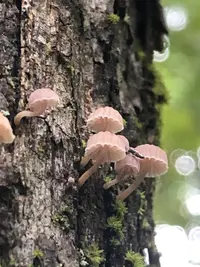
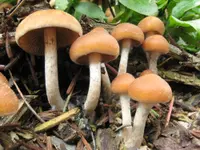
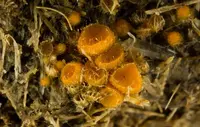
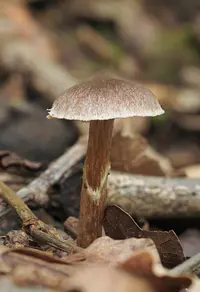
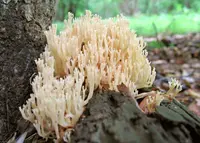
earthy webcap Care (Cortinarius hinnuleus)

earthy webcap

About earthy webcap

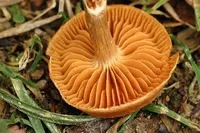
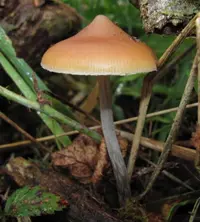
The earthy webcap, Cortinarius hinnuleus, is a small to medium woodland mushroom, not a houseplant. It grows from soil, usually near broadleaf or conifer trees. Caps are tawny to brown with a dry, often fibrous surface, and the gills are covered by a delicate cobweb-like veil in young specimens. It fruits mainly in autumn, often in groups. This species forms mycorrhiza, a symbiotic partnership with tree roots, so it cannot be grown successfully in regular pots or standard garden beds. For anyone asking how to care for earthy webcap, it is essentially a forest-dependent fungus that is very difficult to cultivate outside its natural habitat.


Main Plant Requirements

Care Difficulty

Hard Care

Light Preference

Partial Shade

Water Requirements

Keep Soil Moist

Temperature Preference

Cool Climate

Hardiness Zone

Unknown

Soil Texture

Loamy, Organic-rich

Soil pH

Acidic (5.5–6.5)

Soil Drainage

Moist but well-drained

Fertilization

Minimal (feed rarely)

Get Personalized Care Plan

Scan your plant to receive care tips personalized for your specific plant

Available on iOS and Android

How to Care for the earthy webcap

This woodland fungus prefers low light similar to a naturally shaded forest floor.

  • Provide dappled or filtered shade under deciduous trees, with only 1–2 hours of weak morning sun if any direct light reaches the ground.
  • Avoid strong midday or afternoon sun, which can dry the upper soil layer and litter too quickly and impair fruiting of earthy webcap.
  • In summer, aim for consistent shade; in spring and autumn brief, shifting sunflecks through the canopy are acceptable and often beneficial.

This mycorrhizal fungus depends on consistently moist, not saturated, forest soil.

  • Aim for evenly moist leaf litter and top soil, allowing the upper 1–2 cm to dry slightly between significant rain events or supplemental watering.
  • Use well-drained, humus-rich soil so excess water percolates away; prolonged puddling, sour smell, or slimy litter suggests overwatering and poor aeration.
  • In hot, dry periods, increase watering frequency, watching for crisp, brittle leaf litter as a sign of drought stress affecting Cortinarius hinnuleus partners.

This species grows best in cool to mild conditions typical of temperate woodlands.

  • Optimal fruiting usually occurs around 50–60°F (10–16°C), often in cool, moist autumn weather with stable temperatures and high humidity.
  • The fungus tolerates cool nights down to about 32°F (0°C), but repeated hard freezes below 28°F (-2°C) can shorten or prevent visible mushroom production.
  • Sustained heat above 77–82°F (25–28°C) dries soil and litter faster, so extra shading and moisture are needed during hot, dry spells to maintain mycelial health.

Humidity management is not relevant for Cortinarius hinnuleus, which grows naturally as a woodland fungus rather than a potted plant.

Soil preparation focuses on recreating a loose, forest-floor environment rather than a standard potting medium.

  • Use a deep, airy layer of leaf litter mixed with well-rotted wood fragments and a small amount of native forest topsoil to mimic natural conditions.
  • Aim for slightly acidic soil, around pH 5.0–6.5, as this aligns with typical habitats of Cortinarius hinnuleus under broadleaf trees.
  • Ensure the substrate drains freely yet stays evenly moist by avoiding heavy clay and by incorporating coarse sand or fine bark chips for structure.
  • Avoid fertilized mixes, manures, or compacted garden soil, which disrupt the delicate mycorrhizal relationship with host tree roots.

This species is not suitable for container growing because it depends on complex mycorrhizal association with living tree roots in open soil.

This forest-dwelling mycorrhizal fungus does not need intentional fertilization in gardens or containers.

Pruning is not applicable to Cortinarius hinnuleus, since it is a wild, mycorrhizal mushroom rather than an ornamental garden plant.

Transplanting this ectomycorrhizal fungus is rarely successful and generally not recommended.

  • Cortinarius hinnuleus depends on close association with tree roots, so disturbing the site usually breaks this relationship.
  • If movement is unavoidable, transfer a generous plug of undisturbed soil and fine roots from the original host tree.
  • Attempt such work only during cool, moist conditions to limit desiccation of mycelium, the thread-like feeding network.
  • After any disturbance, keep the area evenly moist and shaded to reduce additional stress on the fungal partner.

Deliberate propagation of this wild ectomycorrhizal fungus is difficult and not a standard horticultural practice.

No specific winter care is required, as this woodland fungus overwinters naturally in temperate climates.

Care Tips

Substrate patch rotation

When cultivating this ectomycorrhizal mushroom near host trees, rotate small inoculated substrate patches every 1–2 years to fresh micro-sites around the same tree to avoid local nutrient exhaustion and to spread the mycelium more evenly through the root zone.

Leaf litter management

Maintain a loose layer of partially decomposed leaf litter over the inoculated area, topping up lightly each autumn so the mycelium has a stable, cool, and shaded microhabitat without being smothered by heavy mulch.

Host root protection

Avoid deep digging, edging, or frequent foot traffic directly over colonized roots so the fine feeder roots and fungal mycelium are not physically damaged, which can sharply reduce fruiting.

Moisture buffering layer

In exposed sites, use a thin layer of shredded, untreated wood or bark chips above the leaf litter as a moisture buffer, but keep it no thicker than 2–3 cm so gas exchange and fruiting bodies are not suppressed.

Simple monitoring markers

Mark inoculated zones with discrete pegs or stones and keep written notes of where and when caps appear each season, so long‑term patterns in fruiting help refine methods for caring for earthy webcap in that specific site.

Common Pests and Diseases

Fungivorous fly larvae

This pest targets the developing fruitbodies, tunneling through caps and stems and leaving brown, water-soaked galleries and soft, collapsing tissue. Symptoms include distorted mushrooms, premature decay, and visible white maggots inside cut specimens.

Solution

Harvest fruitbodies promptly when mature, discard any visibly infested material, and avoid leaving decaying mushrooms on site, since these attract egg‑laying adults. Where allowed, use fine insect mesh over fruiting areas and maintain good forest floor hygiene by removing overripe mushrooms to reduce breeding sites and population buildup.

Mite infestation

These insects (microscopic arachnids) feed on developing gills and cap surfaces, leaving pitted, rough textures, pale speckling, and sometimes fine debris around the mushroom base. This pest often appears in very humid, stagnant microclimates with abundant decaying organic matter.

Solution

Limit heavy disturbance of leaf litter that concentrates organic debris under a small area, and remove badly affected fruitbodies to break the local life cycle. Improving air movement at ground level and avoiding constant saturation of the substrate helps reduce mite densities; in cultivation or research settings, keep collected fruitbodies refrigerated and in clean containers to prevent further damage.

Parasitic molds

This disease involves opportunistic fungi such as Hypomyces and related genera colonizing the mushroom surface, producing white, yellow, or reddish crusts that deform caps and gills. Symptoms include loss of normal coloration, powdery or felted growth, and failure of gills to release spores.

Solution

Remove and discard parasitized fruitbodies as soon as discoloration or crusting is noticed, and do not handle healthy specimens after touching infected ones. Avoid piling many damp mushrooms together in baskets or containers, and allow good airflow around collected caps to limit spread and spore load in a small area.

Bacterial soft rot

This disease causes water-soaked, slimy patches that spread rapidly through caps and stems, often with an unpleasant odor and collapse of affected tissue. Symptoms include translucent margins, drooping caps, and rapid liquefaction under warm, wet conditions.

Solution

Harvest only firm, undamaged fruitbodies and discard any that show sliminess or off smells, since removing decaying material lowers the local bacterial load. Minimize handling trauma, avoid storing mushrooms in sealed plastic while warm, and spread them in a single layer in cool conditions to slow bacterial growth.

Interesting Facts

Earthy animal scent

Fresh fruiting bodies have a distinct odor described as earthy to slightly animal-like, which helps field mycologists separate it from similar brown webcaps that lack this specific smell profile.

Webbed veil remnants

As the cap expands, the cobweb-like partial veil tears and leaves fine rusty-brown fibrils on the stem, a visual clue that supports reliable identification within the large and complex webcap group.

Nutrient-trading partner

This species forms ectomycorrhizal associations with broadleaf trees, especially beech and oak, exchanging mineral nutrients and water for sugars produced by its host through photosynthesis.

Botan icon

Did you know?

Cortinarius hinnuleus belongs to one of the most taxonomically challenging mushroom groups, and its identification often requires careful microscopic examination of spores and tissue structures in addition to field characters such as odor, habitat, and cap color.

FAQs about earthy webcap

This species is not edible and must be considered poisonous. It belongs to a genus with several seriously toxic mushrooms that can damage kidneys. Foragers should avoid consumption and not rely on taste or smell to judge safety.

Grow Healthy Plants with Botan Care

Keep your plants happy and healthy with plant identification, disease detection, and easy care guidance.

Botan plant care app — identify plants on mobile

Explore More Plants