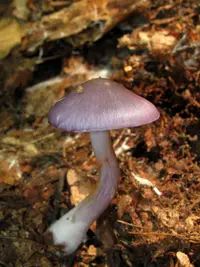
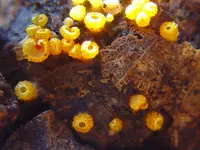
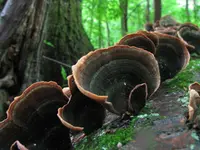
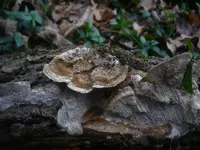
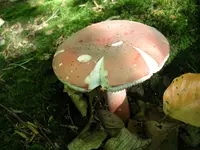
yellow webcap Care (Cortinarius delibutus)

yellow webcap

About yellow webcap

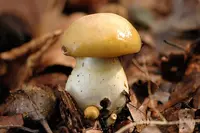
The yellow webcap, Cortinarius delibutus, is a woodland mushroom rather than a typical garden plant. It forms slim, yellow to ochre caps with a sticky or slimy surface when moist and slender, pale stems. This species usually appears in late summer to autumn in coniferous and mixed forests, often in association with pines or spruces.

Cortinarius delibutus depends on a mycorrhizal partnership, meaning it grows only in living soil with compatible trees, not in regular pots or beds. Because of this specialized relationship, it is considered difficult to cultivate intentionally, and information on how to care for yellow webcap at home is very limited.


Main Plant Requirements

Care Difficulty

Hard Care

Light Preference

Partial Shade

Water Requirements

Keep Soil Moist

Temperature Preference

Cool Climate

Hardiness Zone

Unknown

Soil Texture

Loamy, Silty, Organic-rich

Soil pH

Strongly acidic (4.5–5.5), Acidic (5.5–6.5)

Soil Drainage

Moist but well-drained

Fertilization

Minimal (feed rarely)

Get Personalized Care Plan

Scan your plant to receive care tips personalized for your specific plant

Available on iOS and Android

How to Care for the yellow webcap

This forest-dwelling fungus prefers cool, shaded woodland light rather than direct sun exposure.

  • Site Cortinarius delibutus in mixed or conifer woodland with dappled or filtered light, receiving no more than 1–2 hours of weak morning sun.
  • Provide consistent partial to full shade; 70–100% tree canopy cover helps maintain moist soil and prevents drying of the mycelium of yellow webcap.
  • Avoid strong midday and afternoon sun, which can overheat leaf litter and upper soil, reducing fruiting and shortening mushroom lifespan in late summer–autumn.

This mycorrhizal mushroom depends on evenly moist, not waterlogged, forest soil.

  • Aim for soil that feels slightly moist at 2–5 cm depth; surface leaf litter may dry lightly, but underlying mineral soil should not turn powder-dry.
  • Rely on natural rainfall where possible; in managed woodlands, supplemental watering is only useful during prolonged drought when soil cracks or mosses become crisp.
  • Avoid standing water and compacted clay; poor drainage leads to anaerobic conditions, root stress for host trees, and reduced fruiting of Cortinarius delibutus.

This species fruits best in cool to mild conditions typical of temperate woodlands.

  • Optimal fruiting temperatures are around 50–65°F (10–18°C), often in late summer to autumn when days are mild and nights start to cool.
  • Mycelium in soil tolerates down to about 23–28°F (-5 to -2°C), but visible mushrooms are damaged by hard frost and may collapse after repeated freezing.
  • Sustained heat above 77–82°F (25–28°C) with dry conditions suppresses fruiting; shade, leaf litter, and adequate soil moisture buffer short warm spells.

Humidity is not a meaningful controllable factor for this wild, ectomycorrhizal fungus and is best managed by preserving its natural woodland setting.

This fungus relies on forming mycorrhizal partnerships with tree roots, so soil preparation focuses on mimicking its natural forest conditions rather than conventional potting mixes.

  • Favors moist, loose, organic-rich, leaf-littered forest soil with a fine crumb structure rather than compacted or heavily tilled ground.
  • Performs best in freely draining but consistently moist substrates; avoid waterlogged, clay-heavy sites that stay saturated after rain.
  • Prefers slightly acidic soil, typically pH 4.5–6.0, as commonly found under pines and birches in undisturbed woodlands.
  • If attempting Cortinarius delibutus care, retain existing forest duff, fallen needles, and twigs to preserve native fungi and soil aeration.

This species is not suitable for container growing because it depends on complex ectomycorrhizal relationships with tree roots in undisturbed soil ecosystems.

This ectomycorrhizal fungus does not need direct fertilizing, as it relies on its host tree for nutrients.

Cortinarius delibutus does not require pruning, since the visible mushroom is a short-lived fruiting body, not a persistent plant structure.

Transplanting focuses on the host tree or soil, not the fungus itself, which lives as an underground mycelium associated with roots.

  • Avoid disturbing established forest or woodland soil where the fungus is present, since mycelial networks are highly sensitive to disruption.
  • If moving a young host tree, take a large, intact root ball with surrounding native soil to preserve as much mycelium as possible.
  • Transplant only during the tree’s dormant season, typically late fall or very early spring, to reduce combined stress on roots and fungal partner.
  • After transplanting, water the host tree deeply and maintain stable moisture so the fine roots and associated fungal threads can re-establish.

Reproducing Cortinarius delibutus in managed settings is difficult and not usually attempted by home growers.

This woodland fungus is naturally cold-hardy in its native range and needs no specific winter care in the ground.

Care Tips

Spore-source planning

Collect spores from mature, correctly identified yellow webcap in a healthy mixed conifer stand and use them only on sites with compatible hosts such as pine, spruce, or fir to increase the chance that mycorrhizae establish successfully.

Host root preparation

Before introducing spores or colonized substrate, lightly loosen the top 2–3 cm of soil around young conifer roots without damaging them, so fine roots are exposed to colonization surfaces while the bulk root system stays stable.

Use of nurse seedlings

Plant several closely spaced conifer seedlings rather than a single tree, as a small cluster of hosts offers a denser fine-root network that increases the likelihood of yellow webcap forming mycorrhizal associations.

Moisture-buffer mulching

Apply a thin, airy layer of conifer needles, small twigs, and a little well-rotted wood on top of the soil to mimic a forest floor, which buffers moisture and protects developing mycelium from drying and mechanical disturbance.

Minimal soil disturbance

After inoculation, avoid raking, deep digging, or frequent foot traffic over the area so the underground fungal network can spread undisturbed, and instead confine maintenance to gentle surface debris removal only when necessary.

Common Pests and Diseases

Mycophagous slugs

This pest feeds directly on the fruiting bodies, leaving irregular holes and shredded caps, especially in damp conditions. Symptoms include slimy trails around damaged mushrooms and missing tissue on caps and stems.

Solution

Hand-pick slugs during early morning or evening and use simple barriers such as copper tape or rough gravel around key fruiting areas. Reduce dense groundcover that shelters slugs and, if needed, place beer traps or shallow dishes with yeast solution to attract and remove them without contaminating the mycelium.

Fungus gnat larvae

These insects lay eggs in moist, organic soil, and the larvae feed on fungal mycelium and developing primordia, which can reduce or deform fruiting. Symptoms include tiny black adult gnats flying close to the ground and poor or patchy mushroom development in overwatered spots.

Solution

Allow the upper soil layer to dry slightly between irrigations and avoid standing water to limit larval survival. Sticky traps help reduce flying adults, and a drench with Bacillus thuringiensis israelensis (Bti), a biological control, can target larvae without harming the fungal partner plant roots.

Parasitic Hypomyces infection

This disease is caused by other fungi that colonize the fruiting bodies, leading to distorted, discolored, or powdery surfaces and a failure of normal spore production. Symptoms include white, yellow, or orange crustlike overgrowth that gradually replaces the natural cap surface.

Solution

Promptly remove and dispose of any parasitized fruiting bodies to reduce spore spread in the patch. Limit mechanical disturbance of the soil and avoid introducing contaminated tools or mushroom material from other sites, which lowers the chance of new Hypomyces strains establishing in the mycelial network.

Mite grazing damage

These pests are small arthropods that feed on spores, gill tissue, and sometimes young primordia, causing pitting, speckling, or uneven gill surfaces. Symptoms include fine surface scarring and a dusty appearance under caps when populations are high.

Solution

Keep litter moderately clean and avoid excessive piles of decaying mushrooms that favor mite buildup, while still maintaining natural forest duff. If damage is severe in a managed site, remove heavily infested fruiting bodies and encourage natural predators such as predatory mites by avoiding broad-spectrum insecticides in the surrounding habitat.

Interesting Facts

Slimy yellow cap

Mature fruit bodies typically show a smooth, bright yellow to yellow-ochre cap that becomes distinctly slimy when wet due to a thick gelatinous layer, a key trait for recognizing this species in the field.

Birch-associated fungus

This ectomycorrhizal fungus forms nutrient-exchanging symbioses with birch trees (Betula spp.), helping the tree absorb water and minerals while receiving sugars produced by photosynthesis.

Spore print contrast

Despite its yellow cap and pale gills in youth, the species produces a rusty-brown spore print, a diagnostic feature that reflects its placement within the large brown-spored genus Cortinarius.

Botan icon

Did you know?

The species is placed in the Delibuti clade within Cortinarius based on molecular studies, illustrating how DNA sequencing has clarified relationships among superficially similar yellow webcaps that were once frequently misidentified using only external features.

FAQs about yellow webcap

This mushroom is considered inedible and potentially poisonous. Identification within the Cortinarius group is difficult, and some close relatives are deadly. It should never be eaten or used in food, even if it appears healthy.

Grow Healthy Plants with Botan Care

Keep your plants happy and healthy with plant identification, disease detection, and easy care guidance.

Botan plant care app — identify plants on mobile

Explore More Plants