False Turkey-Tail Care (Stereum ostrea)

Also known as: golden curtain crust
False Turkey-Tail

About False Turkey-Tail

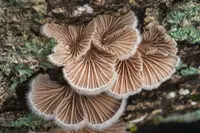
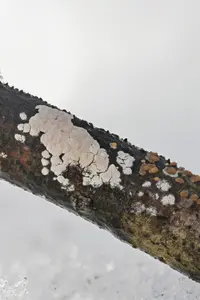
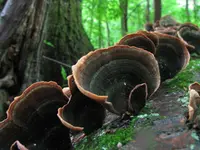
False turkey-tail, Stereum ostrea, is a wood-decaying bracket fungus, not a traditional houseplant. It forms thin, leathery, fan-shaped shelves on dead or dying wood. Bands of orange, brown, and cream create a layered look that loosely resembles true turkey-tail mushrooms but without visible pores underneath.

This fungus occurs widely in warm, humid regions, especially in Asia and other tropical to subtropical areas, on logs, stumps, and fallen branches. It is not typically cultivated indoors, so learning how to care for False Turkey-Tail mainly suits hobbyists interested in fungi and naturalistic wood displays.

It generally favors shaded, consistently moist environments with plenty of decaying wood and good air movement around the substrate.

Main Plant Requirements

Care Difficulty

Moderate Care

Light Preference

Partial Shade

Water Requirements

Regular Water

Temperature Preference

Warm Climate

Hardiness Zone

Unknown

Soil Texture

Loamy, Organic-rich

Soil pH

Acidic (5.5–6.5), Slightly acidic (6.5–7.0)

Soil Drainage

Moist but well-drained

Fertilization

Minimal (feed rarely)

Get Personalized Care Plan

Scan your plant to receive care tips personalized for your specific plant

Available on iOS and Android

How to Care for the False Turkey-Tail

This wood-decay fungus prefers low to moderate light similar to shaded woodland conditions.

  • Provide bright shade or dappled light, such as under tree canopies, avoiding direct sun for more than 1–2 hours per day to prevent drying of the substrate.
  • Partial shade with filtered morning sun and shaded afternoons supports stable moisture, which is important when caring for False Turkey-Tail on logs or fallen branches.
  • In summer, shield from strong midday sun; in winter, slightly more indirect light is acceptable as long as the host wood does not dry out completely.

Stereum ostrea depends on consistent moisture in its woody substrate rather than direct watering of the fruiting bodies.

  • Maintain host wood slightly damp but not waterlogged; allow the surface to lose its glossy wet look before rewetting, keeping internal moisture stable.
  • Use well-drained surroundings so rain or irrigation can run off; standing water around logs encourages anaerobic conditions and decay harmful to the mycelium.
  • In warm, dry seasons, increase misting or gentle soaking of the wood when it feels dry several millimeters deep; reduce added moisture in cool, wet weather to avoid rot.

This species grows best in mild, temperate conditions typical of shaded woodlands.

  • Optimal growth occurs around 60–77°F (16–25°C), with steady moisture and shade promoting regular fruiting on dead or decaying wood.
  • It tolerates cooler periods down to about 32°F (0°C), but hard, prolonged freezes below this can damage exposed tissue, though protected mycelium in wood may survive.
  • Heat above 86°F (30°C), especially with low humidity, can dry the substrate and slow growth, so additional shade and moisture buffering are important in hot seasons.

This bracket fungus prefers consistently moist air typical of shaded woodland rather than dry indoor conditions.

  • Aim for 60–90% humidity by positioning it in a sheltered, shaded, naturally humid outdoor spot.
  • It tolerates brief dips to 40–50% humidity but prolonged dry air slows growth and dulls False Turkey-Tail coloration.
  • Low humidity stress appears as brittle, cracked fruiting bodies; increase moisture by misting nearby surfaces and maintaining damp, decaying wood substrate.

This wood-decaying fungus grows on lignin-rich material rather than mineral soil, so the focus is on the woody substrate.

  • Use well-aerated hardwood logs or thick branches with intact bark, avoiding conifers or resinous woods that inhibit Stereum ostrea colonization.
  • Ensure the wood stays evenly moist but not submerged; excess standing water excludes oxygen and slows fungal activity.
  • Place logs on bricks or coarse bark so air can move around them, improving drainage and preventing constant contact with saturated ground.
  • Avoid compacted soil, heavily fertilized beds, or treated lumber, which introduce salts or chemicals that interfere with mycelial growth.

This species is not naturally suited to standard container culture, but it can be grown on wood placed in a container for observation.

  • Set hardwood logs vertically or firmly wedged in a heavy container to keep the lightweight fruiting shelves stable in wind and rain.
  • Use a wide, shallow container filled with coarse gravel below the log to let excess water drain while keeping ambient moisture around the wood.
  • Choose opaque or thick-walled containers that reduce rapid drying of the log surface, maintaining a more stable microclimate near the fungus.

Stereum ostrea, a saprophytic bracket fungus on dead wood, usually needs no direct fertilization when grown on suitable logs or stumps.

Pruning has no practical role for Stereum ostrea, since it is a wood-decaying fungus rather than a conventional garden plant.

This fungus grows on dead hardwood rather than in pots, so care focuses on positioning fresh logs or blocks instead of classic repotting.

  • Select sound, untreated hardwood logs or blocks showing full colonization by the mycelium before moving.
  • Transplant only in mild weather to reduce drying of the colonized wood surface.
  • Move the colonized wood gently, avoiding impacts that could crack or desiccate the fungal tissue.
  • Place the new substrate in a shaded, humid spot and water the surrounding area lightly to limit moisture loss.

Propagation of Stereum ostrea is specialized and generally left to experienced mycologists or commercial growers.

False Turkey-Tail is naturally cold hardy and typically needs no special winter care when established on outdoor hardwood.

Care Tips

Use fresh hardwood

For reliable fruiting, inoculate only freshly cut, disease-free hardwood logs or blocks, as older or decayed wood is often already colonized by competing fungi.

Control competitor fungi

Before inoculation, heat-treat small wood pieces in an oven or pressure cooker to kill existing fungi and molds, which greatly improves colonization success when growing False Turkey-Tail.

Optimize log size

Choose logs about 10–20 cm in diameter and 60–100 cm long, which balance moisture retention with enough surface area for good fruiting.

Stack for airflow

Stack inoculated logs in a crib or lean-to style off the ground to reduce contact with soil-borne fungi while still allowing good air circulation around each piece.

Monitor bark integrity

Inspect logs regularly and prioritize those with intact, firmly attached bark, since loss of bark usually signals drying or contamination and leads to weaker or patchy fruiting.

Common Pests and Diseases

Wood-boring beetles

These insects tunnel into dead or decaying hardwood where the fungus is growing, disrupting the fungal tissue and fruiting layers. Symptoms include crumbly, riddled brackets and fine bore dust on or beneath the host log.

Solution

Physically remove and discard heavily infested wood and collect fallen debris to reduce shelter for beetles. Where possible, shift fruiting logs to a cooler, less exposed, and slightly drier but still shaded spot to slow beetle activity, and maintain good airflow around the substrate so brackets dry quickly after rain.

Competing bracket fungi

This disease complex involves other wood-decay fungi colonizing the same log and overgrowing the fruiting surface, leading to distorted or suppressed False Turkey-Tail brackets. Symptoms include mixed, overlapping shelves of different colors and textures on the same substrate.

Solution

Cut away or remove sections of wood that are heavily dominated by competing fungi and discard them away from the growing area. When cultivating or encouraging Stereum ostrea, start with freshly cut, clean hardwood and place it where cross-contamination from old, fungus-covered logs is minimized.

Slugs and snails

These pests rasp the soft, growing margins of brackets, leaving irregular holes, shredded edges, and slime trails. This grazing can slow new growth and reduce the decorative value of the fruiting bodies.

Solution

Hand-pick slugs and snails at dusk or after rain and remove mulch or dense groundcover that shelters them near the host wood. Physical barriers such as copper tape around staging surfaces or elevating logs off the soil on stands can significantly reduce access.

Mite grazing

These insects (actually small arachnids) feed on the hymenial surface where spores form, causing a roughened, pitted look and reduced spore production. Symptoms include fine speckling, pale patches, and a dusty appearance on the fertile surface of the brackets.

Solution

Move affected wood to a location with better airflow and slightly lower humidity, since constantly damp conditions favor mite build-up. Gently brushing the surface with a soft, dry brush to remove dust and debris, combined with relocating the substrate away from dense leaf litter, can help reduce mite pressure over time.

Interesting Facts

Look‑alike warning

This species closely resembles the true turkey-tail Trametes versicolor, but lacks visible pores on the underside and instead has a smooth to slightly wrinkled hymenium, which is why it is placed in a different fungal family.

Color changes with age

Its multicolored bands start in bright orange, yellow, and reddish tones but often fade to dull brown with age and weathering, making older fruiting bodies much less conspicuous on decaying wood.

Year‑round fruiting bodies

The leathery, bracket-like fruiting bodies are tough and persistent, often remaining on the same dead log for many months and sometimes through multiple seasons, gradually accumulating new growth rings along the margin.

Botan icon

Did you know?

Genetic studies have shown that what was once broadly called Stereum ostrea in many regions actually represents several distinct but closely related species, so some older field guides use this name for a wider complex than modern mycologists currently accept.

FAQs about False Turkey-Tail

This bracket fungus is best grown outdoors on hardwood logs or stumps, where it can decompose dead wood. Indoor conditions rarely provide enough fresh air, humidity variation, or suitable substrate for stable, long‑term growth.

Grow Healthy Plants with Botan Care

Keep your plants happy and healthy with plant identification, disease detection, and easy care guidance.

Botan plant care app — identify plants on mobile

Explore More Plants