Spore-friendly habitat
Leave a portion of the surrounding leaf litter and small twigs undisturbed in autumn so the fungus can complete its life cycle and spread spores into a stable, sheltered microhabitat.

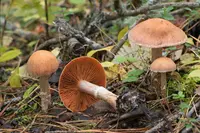
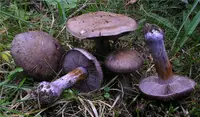
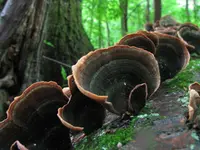
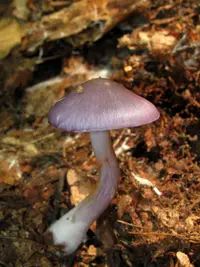
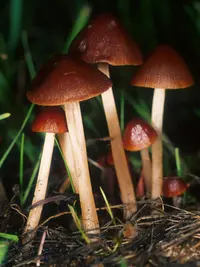
The woolly webcap, Cortinarius laniger, is a wild mushroom rather than a garden plant. It forms small to medium fruiting bodies with a woolly, fibrous cap and a cobweb-like veil under the cap when young.
This species occurs naturally in forested areas, usually in temperate regions, growing on the ground in soil rich in leaf litter. It forms mycorrhiza, a symbiotic relationship with tree roots, which makes it unsuitable for typical indoor cultivation.
Because of its dependence on specific tree partners and natural woodland conditions, it is considered very difficult to cultivate deliberately. For this reason, there is little practical value in learning how to care for woolly webcap in a home or garden setting.

Care Difficulty
Hard Care

Light Preference
Partial Shade

Water Requirements
Keep Soil Moist

Temperature Preference
Cool Climate

Hardiness Zone
Unknown

Soil Texture
Loamy, Organic-rich

Soil pH
Strongly acidic (4.5–5.5), Acidic (5.5–6.5)

Soil Drainage
Moist but well-drained

Fertilization
Minimal (feed rarely)
Scan your plant to receive care tips personalized for your specific plant
Available on iOS and Android
This mycorrhizal woodland fungus prefers cool, shaded forest conditions rather than direct open sun.
This forest-dwelling fungus depends on naturally moist, well-drained soil rather than direct watering of the mushrooms themselves.
This temperate woodland fungus fruits best in cool conditions typical of late summer to autumn.
This mycorrhizal mushroom prefers consistently moist air outdoors but does not require controlled household-style humidity management.
This woodland fungus relies on natural forest soil rather than prepared potting mixes.
This species is not suitable for container growing, as it depends on complex mycorrhizal relationships with tree roots and natural forest soil conditions.
This mycorrhizal fungus grows in nutrient-poor soils and does not benefit from direct fertilization.
Pruning is not applicable to Cortinarius laniger, as it is a wild ectomycorrhizal mushroom rather than a managed garden plant.
This woodland fungus is not suited to normal repotting and is best left in undisturbed soil with its tree partners.
Reproducing this ectomycorrhizal species under garden conditions is difficult and rarely attempted by home growers.
Cortinarius laniger is naturally cold hardy in its native range and does not need active winter care from gardeners.

Plant Health Check
Not sure what's wrong with your plant? Check your plant's health inside the app.
The cap surface of this species is distinctly woolly or fibrillose, especially in younger specimens, a feature that helps distinguish it from many smooth-capped Cortinarius species in the field.
This fungus forms ectomycorrhizal associations with trees, particularly in coniferous and mixed forests, exchanging mineral nutrients from the soil for sugars produced by its host’s photosynthesis.
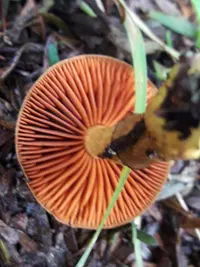
Like many members of its genus, it produces a rusty to cinnamon-brown spore print, and this spore color is an important trait used by field mycologists to separate it from superficially similar genera.
This fungus is considered poisonous and should never be eaten. Several Cortinarius species contain dangerous toxins that can cause severe, delayed kidney damage. Identification is difficult, so for safety, avoid consuming any look-alike brown webcap mushrooms.
Keep your plants happy and healthy with plant identification, disease detection, and easy care guidance.