Fluted bird's nest Care (Cyathus striatus)

Also known as: fluted bird's nest fungus
Fluted bird's nest

About Fluted bird's nest

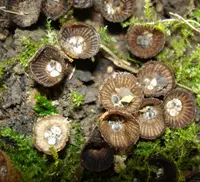
Fluted bird's nest (Cyathus striatus) is a small, cup-shaped fungus often found on decaying wood, mulch, or plant debris. It is not a leafy plant but a saprophytic fungus that feeds on dead organic matter.

The tiny fluted cups hold firm, gray to brown “eggs,” which are spore-filled structures. These fruiting bodies appear in clusters and are most common in damp, shaded outdoor areas.

Cyathus striatus occurs widely in temperate regions and often appears naturally in gardens and woodland edges. It is generally left to grow on its own, so most people do not need to actively care for Fluted bird's nest.

Main Plant Requirements

Care Difficulty

Moderate Care

Light Preference

Partial Shade

Water Requirements

Keep Soil Moist

Temperature Preference

Cool Climate

Hardiness Zone

Unknown

Soil Texture

Loamy, Silty, Organic-rich

Soil pH

Acidic (5.5–6.5), Slightly acidic (6.5–7.0)

Soil Drainage

Moist but well-drained

Fertilization

Minimal (feed rarely)

Get Personalized Care Plan

Scan your plant to receive care tips personalized for your specific plant

Available on iOS and Android

How to Care for the Fluted bird's nest

Cyathus striatus grows best in shaded forest-like conditions with indirect light.

  • Provide dappled or filtered light, similar to light under shrubs or trees, avoiding direct sun for more than 1–2 hours, especially at midday.
  • Allow gentle morning sun if present, but prioritize bright shade or north/east exposure; strong afternoon sun can dry the substrate and damage fruiting bodies of the Fluted bird's nest.
  • In summer, increase shade and maintain moisture; in cooler seasons, ensure at least 4–6 hours of bright indirect light to sustain steady development.

Cyathus striatus prefers consistently moist, but not waterlogged, organic substrate.

  • Keep the substrate evenly damp, allowing only the top 1–2 cm to begin drying before adding water, mimicking naturally moist leaf litter or decaying wood.
  • Increase watering or misting frequency during warm, dry periods, watching for curling or shriveling fruiting bodies as a sign of insufficient moisture.
  • Improve drainage so excess water can drain away; persistent soggy conditions, sour odor, or moldy patches indicate overwatering and poor aeration.

This species performs best in cool to mild conditions without temperature extremes.

  • Aim for an active growth range of 55–72°F (13–22°C), similar to a shaded woodland floor with stable, moderate temperatures.
  • Avoid frost; tissue damage occurs near 32°F (0°C), and prolonged exposure below 40°F (4°C) can slow or stop development.
  • Tolerates short warm spells up to about 80–82°F (27–28°C) if humidity and moisture stay high, but extended heat and drying winds reduce fruiting and may cause desiccation.

This small fungus prefers consistently moist, humid air rather than dry indoor conditions.

  • Aim for 60–80% humidity in shaded, sheltered outdoor spots or naturally damp microclimates.
  • It tolerates brief drops to 40–50% humidity but dries out and stops fruiting in prolonged arid air.
  • Watch for pale, shriveled cups or cracking substrates as signs of low humidity stress in Fluted bird's nest.
  • Increase humidity by keeping it near decomposing organic mulch and maintaining evenly moist, not waterlogged, substrate.

This saprophytic fungus needs consistently moist, loose organic material rather than traditional mineral garden soil.

  • Provide a substrate of finely shredded wood mulch, rotting twigs, and leaf litter, which mimics Cyathus striatus natural woodland habitat.
  • Ensure the layer drains freely but stays evenly damp by mixing coarse bark or wood chips to prevent compaction.
  • A slightly acidic to neutral reaction around pH 5.5–7.0 supports decomposition and fruiting body formation.
  • Avoid heavy clay, sterile potting mix alone, or sites that dry out quickly, as these restrict colonization and cup development.

This species can be grown in shallow containers that replicate a damp, decomposing woodland floor.

  • Use a broad, low container so the decomposing mulch layer stays thin and evenly moist across the surface.
  • Choose a potting tray with side drainage holes to let excess water escape while keeping the organic substrate continuously damp.
  • Select a heavier container material to prevent tipping, since surface colonization can spread unevenly across one side.

Cyathus striatus, often called fluted bird's nest, gains little from fertilization and usually thrives on naturally rich, undisturbed organic substrates.

Cyathus striatus does not benefit from shaping cuts, but a little hygiene pruning can support healthy fruiting in cultivation beds or containers.

  • Carry out light cleanup at the end of the main fruiting period, removing obviously decayed or mold-covered fruiting bodies.
  • Lift and discard any damaged or collapsed clusters to reduce unwanted fungal competition on the substrate surface.
  • Use simple tools like gloved hands or tweezers; avoid disturbing the underlying wood or organic matter layer.
  • Keep surrounding leaf litter loose rather than compacted so new fruiting bodies have space to emerge.

In gardens or culture trays, Cyathus striatus is managed by renewing or shifting substrate rather than true repotting.

  • Transplant or reset culture when growth declines, fruiting bodies shrink, or the woody substrate is heavily decomposed.
  • Time any move for mild, moist conditions in spring or early fall to limit desiccation stress on the mycelium.
  • Typically refresh or relocate substrate every 1–2 years, depending on how quickly the woody material breaks down.
  • Lift substrate gently as a block, keep it evenly moist, and avoid shaking or breaking it to protect fine fungal threads.

Cyathus striatus is usually propagated by spores or by transferring colonized substrate rather than by vegetative cuttings or division in the plant sense.

  • Allow mature fruiting bodies to release spores naturally over nearby suitable woody debris to spread the colony.
  • For controlled culture, move small pieces of clearly colonized wood or mulch onto fresh, similar substrate in a shaded, moist site.
  • Aim for cool to mild temperatures and consistently damp, not waterlogged, conditions to help new areas colonize.
  • Minimize disturbance once placed; stable humidity and limited direct sun support gradual overgrowth of the new material.

Cyathus striatus is quite cold hardy and usually needs no special winter care in temperate climates.

  • In colder regions, a light mulch of leaves or wood chips helps buffer freeze–thaw cycles around the colonized substrate.
  • Avoid disturbing the site during winter so the underlying mycelium remains insulated and undamaged.
  • Container cultures can be overwintered in a cold, sheltered, frost-prone but shaded area that stays slightly moist.

Care Tips

Use Sterile Substrate

Grow cultures on sterilized hardwood sawdust or well-boiled wood chips in ventilated containers to reduce contamination from competing fungi and bacteria.

Wood Chip Refresh

Every 3–6 months, top up the culture with a thin layer of fresh, pre-soaked hardwood chips to provide new lignin-rich material that sustains fruiting over a longer period.

Moisture Microclimate

Create a humid microclimate by placing culture containers inside a larger clear box with a few small air holes and a shallow tray of water, keeping humidity high without directly soaking the fruiting bodies.

Targeted Misting Practice

If misting is needed, direct fine mist to the surrounding substrate rather than onto the cups themselves, which helps preserve the delicate peridioles and prevents physical damage.

Controlled Spore Spread

To maintain a clean culture, limit open-air exposure of mature cups and gently cover containers with fine mesh or perforated lids so that spores stay mostly within the intended growing area.

Common Pests and Diseases

Saprophagous mites

These pests feed on fungal tissue and spores, sometimes grazing the fruiting bodies and reducing spore production. Symptoms include pitted, deformed, or prematurely collapsing cups.

Solution

Limit excessive handling and avoid moving infested woody substrate between culture containers. If populations build up in indoor culture, physically remove heavily infested material and refresh with clean, pasteurized substrate; maintain moderate air movement and avoid overly damp, stagnant conditions that favor mite buildup as part of Cyathus striatus care.

Fungus gnat larvae

These insects develop in very moist, organic substrates and can disrupt developing fruiting bodies by burrowing through the tissue. Symptoms include distorted or aborted cups and the presence of small black adult gnats around the culture.

Solution

Allow the top layer of substrate to dry slightly between heavy misting, use well-drained media, and improve airflow to reduce excess moisture. Yellow sticky traps help reduce adult numbers; remove and replace heavily infested substrate layers to interrupt the larval stage.

Green mold (Trichoderma)

This disease appears as fast-spreading green patches on the substrate or over the bird’s nest cups, often outcompeting the fungus and halting normal development. Symptoms include stalled or misshapen fruiting bodies covered by green powdery spores.

Solution

Promptly cut out or discard infected substrate sections and avoid spraying water directly onto obvious mold patches. Improve hygiene by sterilizing or pasteurizing new substrate, using clean tools and containers, and maintaining good ventilation so surfaces dry between misting.

Bacterial soft rot

This disease causes localized water-soaked, slimy patches on fruiting bodies that quickly collapse and decay, often with an unpleasant odor. Symptoms include mushy cups that lose shape and disintegrate rather than drying naturally.

Solution

Remove and discard affected fruiting bodies and any adjacent overly wet substrate, then slightly reduce watering or misting intensity. Ensure good air exchange and avoid standing water on or around the fruiting bodies to limit bacterial spread.

Competing saprophytic fungi

This issue involves colonization of the same woody substrate by faster-growing fungi, which may fully cover or suppress bird’s nest fruiting. Symptoms include other mushroom or mold growth dominating the surface where bird’s nest cups were expected to appear.

Solution

Start with clean, relatively uniform woody substrate and, where possible, pre-pasteurize or sterilize it before inoculation. If strong competitors appear, remove heavily colonized pieces, refresh with new substrate, and adjust moisture to slightly drier, stable conditions that favor the target species over aggressive molds.

Interesting Facts

Birds-nest splash cups

The fruiting bodies form small, fluted cups that look like miniature bird nests, each holding tiny, hard “eggs” called peridioles that contain the spores.

Raindrop-powered dispersal

Peridioles are ejected by the impact of raindrops, which splash them out of the cup so they can stick to nearby surfaces and spread the fungus.

Wood-decaying specialist

This species is a saprotroph on dead wood, meaning it feeds on and decomposes woody debris, helping to recycle nutrients in forest ecosystems.

Botan icon

Did you know?

The inner surface of the cups is distinctly grooved and shiny, which helps direct the force of raindrops to catapult the peridioles more efficiently, a precise mechanical adaptation rarely seen in other fungi.

FAQs about Fluted bird's nest

This fungus spreads locally where there is consistently damp, decaying plant material, but it is not considered aggressive. Fruiting bodies stay small and patchy, and it does not usually overrun garden beds or forest floors.

Grow Healthy Plants with Botan Care

Keep your plants happy and healthy with plant identification, disease detection, and easy care guidance.

Botan plant care app — identify plants on mobile

Explore More Plants