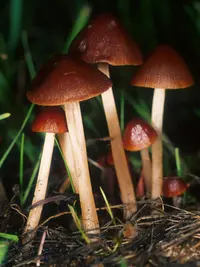
blunt webcap Care (Cortinarius obtusus)

blunt webcap

About blunt webcap

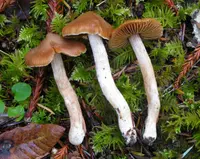
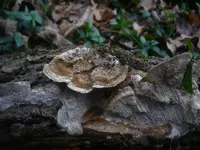
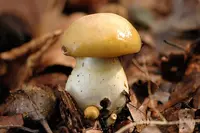
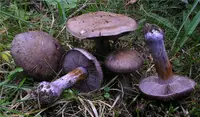
Blunt webcap, Cortinarius obtusus, is a small woodland mushroom rather than a leafy houseplant. It forms rounded to slightly flattened caps with dull brown to ochre tones and a somewhat stout stem. The gills are covered by a fine web-like veil when young, a typical trait of the genus.

This species usually appears on soil in coniferous or mixed forests in temperate regions, often in mossy or humus-rich areas. It can be difficult to identify accurately and should not be collected for consumption. Due to its specific mycorrhizal relationship with trees, it is not a practical species to cultivate or care for blunt webcap in typical home or garden conditions.


Main Plant Requirements

Care Difficulty

Hard Care

Light Preference

Shade

Water Requirements

Keep Soil Moist

Temperature Preference

Cool Climate

Hardiness Zone

Unknown

Soil Texture

Loamy, Peaty, Organic-rich

Soil pH

Strongly acidic (4.5–5.5), Acidic (5.5–6.5)

Soil Drainage

Moist but well-drained

Fertilization

Minimal (feed rarely)

Get Personalized Care Plan

Scan your plant to receive care tips personalized for your specific plant

Available on iOS and Android

How to Care for the blunt webcap

This woodland fungus prefers low to moderate light that mimics a shaded forest floor.

  • Provide full shade to dappled light, such as beneath deciduous trees, avoiding direct midday or afternoon sun that can dry the substrate.
  • Aim for 1–3 hours of weak morning sun at most, or bright but filtered light through leaf litter or understory vegetation.
  • In summer, increase shade cover if caps appear pale or cracked; in late autumn, slightly more open light is acceptable for blunt webcap in cool, moist conditions.

Moist, well-drained, humus-rich soil is critical for reliable fruiting of this mycorrhizal fungus.

  • Maintain consistently moist conditions in the upper 5–10 cm of soil, never waterlogged; organic leaf litter helps buffer moisture and prevents rapid drying.
  • Use visual and tactile checks: if soil and litter feel dry and crumbly at 3–5 cm depth, supply gentle irrigation or rely on rainfall to re-moisten.
  • Reduce supplemental watering in cool, wet seasons; signs of excess moisture include sour odor and standing water, while slow or absent fruiting suggests chronic dryness for Cortinarius obtusus.

This species fruits best in cool to mild conditions typical of temperate forests.

  • Optimal fruiting occurs around 50–65°F (10–18°C), often in autumn when soil is cool, moist, and shaded by a tree canopy.
  • It tolerates brief drops to about 32°F (0°C), but hard freezes below 28°F (-2°C) can damage developing fruiting bodies and halt growth.
  • Sustained heat above 75°F (24°C), especially with dry air, reduces activity; rely on thick mulch and shade to keep the rooting zone cooler in warm spells.

This ectomycorrhizal mushroom requires consistently moist, cool, forest-floor air but does not need artificially high humidity for cultivation attempts.

  • Aim for 60–80% humidity by maintaining a damp leaf-litter layer and avoiding exposed, windy sites that dry the substrate.
  • If caps crack, edges dry rapidly, or pins abort before opening, humidity is likely too low around the fruiting zone.
  • Increase localized humidity by using a deep mulch of leaf litter over the inoculated soil and light, occasional misting of the surrounding air, not the caps.

This fungus fruits best in cool, undisturbed forest soil rather than constructed mixes.

  • Prioritize a loose, organic-rich, loamy top layer with plenty of fine roots from compatible host trees, since Cortinarius obtusus forms ectomycorrhiza on living roots.
  • Ensure the profile drains freely but never dries completely; a crumbly, moisture-retentive humus layer over mineral soil provides stable conditions.
  • Target slightly acidic soil, around pH 4.5–6.0, avoiding limed or strongly alkaline ground that disrupts its natural fungal community.
  • To improve structure, incorporate well-rotted leaf mold and fine wood debris into the top 5–10 cm, avoiding dense clay or compacted, heavily fertilized garden beds.

This forest mushroom is not suitable for container growing because it depends on ectomycorrhizal association with tree roots in complex soil ecosystems.

Cortinarius obtusus is a wild ectomycorrhizal fungus that does not benefit from targeted fertilization in garden or container settings.

Pruning is not applicable to Cortinarius obtusus, as it is a wild mushroom forming seasonal fruiting bodies rather than a woody or leafy plant.

This ectomycorrhizal fungus is not suited to typical repotting or transplanting and is best left in its natural woodland habitat.

  • Transplanting usually fails because the fungus relies on fine root connections with its host trees, which are easily disrupted.
  • Moving soil around fruiting bodies breaks the hidden mycelium network, reducing future mushroom production.
  • Cultivation attempts in pots or garden beds rarely succeed and can disturb local ecosystems.
  • The most sustainable approach is to conserve existing host trees and undisturbed leaf litter where the fungus already occurs.

Propagation of Cortinarius obtusus is highly specialized and not recommended for home growers, as it depends on complex mycorrhizal relationships with trees.

No specific winter care is practical or necessary for this hardy woodland fungus, which overwinters naturally as mycelium in the soil.

Care Tips

Spore-friendly substrate

Use a well-rotted hardwood chip and forest duff mix collected from healthy, pesticide-free broadleaf woodland to mimic natural ectomycorrhizal partners and improve the chance of establishing a stable fungal network when growing blunt webcap.

Minimal disturbance zone

After inoculation, mark and avoid walking on or raking the colonized area so the fine fungal mycelium is not compacted or torn, which can delay or prevent fruiting for several years.

Host tree selection

Introduce or maintain suitable host trees such as birch or other compatible broadleaf species near the inoculated plot, since this fungus relies on forming ectomycorrhizae with living roots rather than growing in isolated substrate.

Leaf litter management

Maintain a thin, continuous layer of natural leaf litter over the inoculated area to conserve moisture and provide organic matter, but avoid deep piles that could become anaerobic and inhibit mycelial growth.

Low-impact monitoring

Check progress by gently lifting a very small section of surface material at the edge of the plot to look for white to pale mycelial threads, then replace the material carefully instead of digging through the main inoculated zone.

Common Pests and Diseases

fungal mycelial competitors

This disease involves faster-growing soil fungi overrunning the blunt webcap mycelium, leading to patchy, weak, or aborted mushrooms. Symptoms include thin, discolored mycelium and failure of caps to develop fully.

Solution

Remove and discard heavily overrun substrate, then re-establish culture in fresh, pasteurized forest-type substrate collected away from agricultural or heavily trafficked areas. Maintain stable moisture and avoid overwatering, and keep the site undisturbed so the mycorrhizal association with host trees can re-form and outcompete aggressive saprophytic fungi.

parasitic mold infection

This disease appears as dense, often white or gray fuzzy growth covering developing mushrooms and gills, which may become misshapen or collapse. Symptoms include a cottony coating and a sour or musty odor around fruiting bodies.

Solution

Carefully remove and destroy affected mushrooms and any adjacent contaminated organic material, avoiding dispersal of spores. Improve air movement at ground level, avoid adding rich manures or kitchen compost nearby, and, if cultivating in a controlled bed, reduce humidity peaks and clean tools and containers with a mild bleach solution before reuse.

fungus gnat larvae

These insects lay eggs in moist organic matter, and the larvae tunnel through developing stems and caps, leaving soft, water-soaked areas and small exit holes. This pest can cause caps to collapse early and decay rapidly.

Solution

Remove and discard heavily infested mushrooms and reduce standing moisture on the soil surface by allowing the top layer to dry slightly between natural rains or light watering. In semi-managed beds, cover young fruiting zones with fine insect mesh during peak gnat season and use yellow sticky traps nearby to lower adult populations without disturbing the forest floor excessively.

Interesting Facts

Distinct blunt cap

This species is named for its characteristically blunt, often slightly depressed cap, which differentiates it from many Cortinarius species that have more sharply convex caps.

Mycorrhizal forest partner

It forms ectomycorrhizal associations with trees, particularly in temperate woodlands, where its underground fungal threads help roots access water and nutrients in exchange for sugars.

Rusty-brown spore print

The species produces a distinctly rusty to ochre-brown spore print, a key field character that helps separate it from similarly colored but unrelated gilled mushrooms.

FAQs about blunt webcap

This species is considered poisonous and must not be eaten. It can cause serious gastrointestinal symptoms and potentially more severe damage. Children and pets should be kept from handling or ingesting any part, including caps, stems, and spores.

Grow Healthy Plants with Botan Care

Keep your plants happy and healthy with plant identification, disease detection, and easy care guidance.

Botan plant care app — identify plants on mobile

Explore More Plants