Spore print monitoring
Regularly take spore prints from several caps on white and dark paper to confirm correct identification and avoid confusing this species with toxic lookalikes before any handling or experimental use.

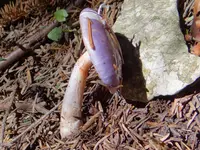
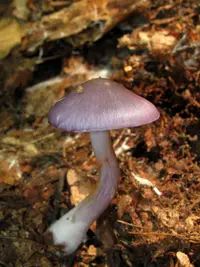
Cortinarius salor is a small to medium-sized mushroom-forming fungus, not a traditional houseplant. It produces lilac to violet caps and stems that fade with age. The fruiting bodies usually appear in mossy, coniferous or mixed forests, often in cool, moist climates of northern and central Europe. As a mycorrhizal fungus, it lives in close association with tree roots, which makes it unsuitable for typical pot culture. It is not a good candidate if someone wants to care for Cortinarius salor like a standard ornamental plant, since it depends on complex soil and forest conditions that are difficult to reproduce indoors or in gardens.

Care Difficulty
Moderate Care

Light Preference
Partial Shade

Water Requirements
Moderate Water

Temperature Preference
Cool Climate

Hardiness Zone
Unknown

Soil Texture
Loamy, Sandy, Organic-rich

Soil pH
Acidic (5.5–6.5)

Soil Drainage
Moist but well-drained

Fertilization
Minimal (feed rarely)
Scan your plant to receive care tips personalized for your specific plant
Available on iOS and Android
This mycorrhizal fungus prefers dappled forest light rather than direct open sun.
This woodland fungus depends on consistently moist, not saturated, soil around its tree partners.
This species favors cool to mild woodland temperatures and does poorly in hard freezes or intense heat.
This mycorrhizal mushroom is not usually managed by adjusting air humidity in cultivation.
Cortinarius salor is an ectomycorrhizal fungus that fruits only when partnered with suitable host tree roots in undisturbed ground.
This species is not suitable for container growing, as it depends on complex woodland root systems and soil ecology that cannot be replicated in pots.
This wild ectomycorrhizal fungus does not benefit from routine fertilization in cultivation or habitat support.
Pruning is not applicable to Cortinarius salor, as it is a wild mushroom rather than a plant with stems or branches to shape.
Transplanting this ectomycorrhizal fungus is not practical, since it depends on living host tree roots and specific soil fungi networks.
Propagation of this wild mycorrhizal mushroom is highly specialized and rarely attempted outside research settings.
No active winter care is used for this woodland fungus, which follows natural seasonal cycles with its tree hosts.

Plant Health Check
Not sure what's wrong with your plant? Check your plant's health inside the app.
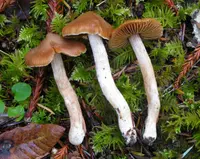
The fruiting bodies show striking violet to lilac tones on the cap, gills, and stem when young, which tend to fade toward brownish or ochre shades as the mushroom ages. This color change is a helpful field character but can make older specimens harder to recognize.
This species forms ectomycorrhizal partnerships with conifers, especially spruce, exchanging mineral nutrients from the soil for sugars from the tree. It is typically found in moist, mossy coniferous forests on acidic soils in temperate to boreal regions of Europe.
Like other members of its genus, it produces a rusty brown spore print that contrasts with the initially pale to lilac gills. The dense cobweb-like cortina on young fruiting bodies often becomes coated with these spores, leaving rusty bands on the stem.
This mushroom is not considered edible and should be treated as potentially poisonous. Many Cortinarius species contain dangerous toxins that damage kidneys. Do not taste, cook, or experiment with using it as food under any circumstances.
Keep your plants happy and healthy with plant identification, disease detection, and easy care guidance.