Cortinarius saturninus Care

Cortinarius saturninus

About Cortinarius saturninus

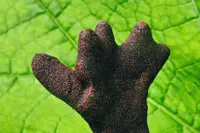
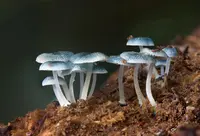
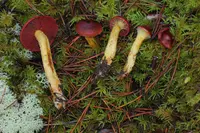
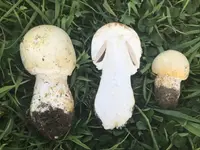
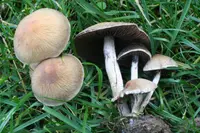
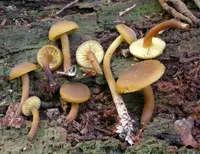
Cortinarius saturninus is a woodland mushroom, not a houseplant, belonging to a large and varied genus of gilled fungi. It forms slim, often clustered fruiting bodies with brownish to violet tones and a cobweb-like veil on young caps.

This species typically appears in temperate forests, often near deciduous trees in nutrient-rich, moist soils. It is not suited to casual cultivation, since many Cortinarius species form complex symbiotic relationships with tree roots and are difficult to grow reliably.

Because of these strict ecological needs, attempts to care for Cortinarius saturninus at home are rarely successful, and this fungus is best appreciated in its natural habitat.

Main Plant Requirements

Care Difficulty

Hard Care

Light Preference

Partial Shade

Water Requirements

Keep Soil Moist

Temperature Preference

Cool Climate

Hardiness Zone

Unknown

Soil Texture

Loamy, Silty, Organic-rich

Soil pH

Acidic (5.5–6.5)

Soil Drainage

Moist but well-drained

Fertilization

Minimal (feed rarely)

Get Personalized Care Plan

Scan your plant to receive care tips personalized for your specific plant

Available on iOS and Android

How to Care for the Cortinarius saturninus

This woodland fungus relies on dappled forest light rather than direct sun exposure.

  • Provide bright shade or light dappled sun under trees, with 1–3 hours of weak morning sun and no harsh afternoon sun to protect the delicate fruiting bodies.
  • Choose a site with a closed or semi-closed canopy where leaf cover filters light, mimicking natural mixed or deciduous woodland conditions.
  • Avoid full, open sun, which dries the substrate quickly and shortens fruiting; deep, continuous shade can reduce fruiting frequency and size.

Moist but not waterlogged soil is critical for this mycorrhizal fungus in its woodland habitat.

  • Aim for evenly moist soil, allowing the top 2–3 cm to start drying between significant rain or irrigation while never letting the soil become powder dry.
  • Ensure free-draining, humus-rich soil so excess water can move away; standing water or compacted clay increases rot risk in associated tree roots and fungal mycelium.
  • In dry, warm periods, supplement rainfall with gentle soaking, watching for shrinking caps and dry, cracked soil as signs of drought stress and slimy, collapsing caps as signs of excess moisture.

This species fruits best in cool to mild conditions typical of autumn woodlands.

  • Optimal fruiting generally occurs around 50–65°F (10–18°C), often in late summer to autumn when soil stays cool and evenly moist.
  • The underground mycelium tolerates cooler periods down to around 25–30°F (-4– -1°C), but hard freezes can damage or delay visible fruiting bodies.
  • Sustained heat above 77°F (25°C) with dry soil reduces or halts fruiting, so shaded, humid woodland sites buffer against temperature extremes and rapid drying.

Humidity is not a controllable or relevant factor for Cortinarius saturninus in typical cultivation contexts.

Cortinarius saturninus is an ectomycorrhizal woodland fungus, so soil conditions matter mainly for associated trees rather than for direct cultivation.

  • In nature it associates with moist, well-aerated, organic-rich forest soils that are often loamy with significant leaf litter and decaying wood.
  • These fungi typically occur in soils that drain freely yet retain consistent moisture, avoiding prolonged saturation or compacted, waterlogged zones.
  • Associated tree roots usually occupy slightly acidic to neutral soil, roughly pH 5.0–7.0, with a deep humus layer supporting fungal growth.
  • To mimic its habitat, maintain a loose, crumbly structure by adding leaf mold or compost to mineral soil, avoiding heavy clay and dense turf.

This species is not suited to container growing, because it depends on complex ectomycorrhizal relationships with tree roots in undisturbed soil.

This woodland ectomycorrhizal fungus is not suited to container culture, and fertilizing is neither necessary nor recommended for Cortinarius saturninus.

Pruning is not applicable, as Cortinarius saturninus is a wild ectomycorrhizal mushroom rather than a managed garden plant.

Transplanting this ectomycorrhizal fungus is not practical, since it depends on a stable association with host tree roots in undisturbed soil.

  • Avoid attempting to lift or move fruiting bodies; they are only the reproductive structures, while the main organism remains in the soil.
  • Do not disturb surrounding tree roots or soil layers, which can disrupt the fungus mycelium and its nutrient exchange.
  • If woodland needs restoration, focus on planting suitable native host trees and allowing natural fungal colonization over time.
  • Maintain leaf litter and low soil disturbance so established mycelial networks remain intact instead of trying to shift them.

Deliberate propagation of Cortinarius saturninus is rarely attempted because it relies on complex mycorrhizal relationships with specific trees.

No active winter care is required, as this wild mycorrhizal fungus survives cold periods naturally in the soil as mycelium.

Care Tips

Use breathable containers

When cultivating this species, use shallow, rigid plastic or polypropylene trays with small side holes so the substrate can gas-exchange without drying too fast or becoming anaerobic.

Prioritize clean handling

Disinfect tools, trays, and work surfaces with 70% isopropyl alcohol before preparing substrate or inoculating, since this fungus is easily outcompeted by green molds and bacteria in contaminated setups.

Control airflow patterns

Provide gentle, indirect airflow over but not directly onto the trays to avoid drying caps and to reduce the risk of bacterial blotch and fuzzy stem overgrowth caused by stagnant, humid air touching the fruiting bodies.

Monitor cap color

Regularly inspect cap color and texture, discarding any trays where mushrooms show unusual spots, odors, or rapid color shifts, as this can indicate contamination or misidentification, both of which are safety concerns when growing Cortinarius saturninus.

Stage harvest timing

Harvest fruiting bodies just before the caps fully flatten and while gills are still moderately covered by the veil remnants, which helps limit spore release and allows more energy to be directed to subsequent flushes rather than excessive sporulation.

Common Pests and Diseases

Mycophagous springtails

These insects feed on developing fungal tissue and can graze gills and caps of fruiting bodies. Symptoms include pitted, scarred, or deformed caps and a noticeable reduction in spore production.

Solution

Collect and remove heavily damaged fruiting bodies and reduce excessive surface moisture where possible, since saturated, organic-rich substrates favor large springtail populations. In outdoor or woodland settings, disturbance of the immediate fruiting area and removal of dense litter can lower numbers; for controlled culture, use fine mesh barriers around beds and keep irrigation light but regular to discourage population spikes without drying out the mycelium.

Fungivorous mites

This pest group includes small arthropods that feed directly on fungal hyphae and young fruiting bodies, causing slow or distorted mushroom development. Symptoms include rough, abraded stipe surfaces and caps that fail to expand normally.

Solution

Inspect fruiting areas closely and, if possible, move collection or cultivation away from heavily infested, long‑undisturbed litter patches. In semi-managed or research plots, gently remove and discard infested surface debris, improve air movement at the forest floor by thinning dense litter, and, where regulations allow, introduce predatory mites that specifically target fungivorous species while sparing the fungal colony as much as possible.

Parasitic Hypomyces infection

This disease is caused by parasitic ascomycete fungi (for example Hypomyces species) that overgrow mushroom caps and gills with a dense, often discolored crust. Symptoms include distorted, color‑altered fruiting bodies with gills that become covered, nonfunctional, and powdery or felted.

Solution

Promptly remove and discard any parasitized mushrooms, including nearby litter that is heavily colonized, to limit local spore buildup. Avoid disturbing infected specimens in place, since breaking them apart can disperse more spores; instead, collect them carefully into a bag and remove them from the site, and in small study or demonstration plots, skip harvesting from patches that show repeated Hypomyces activity until a new flush appears in a different micro‑site.

Bacterial blotch

This disease is caused by opportunistic bacteria that colonize moist cap surfaces and damaged tissues, leading to water‑soaked, greasy, or darkly discolored patches. Symptoms include localized collapse or slimy areas on caps and upper stipes, especially after prolonged wet conditions.

Solution

Reduce leaf litter compaction and improve natural air movement around fruiting sites so surfaces dry between rain or irrigation events. Avoid handling or compressing wet mushrooms, and in controlled or experimental cultivation beds, adjust watering to short, infrequent pulses and use clean water to limit bacterial spread, removing visibly affected fruiting bodies promptly.

Interesting Facts

Variable cap coloration

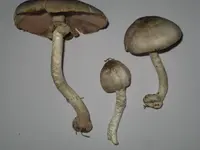
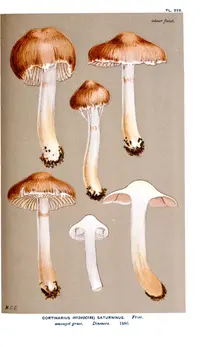
The cap of this species typically appears brownish but can show subtle violet or gray tones when young, gradually becoming more uniformly brown as the spores mature. This color shift is linked to pigment changes and the dense cinnamon-brown spore deposit that develops on the gills.

Urban-adapted mycorrhizal fungus

This species forms ectomycorrhizal associations with willow and other broadleaved trees, exchanging mineral nutrients for tree-produced sugars in the root zone. It is frequently recorded in disturbed and urban habitats such as roadside plantings and city parks, showing an unusual tolerance of human-modified environments for a mycorrhizal mushroom.

Distinctive cortina remnants

Young fruitbodies show a fine, cobweb-like partial veil known as a cortina stretching between cap and stem. As the mushroom matures, this delicate tissue breaks, often leaving faint fibrous bands or zones of spore-covered threads on the upper stem that help separate it from some similar brown Cortinarius species.

FAQs about Cortinarius saturninus

This species is considered poisonous and must not be eaten. It belongs to a genus containing many seriously toxic mushrooms that can damage kidneys. Identification is difficult, so for safety it should always be treated as inedible.

Grow Healthy Plants with Botan Care

Keep your plants happy and healthy with plant identification, disease detection, and easy care guidance.

Botan plant care app — identify plants on mobile

Explore More Plants