Cortinarius seidliae Care

Cortinarius seidliae

About Cortinarius seidliae

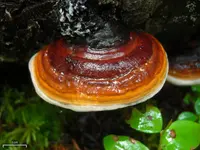
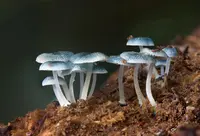
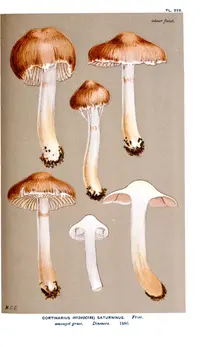
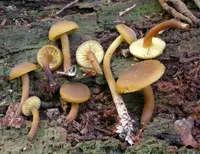
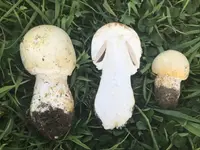
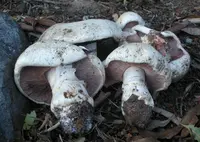
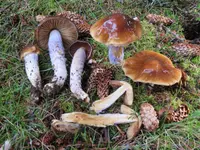
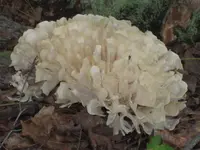
Cortinarius seidliae is not a plant but a woodland mushroom belonging to the large genus Cortinarius. It forms fruiting bodies on the forest floor rather than leaves and stems. The caps are typically brownish to rust colored, with a web-like veil on young specimens and rusty spores on the gills. It usually appears in coniferous or mixed forests, often in cool, temperate regions. This species forms mycorrhiza, a symbiotic relationship with tree roots, so it cannot be cultivated like regular houseplants or garden plants. For this reason, information on how to care for Cortinarius seidliae in a home or yard setting is very limited and largely impractical.

Main Plant Requirements

Care Difficulty

Hard Care

Light Preference

Partial Shade

Water Requirements

Keep Soil Moist

Temperature Preference

Cool Climate

Hardiness Zone

Unknown

Soil Texture

Loamy, Peaty, Organic-rich

Soil pH

Acidic (5.5–6.5)

Soil Drainage

Moist but well-drained

Fertilization

Minimal (feed rarely)

Get Personalized Care Plan

Scan your plant to receive care tips personalized for your specific plant

Available on iOS and Android

How to Care for the Cortinarius seidliae

This woodland fungus prefers cool, shaded forest conditions rather than direct open sun.

  • Site Cortinarius seidliae under a closed or mostly closed tree canopy where it receives dappled light or deep shade for most of the day.
  • Allow brief morning sun of up to 1–2 hours if filtered through foliage, but avoid strong midday or afternoon sun that can dry leaf litter and mycelium.
  • In summer, increased canopy cover and leaf-out naturally reduce light; avoid clearing overhead branches that would suddenly expose the forest floor.

This mycorrhizal fungus depends on consistently moist, not saturated, forest soil conditions.

  • Aim for soil that stays evenly moist in the top 5–8 cm, with organic leaf litter helping retain water while still draining freely.
  • Use visual cues: leaves and litter should feel damp but not soggy; standing water or sour, anaerobic smell indicates overwatering or poor drainage if irrigation is used.
  • During dry spells, occasional gentle soaking that mimics rainfall supports the host trees and fungal network, while rapid cycles of flooding and drying can stress the system.

This species favors cool to mild forest temperatures and is sensitive to prolonged heat or hard frost exposure.

  • Optimal activity is typically in ranges around 50–65°F (10–18°C), often during spring or autumn fruiting periods in temperate woods.
  • It tolerates cooler nights down to about 32°F (0°C), but repeated hard freezes below this can damage developing fruiting bodies at the soil surface.
  • Sustained heat above roughly 77–82°F (25–28°C) dries surface litter and can suppress fruiting; deep organic mulch and shade help buffer temperature swings.

Humidity is not a meaningful care factor for Cortinarius seidliae, which is a wild mycorrhizal fungus rather than a cultivated houseplant.

Cortinarius seidliae is not realistically cultivated, but its natural soil conditions can guide any experimental habitat setups.

  • Provide a loose, humus-rich forest substrate with abundant leaf litter, decayed wood, and fine roots rather than standard potting mixes.
  • Maintain consistently moist but never waterlogged conditions, using a coarse mineral fraction such as sand or fine gravel to improve drainage and aeration.
  • Target a slightly acidic to acidic pH around 4.5–6.0, avoiding liming materials that push the substrate toward neutral or alkaline conditions.
  • Avoid compacted, heavily fertilized, or sterilized soils, which disrupt the mycorrhizal associations this fungus relies on for growth.

This species is not suitable for conventional container growing, as it depends on complex mycorrhizal relationships with tree roots in natural forest soil.

This wild ectomycorrhizal fungus relies on its tree partners and natural soil nutrients, so direct fertilization is neither necessary nor recommended for Cortinarius seidliae.

Pruning is not applicable for Cortinarius seidliae, as it is a wild mushroom forming seasonal fruiting bodies rather than a woody or leafy ornamental plant.

This species is not suited to typical container culture, so handling focuses on avoiding disturbance of its woodland habitat rather than active transplanting.

  • Avoid digging or moving soil around established host trees, since disturbing the fine mycorrhizal network can reduce future fruiting.
  • Do not attempt routine transplanting, as the fungus depends on a stable association with specific tree roots and soil microorganisms.
  • If habitat must be altered, leave undisturbed buffer zones around host trees so remaining mycelium can persist and recover.

Deliberate propagation of this ectomycorrhizal fungus is technically complex and rarely attempted outside research settings.

No active winter care is needed, as the underground mycelium is naturally adapted to local seasonal cold in its native woodland range.

Care Tips

Host tree selection

Establish this mycorrhizal fungus only near suitable host trees such as birch, spruce, or pine, and avoid planting it in isolated beds or lawns without these partners since it relies on their roots to complete its life cycle.

Minimal soil disturbance

Mark the colonized area and avoid digging, tilling, or compacting the soil there so the fine fungal mycelium and its connection to host tree roots stay intact and productive year after year.

Leaf litter management

Let a light layer of natural leaf litter remain around host trees to buffer moisture and protect mycelium, removing only thick, matted layers that may create anaerobic, poorly aerated conditions.

Targeted moisture checks

When rainfall is low, check soil moisture 5–10 cm deep near the dripline of host trees and provide gentle, occasional irrigation there rather than watering the whole area uniformly.

Avoid fungicide drift

Do not use fungicides or fungicidal lawn products within or upwind of the colonized zone, because even low drift levels can suppress or eliminate the mycelial network that supports growing Cortinarius seidliae.

Common Pests and Diseases

Mycophagous springtails

These insects feed on fungal tissue and can graze on caps and gills, leaving pitted or scarred areas on fruiting bodies. Symptoms include small jumping insects in the substrate and surface damage on young mushrooms.

Solution

Reduce excessive surface moisture by improving drainage and ventilation around the fruiting site, then remove heavily damaged fruiting bodies to limit attraction. If needed, use sticky traps around the area and temporarily cover developing mushrooms with fine mesh to physically exclude springtails while maintaining airflow.

Fungivorous mites

These pests consume fungal hyphae and spores, often causing distorted, stunted, or deformed mushroom caps. Symptoms include tiny moving dots on the substrate or stems and a dusty or rough appearance on affected tissues.

Solution

Discard heavily infested substrate and any badly deformed fruiting bodies, then clean nearby surfaces to remove residual mites and eggs. For remaining culture, keep the substrate slightly drier at the surface, increase air movement, and use physical barriers such as fine insect mesh or mite-proof filters on vents to reduce reinfestation.

Parasitic Hypomyces infection

This disease is caused by parasitic fungi such as Hypomyces species that overgrow mushroom fruiting bodies, forming whitish to yellow or orange crust-like growth and eventually destroying the cap and gills. Symptoms include discolored, felted or crusty patches that spread over the mushroom surface and stop normal spore production.

Solution

Promptly remove and discard all infected fruiting bodies and surrounding substrate to reduce spread of spores. Avoid reusing contaminated material, improve air circulation, and in cultivation settings rotate to a fresh, clean substrate and tools that have been thoroughly disinfected with hot water or alcohol.

Bacterial blotch

This disease causes greasy, water-soaked lesions and yellow-brown spots on caps and stems, often associated with standing water on mushroom surfaces. Symptoms include slimy patches and rapid softening and collapse of affected tissues.

Solution

Prevent free water from sitting on fruiting bodies by adjusting irrigation, using finer misting, and increasing airflow to dry surfaces between waterings. Remove and discard blotched mushrooms, sanitize tools and trays, and avoid overhead watering directly onto developing caps to limit bacterial spread.

Interesting Facts

Distinctive purple coloration

The fruiting bodies often show violet to purple hues, especially on the cap and gills when young, a characteristic that helps separate this species from many brown- or rust-colored Cortinarius relatives.

Mycorrhizal forest partner

This species forms ectomycorrhizal associations with trees, meaning its underground hyphae wrap around fine roots and trade mineral nutrients and water for sugars produced by the host tree.

Rusty spore deposit

Like other Cortinarius species, it produces a rusty to ochre spore print, which is an important diagnostic feature in field identification together with its color, size, and ecological setting.

FAQs about Cortinarius seidliae

This species is not considered edible and should be strictly avoided. Many Cortinarius mushrooms contain dangerous toxins that can cause severe, delayed kidney damage. Identification is difficult, so for safety it is treated as poisonous and inedible.

Grow Healthy Plants with Botan Care

Keep your plants happy and healthy with plant identification, disease detection, and easy care guidance.

Botan plant care app — identify plants on mobile

Explore More Plants