


Host tree selection
Establish this mycorrhizal fungus near compatible hosts such as young pine or spruce, as it relies on their roots for nutrition and will not fruit well in isolation.

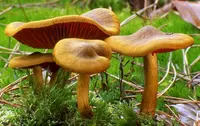
Surprise webcap, Cortinarius semisanguineus, is a small woodland mushroom rather than a traditional houseplant or garden plant. It forms slender, bell-shaped caps in yellow-brown tones, with reddish gills and stem markings that become more visible as it matures.
This species grows naturally in coniferous forests across Europe and parts of North America, usually in mossy, acidic soils under spruce or pine. It forms a mycorrhizal partnership, meaning its fine roots exchange nutrients with nearby trees, so it cannot be grown easily in pots or standard beds.
Because it depends on forest trees and specific soil fungi, it is considered very difficult to cultivate. Guides that explain how to care for Surprise Webcap mainly focus on habitat protection rather than home cultivation.

Care Difficulty
Hard Care

Light Preference
Partial Shade

Water Requirements
Regular Water

Temperature Preference
Cool Climate

Hardiness Zone
Unknown

Soil Texture
Loamy, Sandy, Organic-rich

Soil pH
Strongly acidic (4.5–5.5), Acidic (5.5–6.5)

Soil Drainage
Moist but well-drained

Fertilization
Minimal (feed rarely)
Scan your plant to receive care tips personalized for your specific plant
Available on iOS and Android
This ectomycorrhizal mushroom prefers cool, shaded forest conditions rather than direct open sun.
Cortinarius semisanguineus develops best in consistently moist, not waterlogged, forest-type soil.
This species favors cool to mild conditions typical of autumn woodlands.
This ectomycorrhizal mushroom does not require managed air humidity in cultivation and is unsuitable for typical indoor humidity control.
This fungus forms symbiotic relationships with tree roots and depends on specific natural soil conditions rather than a typical potting substrate.
This species is not realistically suitable for container growing because it requires complex mycorrhizal interactions with tree roots in open soil.
Cortinarius semisanguineus is a wild mycorrhizal fungus that does not benefit from direct fertilization in gardens or containers.
Cortinarius semisanguineus is a wild mushroom and is not managed with pruning in the way ornamental plants are.
This species is a mycorrhizal forest fungus that forms symbiosis with tree roots, so it is not suited to normal repotting or transplanting practices.
Propagation of Cortinarius semisanguineus is not practical for home growers because it relies on specialized mycorrhizal relationships with trees.
This forest-dwelling fungus is naturally cold hardy in its native range and needs no specific winter care from gardeners.

Plant Health Check
Not sure what's wrong with your plant? Check your plant's health inside the app.
The gills of this species start yellowish but become distinctly blood-red as the spores mature, a color contrast that taxonomists use as a key identification character in the field.
Traditional mushroom dyers value this species because its caps and stems can produce stable yellow to olive tones on animal fibers when used with appropriate mordants, contributing to natural textile dyeing.
This fungus forms ectomycorrhizal partnerships with conifers, especially spruce and pine, exchanging mineral nutrients and water from the soil for sugars produced by its tree hosts.

Chemical analyses have shown that this species accumulates arsenic from the soil at relatively high levels, which makes it unsuitable for consumption even in regions where some related webcaps are occasionally eaten.
This mushroom is not considered edible and should be treated as toxic. Identification within the genus Cortinarius is difficult, and several related species are dangerously poisonous. For safety, do not eat it under any circumstances.
Keep your plants happy and healthy with plant identification, disease detection, and easy care guidance.

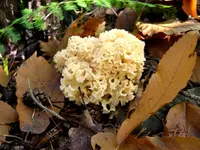
Cauliflower Fungus
Sparassis crispa
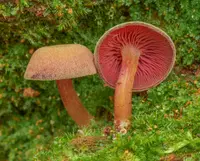
Purple-edged Lute
Callistosporium purpureomarginatum
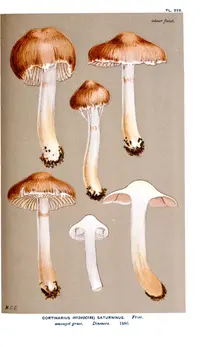
Cortinarius saturninus
Cortinarius saturninus
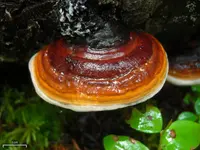
Red-banded polypores
Fomitopsis pinicola
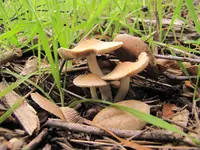
Coprinopsis uliginicola
Coprinopsis uliginicola
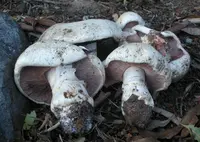
Salt-loving Agaricus
Agaricus bernardi
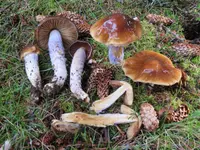
Cortinarius seidliae
Cortinarius seidliae
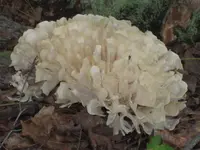
Eastern cauliflower mushroom
Sparassis spathulata