Cortinarius sinapicolor Care

Cortinarius sinapicolor

About Cortinarius sinapicolor

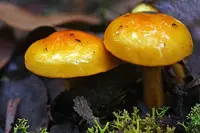
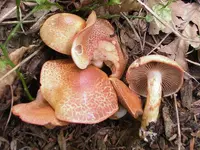
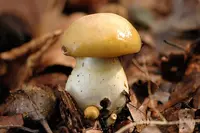
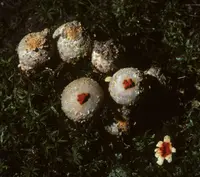
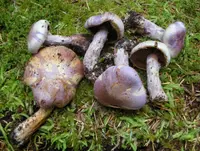
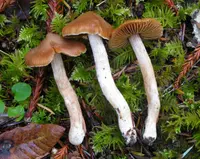
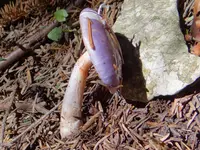
Cortinarius sinapicolor is not a plant but a woodland mushroom in the large genus Cortinarius. It forms fleshy, often yellowish to ochre caps with a fibrous stem and rusty brown spores. This species typically appears on forest floors, usually in association with trees, where it helps decompose organic matter and may form mycorrhizal partnerships, a mutual relationship between fungus and roots.

It is not suitable for home cultivation and does not behave like an ornamental or edible mushroom. Conditions needed to grow it reliably are complex, so practical advice on how to care for Cortinarius sinapicolor is very limited and mainly of interest to mycologists rather than home growers.


Main Plant Requirements

Care Difficulty

Moderate Care

Light Preference

Partial Shade

Water Requirements

Moderate Water

Temperature Preference

Warm Climate

Hardiness Zone

Unknown

Soil Texture

Loamy

Soil pH

Slightly acidic (6.5–7.0)

Soil Drainage

Well-drained

Fertilization

Minimal (feed rarely)

Get Personalized Care Plan

Scan your plant to receive care tips personalized for your specific plant

Available on iOS and Android

How to Care for the Cortinarius sinapicolor

This woodland fungus relies on shaded, forest light conditions rather than direct, open sun exposure.

  • Provide dappled or filtered light under trees, similar to a mixed deciduous or coniferous forest floor, with only 1–3 hours of weak, early morning sun reaching the ground.
  • Avoid direct midday or afternoon sun, which can dry the leaf litter and upper soil layer too quickly and reduce fruiting of Cortinarius sinapicolor.
  • Maintain partial shade through the year using tree canopy, shrubs, or shade cloth so the site stays bright enough to navigate but never fully exposed.

This mycorrhizal fungus depends on stable, evenly moist forest soil rather than direct, surface watering like a typical garden plant.

  • Aim for consistently moist but not waterlogged soil; the top 1–2 cm of leaf litter may feel slightly dry while the soil beneath stays damp to the touch.
  • Ensure excellent drainage with a loose, humus-rich layer over mineral soil so rain or irrigation drains within a few hours and does not pool.
  • Reduce supplemental watering during cool, wet seasons and increase light irrigation only during extended dry spells, watching for cracked, dusty soil as a sign of drought stress.

This species develops best in cool to mild forest conditions with distinct seasonal changes and no prolonged extreme temperatures.

  • Optimal fruiting typically occurs around 50–65°F (10–18°C), often in autumn when days are cool and nights drop further but the soil has not yet frozen.
  • The underlying mycelium usually tolerates down to about 25–30°F (-4 to -1°C) in soil, but hard, repeated ground freezes can limit fruiting the following season.
  • Sustained heat above 80°F (27°C), especially with dry soil, can suppress growth, so a shaded, mulched forest floor helps buffer against summer temperature peaks.

Humidity is not a primary controllable factor, as this is a wild ectomycorrhizal fungus rather than a houseplant.

This mycorrhizal fungus depends on natural forest soil conditions around its host tree roots rather than prepared potting mixes.

  • Fruiting typically occurs in moist, well-aerated forest soil rich in decaying leaf litter and fine roots, not in containers.
  • Soil needs free drainage with no standing water, but the upper layer must stay evenly moist during the fruiting period.
  • A slightly acidic to neutral pH around 5.5–7 suits most associated trees, supporting fungal growth indirectly.
  • Avoid compacted, heavily tilled, fertilized, or sterilized soil, which disrupts root-fungus contact and can prevent Cortinarius sinapicolor from fruiting.

This species is not realistically suitable for container growing, as it depends on complex ectomycorrhizal relationships with living trees.

This wild ectomycorrhizal fungus does not need conventional fertilizer, as it relies on a host tree and natural soil nutrients.

As a woodland mushroom, Cortinarius sinapicolor is not pruned, and any disturbance can damage the fruiting bodies and underlying mycelium.

This species is not suited to typical repotting or transplanting because it depends on a symbiotic relationship with host tree roots in undisturbed soil.

  • Avoid lifting or moving fruiting bodies; disturbing the soil can injure the mycelium network.
  • Do not attempt to grow it in pots; container culture cannot replicate the natural tree root partnership.
  • If habitat must be disturbed, leave as much soil and root structure intact as possible to reduce stress on the fungal colony.
  • Focus on conserving the surrounding woodland habitat rather than relocating individual mushrooms.

Propagation of this ectomycorrhizal fungus is specialized and not practical for home growers, so intentional propagation is rarely attempted.

This woodland fungus is adapted to local seasonal cycles and normally requires no specific winter care from gardeners.

Care Tips

Confirm species identity

Before attempting cultivation, confirm the fungus with a local mycologist or reliable field guide, since closely related Cortinarius species can be toxic and correct identification is critical for any work involving spore collection or experimentation.

Ethical spore collection

If collecting spores from wild fruiting bodies, take only a small portion of mature caps, make spore prints on clean foil or paper in the field, and leave most mushrooms intact to maintain local populations and their mycorrhizal relationships with host trees.

Host tree association

Map and record the tree species, soil type, and surrounding vegetation where the fungus is found, because this species is mycorrhizal and any attempt at growing Cortinarius sinapicolor depends on matching or closely approximating its natural tree partners and site conditions.

Minimal habitat disturbance

When observing or sampling, avoid raking leaf litter or compacting soil around the host trees, since the main fungal body (mycelium) lives in the soil and fine roots, and physical disturbance can reduce future fruiting.

Long-term site monitoring

Keep notes and photos across several seasons, including weather patterns and fruiting times, as this long-term record helps understand local fruiting triggers and supports more accurate Cortinarius sinapicolor care instructions for any experimental cultivation efforts.

Common Pests and Diseases

Fungivorous mites

These insects (actually tiny arachnids) feed on fungal tissue, grazing gills and caps and sometimes tunneling into developing fruiting bodies. Symptoms include pitted or scarred caps, deformed mushrooms, and very fine movement of pale dots on the surface.

Solution

Reduce excessive handling and disturbance of the mushroom patch, keep the surrounding leaf litter slightly drier at the surface, and if cultivated under controlled conditions, use sticky traps and fine mesh to limit mite entry. In small culture setups, remove and discard heavily infested fruiting bodies and adjust humidity and airflow to discourage mite buildup while maintaining suitable conditions for the fungus.

Fungal parasitism

This disease involves other fungi colonizing and deforming the fruiting bodies, leading to abnormal shapes, discoloration, or a powdery or cottony overgrowth. Symptoms include distorted caps, reduced spore production, and patches of different-colored fungal growth on or around the mushrooms.

Solution

Remove and discard parasitized mushrooms promptly to reduce spore spread from the contaminant fungus. In managed or research settings focused on Cortinarius sinapicolor care, maintain clean tools, avoid overcrowding fruiting sites, and adjust moisture and airflow so surfaces dry slightly between wet periods, which helps limit opportunistic fungal competitors.

Interesting Facts

Color change with age

The fruiting bodies typically appear yellow to yellow-brown when young and become more brownish or ochre as they mature, which can complicate field identification over time.

Cortina-derived species name

The species epithet sinapicolor refers to a mustard-yellow coloration, describing the characteristic yellow tones of the cap and other tissues in fresh specimens.

Mycorrhizal forest partner

This species forms ectomycorrhizal associations with trees, meaning its underground mycelium connects with tree roots and helps them absorb water and minerals while receiving sugars in return.

FAQs about Cortinarius sinapicolor

This species is not recommended for eating. Identification of Cortinarius mushrooms is difficult, and many close relatives contain dangerous kidney toxins. Treat it as inedible and avoid consumption, even if local sources suggest otherwise.

Grow Healthy Plants with Botan Care

Keep your plants happy and healthy with plant identification, disease detection, and easy care guidance.

Botan plant care app — identify plants on mobile

Explore More Plants