Early trunk training
Stake young trees for the first 1–3 years and gradually loosen ties as the trunk thickens so wind movement can build a strong, upright leader without causing rubbing wounds.

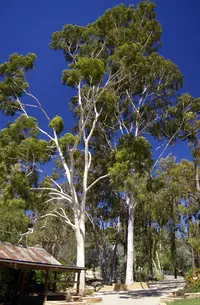
Lemonscented gum, Corymbia citriodora, is a fast-growing evergreen tree known for its smooth pale bark and strong lemon-scented foliage. It is most often grown as an ornamental or feature tree in mild to warm climates.
In nature, it is native to northeastern Australia, where it forms tall, straight trunks and a light, open canopy. The leaves release fragrant oils when crushed or on warm days.
This species prefers full sun, well-drained soil, and low to moderate water once established. It is generally easy to grow in suitable climates but becomes very large, which limits how to care for lemonscented gum in small gardens or containers.

Care Difficulty
Moderate Care

Light Preference
Full Sun

Water Requirements
Low Water

Temperature Preference
Tropical / Frost Sensitive

Hardiness Zone
9–11

Soil Texture
Sandy, Loamy, Rocky

Soil pH
Acidic (5.5–6.5), Slightly acidic (6.5–7.0)

Soil Drainage
Well-drained

Fertilization
Minimal (feed rarely)
Scan your plant to receive care tips personalized for your specific plant
Available on iOS and Android
Corymbia citriodora grows best in bright, open sites with strong sun exposure.
This species prefers deep, infrequent watering that encourages a strong, drought-tolerant root system.
This warm-climate tree thrives in mild to hot conditions but reacts badly to hard frost.
This species handles typical outdoor humidity well and usually does not need special humidity management.
Corymbia citriodora prefers freely draining, moderately fertile soil that does not stay wet after rain or irrigation.
This tree can be grown in containers when kept small, but needs careful management due to its strong, fast root system.
This fast-growing lemonscented gum benefits from light, controlled feeding rather than heavy fertilization.
Thoughtful pruning supports strong structure and safe growth in Corymbia citriodora.
This species is usually grown in the ground, so transplanting young trees at the right time is more important than frequent repotting.
Corymbia citriodora is most commonly propagated from seed, which maintains genetic diversity and strong root systems.
This warm-climate tree has low frost tolerance and needs thoughtful winter care in cooler regions.

Plant Health Check
Not sure what's wrong with your plant? Check your plant's health inside the app.
Leaves and young stems release a pronounced lemon scent when crushed due to high levels of citronellal and related essential oil components, which are also used in insect-repellent formulations.
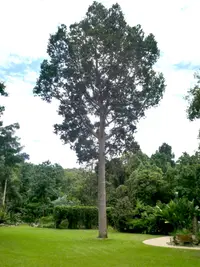
This species can become a very tall tree with a straight, slender trunk and narrow crown, and is known in forestry for its rapid height growth in suitable subtropical and tropical climates.
The tree develops a smooth, pale bark that peels in patches, creating vertical streaks of cream, pinkish, or bluish tones that are often used as a key feature for field identification.

In its native range in eastern Australia, this species is part of tall open forests and can form almost pure stands on certain sites, significantly influencing local microclimate and providing a characteristic lemon scent to the surrounding area after rain or on hot days.
This species is considered fast-growing, often adding 60–150 cm in height per year in suitable climates. Growth is quickest in the first 10–15 years, especially with deep watering, full sun, and enough root space.
Keep your plants happy and healthy with plant identification, disease detection, and easy care guidance.