karaka nut Care (Corynocarpus laevigatus)

Also known as: Karaka
karaka nut

About karaka nut

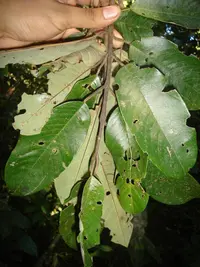
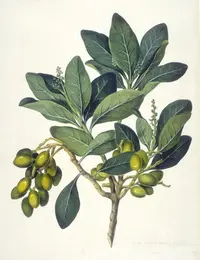
Karaka nut, Corynocarpus laevigatus, is an evergreen tree grown for its dense, glossy foliage and tidy, upright form. It is often used as a specimen tree or clipped hedge in mild climates.

The tree naturally occurs in coastal forests of New Zealand, where it can form a rounded crown and produce orange, plum-like fruits. Its slow to moderate growth rate, tolerance of pruning, and generally robust nature make it manageable for many gardeners.

It prefers mild, frost-free conditions, well-drained soil, and consistent moisture, and benefits from bright light with some shelter from harsh exposure. These traits shape how to care for karaka nut in home gardens.

Main Plant Requirements

Care Difficulty

Moderate Care

Light Preference

Partial Sun

Water Requirements

Moderate Water

Temperature Preference

Warm Climate

Hardiness Zone

9–11

Soil Texture

Loamy, Sandy, Organic-rich

Soil pH

Slightly acidic (6.5–7.0), Neutral (7.0)

Soil Drainage

Moist but well-drained

Fertilization

Minimal (feed rarely)

Get Personalized Care Plan

Scan your plant to receive care tips personalized for your specific plant

Available on iOS and Android

How to Care for the karaka nut

This evergreen tree prefers bright conditions and copes well with mild coastal light levels.

  • Provide 4–6 hours of sun daily, ideally morning sun with light afternoon shade, especially for young Corynocarpus laevigatus plants.
  • Tolerates partial shade, but very dense shade reduces growth and foliage density; choose a site with dappled light under taller trees if full sun is harsh.
  • In hot summers, protect karaka nut leaves from intense midafternoon sun to limit scorch, especially on reflective sites and during dry periods.

This species prefers evenly moist but not saturated soil once established outdoors.

  • Allow the top 3–5 cm of soil to dry before watering; soil should feel slightly dry at the surface but still cool and faintly damp below.
  • In spring and summer, increase watering during hot, dry spells, then reduce in fall and winter as growth slows and rainfall usually increases.
  • Watch for yellowing, soft leaves and soggy soil as signs of overwatering, and for limp, curling, or browning leaf edges as indicators of underwatering.

This coastal tree favors mild, frost-free climates with stable seasonal temperatures.

  • Optimal growth occurs around 60–77°F (16–25°C), with steady conditions promoting dense, glossy foliage and slower, controlled extension growth.
  • Tolerates brief drops to about 28–30°F (-2 to -1°C) once mature, but young plants are more frost-sensitive and benefit from light protection in cold snaps.
  • Handles summer heat up to about 86–90°F (30–32°C) if soil moisture is maintained, though extended dry heat and hot winds can scorch exposed foliage.

This species tolerates a fairly wide humidity range but benefits from moderately moist air, especially indoors.

  • Aim for 40–60% humidity for stable foliage and steady growth.
  • Tolerates short dry spells, but very dry heated rooms cause leaf tip browning and slight edge curl.
  • Increase humidity with a nearby pebble tray or grouped plants rather than misting, which adds only brief moisture.

Corynocarpus laevigatus prefers a deep, evenly moist, well-drained substrate that does not stay waterlogged.

  • Use a loamy mix with 40–60% organic matter and added mineral grit to keep structure open.
  • Aim for slightly acidic to neutral pH around 6.0–7.0 for balanced nutrient uptake.
  • Combine compost, fine bark, and perlite or pumice to improve aeration and prevent compaction around the roots.
  • Avoid heavy clay, poorly drained spots, or mixes rich in peat alone, which can swing between soggy and overly dry.

This tree can adapt to container growing when managed for root space and stability.

  • Choose a tall, heavy pot to counter its future height and reduce the risk of tipping in strong wind.
  • Select a container material that slightly insulates roots, such as thick-walled ceramic, to reduce moisture and temperature swings.
  • Leave a 3–5 cm free rim at the top of the pot so slow, deep watering does not overflow and erode the mix around the karaka nut trunk.

Corynocarpus laevigatus is slow-growing and needs only modest feeding to stay healthy in containers or poor soils.

  • Use a balanced slow-release fertilizer (around 10-10-10) or well-rotted compost in early spring for karaka nut.
  • Feed container plants every 8–10 weeks during the growing season at half the label rate to avoid salt buildup.
  • Reduce or stop feeding in late fall and winter when growth slows, especially in cooler regions.
  • Water before and after applying fertilizer to prevent root burn and aid nutrient uptake.

Corynocarpus laevigatus needs only light, occasional pruning to maintain structure and remove problem growth.

  • Carry out shaping and thinning in late winter or early spring before strong new growth starts.
  • Remove dead, diseased, crossing, or inward-growing branches to improve airflow and light penetration.
  • Shorten overly long shoots to keep a dense, compact crown without cutting into the main framework heavily.
  • Use clean, sharp bypass pruners and make smooth cuts just above a bud or branch junction.

This species is usually grown as a landscape tree, so attention focuses on careful transplanting rather than frequent repotting.

  • Transplant in late winter or early spring once soil is workable, avoiding hot, dry periods to limit stress.
  • Look for slow growth, poor vigor, or circling roots in containers as signs it has outgrown its current pot.
  • Shift container plants only every 3–4 years into a pot 2–5 cm wider, keeping the root ball intact.
  • Water deeply before and after moving, keep the root zone shaded and evenly moist, and avoid heavy pruning at the same time.

Corynocarpus laevigatus is typically propagated by seeds or semi-hardwood cuttings, but the process is slow and requires patience.

  • Collect ripe seeds, clean the pulp carefully, and sow in a free-draining mix kept at 68–75°F with steady moisture.
  • Take semi-hardwood cuttings in late summer, 8–12 cm long, with 2–3 nodes and a few leaves remaining.
  • Dip cutting bases in rooting hormone, place in a humid, bright, indirect-light environment, and keep the medium just moist.
  • Expect gradual rooting or germination; maintain stable warmth and avoid disturbing material during early development.

This evergreen tolerates only light frost and benefits from basic winter protection in regions with colder conditions.

  • In-ground plants handle short drops to about 25–28°F but can suffer foliage damage with harder or prolonged freezes.
  • Apply a 5–8 cm mulch layer around the root zone in late fall, keeping it slightly away from the trunk.
  • Move container plants indoors or into a bright, frost-free space when temperatures consistently fall below 32°F.
  • Shelter young trees with windbreak fabric or a temporary cover during expected hard frosts to reduce damage.

Care Tips

Juvenile staking

Stake young plants with a single sturdy bamboo cane and soft ties for the first 2–3 years to encourage a straight central leader and prevent wind rock that can distort the trunk base.

Root-zone mulching

Maintain a 5–8 cm layer of coarse organic mulch over the root zone, keeping it 5–10 cm away from the trunk, to buffer soil moisture and temperature and reduce surface root stress.

Wind exposure management

In windy sites, use a temporary windbreak fence or plant on the sheltered side of a building to limit leaf shredding and bending of new shoots while the framework branches establish.

Canopy lifting

Once the plant reaches 1.5–2 m, selectively remove only the lowest, weak lateral branches over several seasons to raise the canopy gradually and create a strong, clear trunk.

Fruit and seed handling

When growing karaka nut in family gardens, regularly collect and dispose of fallen fruits and seeds in sealed bags or municipal green waste to reduce risks to pets and wildlife that may eat them.

Common Pests and Diseases

Scale insects

These insects feed on sap and often appear as small brown, grey, or white bumps along stems and leaf undersides, causing yellowing and weakened growth. This pest is relatively common on mature karaka, especially in sheltered or indoor situations.

Solution

Prune out heavily infested twigs, then wipe remaining insects off leaves and stems with a cotton pad dipped in diluted alcohol or insecticidal soap. For larger plants outdoors, use a horticultural oil spray to smother scale, repeating after 7–14 days and monitoring for ants that may protect the insects; control ants if present.

Karaka gall mite

This pest causes raised, blister-like galls and distorted new leaves, especially on young shoots. Symptoms include thickened, puckered foliage and sometimes reduced vigor at the shoot tips.

Solution

Prune and dispose of affected shoot tips as soon as galls are noticed, cutting back into healthy tissue. Improve airflow around the canopy and avoid high-nitrogen fertiliser that drives very soft, mite-prone growth; in severe or recurring cases, consult local extension or a specialist about a targeted miticide suitable for ornamental trees.

Sooty mold

This disease appears as black, soot-like coating on leaves and stems, usually growing on the sticky honeydew excreted by sap-sucking insects such as scale or aphids. Symptoms include dull, blackened foliage and reduced photosynthesis, but the fungus remains mostly superficial.

Solution

Wash affected leaves gently with lukewarm water and a mild soap solution to remove the mold film. Long-term control depends on managing the underlying honeydew-producing pests; once insects are suppressed and the canopy has better light and airflow, new growth usually emerges clean.

Leaf spot

This disease causes small brown or dark olive spots on leaves that may merge into larger patches, sometimes with yellow halos and premature leaf drop. Symptoms include scattered blemishes that are more noticeable in humid, shaded, or crowded conditions.

Solution

Remove and discard affected fallen leaves and heavily marked foliage to reduce spores. Improve light and airflow, water at the soil level instead of wetting the canopy, and if the problem intensifies on high-value specimens, use a labeled ornamental fungicide during warm, wet periods according to local regulations and label directions.

Interesting Facts

Ancient Māori food source

The bright orange drupes were traditionally eaten by Māori after careful processing to remove toxins, and the kernels were an important seasonal carbohydrate source.

Specialized bird dispersal

Native New Zealand birds such as kererū (New Zealand pigeon) are key dispersers of its large fruits, swallowing them whole and spreading the seeds through their droppings.

Coastal wind tolerance

This evergreen tree naturally occurs on coastal cliffs and forest margins in New Zealand, showing strong tolerance to wind and salt-laden air compared with many other broadleaf trees.

Botan icon

Did you know?

Karaka groves were often deliberately planted or managed by Māori near settlements and travel routes, and some of these culturally important tree stands are thought to reflect centuries of continuous human use and stewardship.

FAQs about karaka nut

All parts, especially the orange fruits and kernels, are highly toxic to pets. Ingestion can cause vomiting, weakness, and serious neurological signs. Keep this plant out of reach and remove dropped fruits promptly from the ground.

Grow Healthy Plants with Botan Care

Keep your plants happy and healthy with plant identification, disease detection, and easy care guidance.

Botan plant care app — identify plants on mobile

Explore More Plants