


Deep pot choice
Use a relatively deep, narrow pot with several large drainage holes so the strong taproot can develop fully and excess salts are flushed during watering.

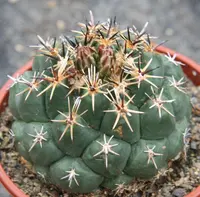
Coryphantha salinensis is a small, globular cactus from arid regions of northern Mexico, often found on rocky, saline slopes. It stays compact, forming a single rounded stem covered with distinct tubercles and short, neat spines rather than long, aggressive spines.
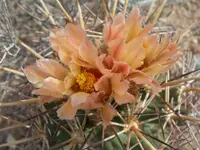
In season, it produces relatively large, showy flowers near the stem tip, adding strong ornamental value despite its modest size. This species is slow growing but long lived when kept dry and bright.
It is considered suitable for growers with some basic cactus experience, as it dislikes excess moisture and poorly drained soil. Understanding how to care for Coryphantha salinensis focuses mainly on providing strong light, fast-draining substrate, and careful watering habits.

Care Difficulty
Moderate Care

Light Preference
Full Sun

Water Requirements
Low Water

Temperature Preference
Warm Climate

Hardiness Zone
9–11

Soil Texture
Sandy, Rocky, Loamy

Soil pH
Slightly acidic (6.5–7.0), Neutral (7.0)

Soil Drainage
Well-drained

Fertilization
Minimal (feed rarely)
Scan your plant to receive care tips personalized for your specific plant
Available on iOS and Android
This small desert cactus prefers strong light that mimics open, arid habitats.
Watering should imitate infrequent desert rains with thorough soakings followed by dry periods.
This species thrives in warm, arid conditions but needs protection from frost and prolonged chill.
This cactus prefers dry air and does not need raised humidity.
Use a very fast-draining, mineral-heavy mix to prevent root rot in Coryphantha salinensis.
This species is very suitable for container growing when drainage and mineral substrate are prioritized.
Nutrient needs are low, but thoughtful feeding supports healthy, compact growth in Coryphantha salinensis.
Pruning is minimal for this small desert cactus and is mainly limited to hygiene and safety.
Container-grown plants benefit from rare, careful repotting to refresh the gritty mix and prevent rot.
Propagation of Coryphantha salinensis is usually done from seed and requires patience.
This cactus prefers a cool, very dry winter rest and is not reliably hardy in freezing climates.

Plant Health Check
Not sure what's wrong with your plant? Check your plant's health inside the app.
This cactus is narrowly endemic to saline flats and gypsum-rich soils in northeastern Mexico, where very few other cacti tolerate such high salt levels in the substrate.
Its small, low dome-shaped stem with tightly packed tubercles and dense spines often blends into the pale, crusted soil surface, making plants difficult to spot even at close range.
The yellowish to cream flowers open near the stem apex and are relatively short-lived, so entire populations can pass through their blooming phase with very little visibility to casual observers.
This species usually blooms in late spring to summer, producing funnel-shaped yellow to yellow-orange flowers at the crown. Individual blooms are short-lived, typically a few days, but several may open in sequence.
Keep your plants happy and healthy with plant identification, disease detection, and easy care guidance.

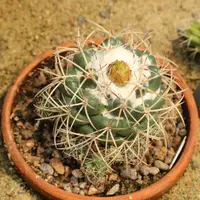
Coryphantha poselgeriana
Coryphantha poselgeriana
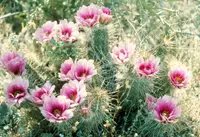
pinkflower hedgehog cactus
Echinocereus fasciculatus
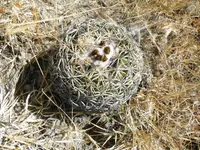
Coryphantha retusa
Coryphantha retusa
pitaya
Echinocereus enneacanthus
Coryphantha maiz-tablasensis
Coryphantha maiz-tablasensis
bunched cory cactus
Coryphantha ramillosa
Pineapple Cactus
Coryphantha sulcata
Pima Pineapple Cactus
Coryphantha robustispina