Rotate For Symmetry
Turn the pot 90° every 1–2 weeks so new shoots lean evenly toward the light and the clumping spiral stems stay upright rather than arching to one side.

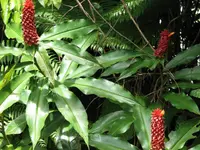
Costus ricus is a tropical perennial from the spiral ginger group, known for its upright cane-like stems and distinctively spiraled foliage. It forms clumps that slowly expand, giving a lush, architectural look.
In suitable conditions it may produce colorful bracts and tubular flowers that attract pollinators. Its natural range is Central and South America, where it grows in warm, humid forest understories.
This species prefers bright, filtered light, consistent moisture, and rich, well-drained soil. With stable warmth and humidity, it is moderately easy to care for Costus ricus, but it is less forgiving of cold or very dry air.

Care Difficulty
Moderate Care

Light Preference
Partial Shade

Water Requirements
Moderate Water

Temperature Preference
Warm Climate

Hardiness Zone
Unknown

Soil Texture
Loamy

Soil pH
Slightly acidic (6.5–7.0)

Soil Drainage
Well-drained

Fertilization
Minimal (feed rarely)
Scan your plant to receive care tips personalized for your specific plant
Available on iOS and Android
This tropical understory plant prefers bright, filtered light that mimics dappled forest shade.
Moist, airy soil is essential to support this rhizomatous plant’s vigorous growth.
Stable warmth is important for strong growth and flowering.
This tropical species appreciates sustained high humidity for best foliage and stem growth.
Costus ricus grows best in loose, organic-rich, fast-draining soil that still holds consistent moisture.
This species adapts well to container culture when the pot supports its upright, rhizomatous growth.
This tropical ginger responds well to light, consistent nutrition during the warm growing season.
Pruning helps maintain tidy clumps and encourages healthy new shoots on this spiral ginger.
This rhizomatous plant benefits from periodic division and moving to slightly larger spaces as clumps expand.
Propagation is commonly done by division and stem cuttings from healthy, mature plants.
This tropical species is frost-tender and needs protection in regions with cold winters.

Plant Health Check
Not sure what's wrong with your plant? Check your plant's health inside the app.
Costus ricus belongs to the spiral gingers, a group known for tightly spiraled stems, but this species develops relatively slender, less robust shoots compared with more ornamental relatives like Costus speciosus.
This species has a relatively restricted natural distribution in Central America, where it occurs in moist tropical forests rather than across a broad range of habitats.
Botanists consider the taxonomy of Costus ricus somewhat uncertain, and some references treat it as closely allied to or potentially confused with morphologically similar Costus species pending detailed revision.
Yellowing leaves usually come from natural aging, poor drainage, or nutrient imbalance. Check that the pot drains freely, avoid waterlogged soil, and use a balanced fertilizer at low strength during active growth to correct deficiencies.
Keep your plants happy and healthy with plant identification, disease detection, and easy care guidance.