

cotoneaster Identification (Cotoneaster multiflorus)

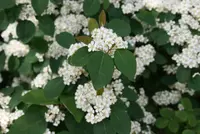
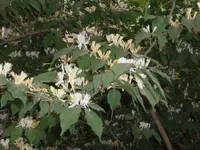
Recognize Cotoneaster multiflorus by its broad, arching shrub form, small oval leaves set alternately along slender stems, and many-flowered clusters carried along short side shoots.

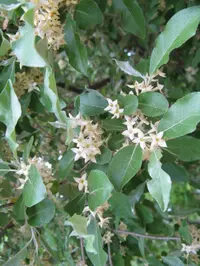
Leaves are usually about 1 inch (2.5 cm) long, with smooth margins. The white, five-petaled flowers are held in dense corymbs, often several together on each spur.

Cotoneaster multiflorus Identification

Check Your Plant ID

Upload a clear photo to check your plant identification with Botan.

Clear images work best. Avoid photos taken too close or too far away

Check the branching, leaves, flowers, and fruit of Cotoneaster multiflorus.

  • Broad, arching shrub, often wider than tall, with many layered side branches.
  • Leaves are simple, oval to elliptic, alternate, and usually about 1-2 inches (2.5-5 cm) long.
  • Leaf undersides look paler and slightly hairy, which shows along the spreading twigs.
  • Flowers are white, 5-petaled, and carried in crowded clusters that line the branches.
  • Fruits are round, red pomes, hanging in dense groups and standing out against the foliage.

Use several traits together, especially the arching habit and heavy flower or fruit clusters.

Cotoneaster multiflorus shows clear visual shifts as branching, flowers, and fruit develop.

  • Young plant: Young plants are upright and sparsely branched, with slender shoots and smaller oval leaves; the broad, layered framework is not yet established.
  • Mature plant: Mature shrubs form wide, arching tiers and a fountain-like outline, often reaching 8-12 feet (2.4-3.7 m) tall and similarly broad.
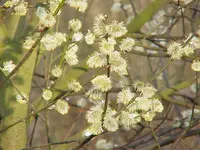
  • Flowering stage: In flower, the branchlets are lined with many small white blossoms in clusters, making the horizontal branching pattern much more obvious than in leafy shoots alone.
  • Fruiting stage: After flowering, hanging clusters of rounded red pomes replace the blossoms, standing out against the branch structure and confirming the plant's many-flowered habit.

In late spring to early summer, Cotoneaster multiflorus becomes especially distinctive when the arching branches are lined with many small white flowers. These are followed by clusters of red fruits that remain visible into fall. Leaves turn yellow in fall before dropping. After leaf drop, the plant shows a broad, fountain-like framework of slender, arching stems that can still help with identification in winter.

A few shrubs can be mistaken for cotoneaster at a glance.

hedge cotoneaster(Cotoneaster lucidus)

Similar because both are arching shrubs with small oval leaves and red fruit. Hedge cotoneaster usually has solitary or few flowers, not the many-flowered clusters of C. multiflorus, and its leaves are glossier and less hairy beneath.

rockspray cotoneaster(Cotoneaster horizontalis)

Similar for its small leaves, white flowers, and red berries. It differs by its flat, fishbone branching and much lower, spreading habit, while C. multiflorus is taller and more fountain-shaped.

Cotoneaster multiflorus is native to parts of northern and central China and nearby areas of Mongolia. It occurs in open woodland margins, scrub, thickets, and rocky slopes, often in hilly country. This habitat context helps mostly when separating it from cotoneasters tied to very different settings. In the field, a many-flowered cotoneaster found on dry slopes or open scrub in its native range is more likely to fit this species than one from wetlands, dense forest understory, or coastal habitats.

  • Berries and seeds: Cotoneaster multiflorus produces pomes, often called berries, that are not considered edible. Ingestion of the fruit, especially the seeds, can be harmful to humans and pets because Cotoneaster seeds contain cyanogenic compounds.
  • Children and pets: The main concern is accidental ingestion of fallen or persistent fruit. Risk relates to eating the fruit or seeds, not to normal skin contact with leaves or stems.

Does Your Plant Match?

Use Botan to compare a photo and help confirm the plant before you label it or make decisions based on the ID.

FAQ

Flowers are borne in many-flowered clusters along the branches, often creating a cascading effect. This arrangement is a strong Cotoneaster multiflorus identification clue, especially when the shrub is covered with numerous small white blooms.

More Plant Identification Guides

Identify the Plant and Get Its Profile

Upload a photo to identify it with Botan, then review plant details, care information, and common problems for that species.

Botan app identifying a plant from a photo
Best Water for Plants – How to Choose the Right Type

7 min read · 13 Aug 2026

Best Water for Plants – How to Choose the Right Type

Rainwater, filtered, distilled, and tap water affect plants differently. Learn which types support healthy growth and which cause slow damage. Match each to your plants and discover how to easily improve tap water quality.

Plant Care
Best Water for Plants – How to Choose the Right Type
20 Most Popular Fruits Around the World

7 min read · 22 Jul 2026

20 Most Popular Fruits Around the World

Curious which fruits the world actually eats the most? Here's the top-20 by production volume, an overview of what people choose in each region, and a few figures that defy common assumptions.

Plant Recommendations
20 Most Popular Fruits Around the World
Banana Peel Water for Plants: 5 Things to Know Before Trying It

5 min read · 9 Jul 2026

Banana Peel Water for Plants: 5 Things to Know Before Trying It

Banana water can provide potassium and some nutrients that may support plant growth, but it is not a universal fix. Use it carefully and only when the plant actually shows signs of nutrient deficiency rather than as a routine treatment.

Plant Care
Banana Peel Water for Plants: 5 Things to Know Before Trying It