Three-parted Crassula Care (Crassula alata)

Three-parted Crassula

About Three-parted Crassula

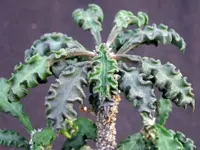
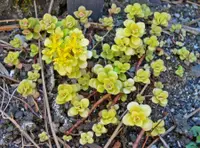
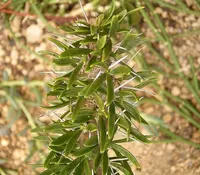
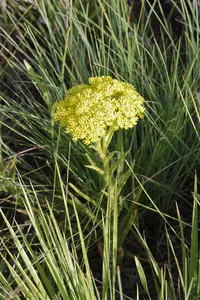
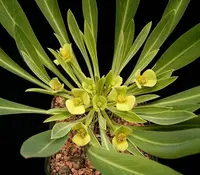
Three-parted Crassula (Crassula alata) is a compact, branching succulent known for its small, triangular leaves arranged in neat opposite pairs. The foliage often forms low, cushion-like mounds that suit small pots, dish gardens, and mixed succulent plantings.

This species is native to arid regions of southern Africa, where it is adapted to strong light, lean soil, and irregular rainfall. Its drought tolerance and slow, tidy growth habit make it relatively easy to care for indoors if overwatering is avoided.

Crassula alata usually prefers bright light, well-draining gritty soil, and light, infrequent watering, which helps owners understand how to care for Three-parted Crassula without complex routines.

Main Plant Requirements

Care Difficulty

Easy Care

Light Preference

Full Sun

Water Requirements

Low Water

Temperature Preference

Tropical / Frost Sensitive

Hardiness Zone

10–11

Soil Texture

Sandy, Loamy, Rocky

Soil pH

Slightly acidic (6.5–7.0), Neutral (7.0)

Soil Drainage

Well-drained

Fertilization

Minimal (feed rarely)

Get Personalized Care Plan

Scan your plant to receive care tips personalized for your specific plant

Available on iOS and Android

How to Care for the Three-parted Crassula

This compact succulent prefers bright, indirect light with some direct sun.

  • Provide 4–6 hours of morning sun or late-afternoon sun; avoid harsh midday sun in hot summers to prevent leaf scorch.
  • Three-parted Crassula tolerates light partial shade, but growth becomes looser and leaf color dulls if kept below roughly 3–4 hours of bright light.
  • In winter, when sun is weaker and lower, it can take more direct sun, while in summer a sheer curtain or dappled shade is often beneficial.

This species prefers deep but infrequent watering in sharply draining soil.

  • Allow the top 3–5 cm of soil to dry fully before watering, then water until excess drains away; do not leave the root zone standing in water.
  • Reduce watering in cooler months when growth slows, sometimes waiting until the soil is dry almost to the bottom of the pot for Crassula alata.
  • Early signs of underwatering are slight leaf wrinkling and softness, while overwatering shows as yellowing, mushy leaves and blackened stems near the base.

This succulent prefers warm, stable conditions without frost exposure.

  • Ideal growing temperatures are 65–80°F (18–27°C), with good light and low to moderate humidity supporting compact growth.
  • It tolerates short heat spells up to about 90°F (32°C) if shaded from intense midday sun and provided with moving air and slightly more frequent checks on soil moisture.
  • Protect from cold below 40°F (4°C) and especially from frost; prolonged exposure under 35°F (2°C) can cause tissue damage and root loss.

This succulent tolerates typical indoor humidity and rarely needs special adjustments.

  • Aim for 30–50% humidity; dry household air is usually suitable for Three-parted Crassula.
  • Watch for soft, pale, or mushy leaves as signs of excess humidity combined with poor air movement.
  • Use a small fan and avoid grouping tightly with moisture-loving plants to reduce stagnant, overly humid air.

Crassula alata needs a sharply draining, mineral-based substrate to avoid root rot.

  • Use a gritty mix such as 50–60% cactus potting mix blended with coarse sand, pumice, or perlite for strong drainage.
  • Keep texture loose and crumbly so water drains in seconds and roots receive consistent air access.
  • Target a slightly acidic to neutral pH around 6.0–7.0, which most commercial cactus mixes already provide.
  • Avoid dense, peat-heavy or clay-based soils that stay wet, compact easily, and suffocate fine feeder roots.

This compact species is very suitable for container growing.

  • Select a shallow, wide pot that matches its spreading root system and reduces the risk of water sitting deep in the substrate.
  • Favor unglazed terracotta when overwatering is a concern because it allows faster evaporation through the pot walls.
  • Raise the container slightly on pot feet or small spacers so drainage holes stay clear and excess water exits quickly.

Crassula alata benefits from modest feeding during active growth but does not require heavy fertilization.

  • Use a balanced liquid fertilizer (such as 10-10-10) diluted to 25–50% strength for Three-parted Crassula.
  • Apply every 4–6 weeks in spring and summer when growth is most active.
  • Avoid fertilizing in late fall and winter, when growth slows or the plant rests.
  • Flush the soil with plain water a few times per year to reduce salt buildup.

Light pruning keeps Crassula alata compact, healthy, and well-shaped.

  • Time most pruning for late winter to early spring, just before strong new growth starts.
  • Remove dead, shriveled, or damaged stems and any soft, rotting tissue with clean, sharp scissors or pruners.
  • Thin crowded shoots to improve light penetration and airflow through the canopy.
  • Pinch back tips of leggy stems to encourage branching and a denser, neater outline.

This succulent grows well slightly root-bound and only needs infrequent repotting or transplanting.

  • Check for roots circling the pot, pushing through drainage holes, or slowed growth as signs Crassula alata needs more space.
  • Plan to repot every 2–3 years in spring, using a shallow container with fast-draining succulent mix.
  • Water lightly a day before repotting to reduce root stress and make removal easier.
  • Handle roots gently, keep them intact, and wait 3–5 days after repotting before thorough watering.

Crassula alata is commonly propagated from stem or leaf cuttings under warm, bright conditions.

  • Take short, healthy stem cuttings or firm leaves in spring or early summer for best success.
  • Allow cut ends to dry and callus for 1–3 days before planting to reduce rot risk.
  • Place cuttings on or in slightly moist, gritty succulent mix, keeping humidity low and light bright but indirect.
  • Keep temperatures around 70–80°F and water sparingly until new roots and growth appear.

Crassula alata dislikes prolonged frost and needs basic winter care in cold climates.

  • In regions below 30°F, grow it in containers so plants can be moved indoors before hard frost.
  • Provide a cool, bright indoor location with minimal watering during winter months.
  • Outdoors in mild climates, use a coarse, well-drained soil and avoid waterlogged conditions in cool weather.

Care Tips

Rotate For Balance

Turn the pot 90° every 2–3 weeks so stems thicken evenly and the plant does not lean or become one-sided toward the light source.

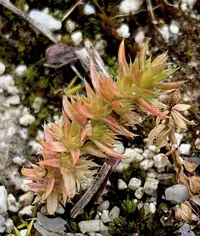
Stem Pinching Strategy

Pinch or cut soft shoot tips above a node in early spring to encourage branching and a denser cushion of growth rather than long, sparse stems.

Controlled Dry Rest

In winter, give the plant a slightly cooler, brighter spot and extend the interval between waterings to support a mild rest period that promotes stronger growth in spring.

Low-Stress Propagation

Use any healthy pruned stems as cuttings, allowing the cut ends to dry for 1–2 days, then root them in a shallow, gritty mix to maintain a compact replacement plant or backups.

Pest-Check Routine

Inspect leaf joints and stem bases every month for early signs of mealybugs or scale and treat promptly with a cotton swab dipped in isopropyl alcohol, which is a practical step when caring for Three-parted Crassula.

Common Pests and Diseases

Mealybugs

This pest feeds on stems and leaf joints, often hiding in the tight angles between the three-sided leaves and along the woody base. Symptoms include white cottony clumps, sticky honeydew, and distorted new growth.

Solution

Isolate the plant, then dab visible insects with cotton swabs dipped in 70% isopropyl alcohol and repeat weekly until no new clusters appear. Improve light and airflow, rinse foliage with a gentle water spray, and use a horticultural soap or neem oil spray labeled for succulents if infestations persist.

Aphids

These insects gather on tender shoot tips and flower stems, sucking sap and causing curling, stunted growth, and sticky residue that can lead to sooty mold. This pest is more common on soft, actively growing outdoor plants or those in bright, warm windows.

Solution

Rinse colonies off with a firm but controlled stream of water, including the undersides of leaves. Follow up with insecticidal soap or neem oil every 5–7 days for 2–3 cycles, and reduce excess nitrogen fertilization that encourages very soft, aphid-prone growth.

Red spider mites

This pest thrives in hot, dry indoor conditions and can cause fine stippling, dulled or grayish leaves, and fine webbing in the angles of the angular stems. Symptoms include slowed growth and premature leaf drop if the plant is stressed for a long period.

Solution

Shower the plant with lukewarm water to remove mites and webbing, then increase humidity locally with a pebble tray while keeping the soil dry between waterings. Apply miticide-grade horticultural soap or neem oil to all leaf surfaces, repeating every 5–7 days until new growth appears clean.

Fungal leaf spots

This disease appears as small brown, tan, or dark spots on leaves, sometimes with a yellow halo, especially in plants kept too shaded or frequently splashed when watered. Symptoms include gradual spotting on older leaves that may eventually drop.

Solution

Remove and discard affected leaves, then improve light, spacing, and airflow so foliage dries quickly. Water at the soil line, avoid overhead misting, and if spotting continues, use a copper-based or sulfur-based fungicide suitable for succulents, applied according to label instructions.

Edema

This disorder occurs when roots take up water faster than the leaves can release it, causing blister-like, corky, or rough patches on the thick triangular leaves. Symptoms include scattered raised spots that do not usually spread from leaf to leaf like a true infection.

Solution

Allow the soil to dry more between waterings, especially in cool, low-light periods, and ensure the pot has sharp drainage. Provide brighter light and stable temperatures, and avoid sudden shifts from very dry to very wet soil to support stable Crassula alata plant care.

Interesting Facts

Small coastal succulent

Crassula alata is a low, mat-forming succulent native to coastal Western Australia, often growing in sandy or calcareous soils close to the sea where salt spray and high light would stress many other species.

Distinct three-part leaves

The species has characteristically three-parted, fleshy leaves arranged in opposite pairs, giving stems a noticeably jointed appearance that helps distinguish it from many other small Crassula species.

Tiny clustered flowers

It produces small white to pale pink star-shaped flowers in compact clusters, which attract small insects and help maintain local pollinator diversity in its native habitats.

FAQs about Three-parted Crassula

This species grows relatively slowly, usually adding only a few centimeters in height and spread per year. Growth speeds up in warm, bright conditions during spring and summer, and slows significantly in low light or cool seasons.

Grow Healthy Plants with Botan Care

Keep your plants happy and healthy with plant identification, disease detection, and easy care guidance.

Botan plant care app — identify plants on mobile

Explore More Plants