Didierea trollii Care

Didierea trollii

About Didierea trollii

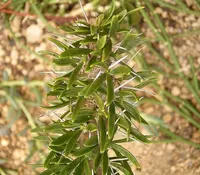
Didierea trollii is a spiny, shrubby succulent from the dry forests of southwestern Madagascar. It forms upright, woody stems covered with dense spines and small, narrow leaves.

This species is adapted to intense sun, heat, and long dry periods, which makes it drought tolerant but sensitive to overwatering and poor drainage. It grows slowly and needs strong light, very well-drained, mineral-rich soil, and protection from prolonged cold. Understanding these natural conditions is key to successful care for Didierea trollii.

Main Plant Requirements

Care Difficulty

Hard Care

Light Preference

Full Sun

Water Requirements

Low Water

Temperature Preference

Tropical / Frost Sensitive

Hardiness Zone

12–13

Soil Texture

Sandy, Rocky

Soil pH

Slightly acidic (6.5–7.0), Neutral (7.0)

Soil Drainage

Well-drained

Fertilization

Minimal (feed rarely)

Get Personalized Care Plan

Scan your plant to receive care tips personalized for your specific plant

Available on iOS and Android

How to Care for the Didierea trollii

This spiny Madagascan succulent shrub needs strong light to stay compact and healthy.

  • Provide 6–10 hours of full sun daily; in very hot regions, give morning sun with light afternoon shade to prevent scorching on young stems.
  • In coastal or cooler climates, it can take unfiltered sun all day, but in inland heat above 95°F (35°C), use 30–40% shade cloth if foliage bleaches or yellows.
  • Outdoors, place Didierea trollii in the brightest, most open spot; in winter, ensure it is not shaded by structures or evergreen trees so it still receives long, bright days.

This drought-adapted species prefers infrequent, deep watering and fast-drying soil.

  • Water only when the top 3–5 cm of soil are completely dry; in hot active growth, this may mean thorough watering every 10–21 days depending on climate and soil.
  • Ensure sharply draining, gritty soil so water runs through in seconds; prolonged wetness, soft stems, or a sour smell indicate overwatering and root rot risk.
  • During cooler months or when growth slows, extend intervals significantly and water just enough to prevent shriveling of stems, not to keep the soil evenly moist.

This plant thrives in consistently warm, dry conditions and is highly sensitive to frost.

  • Aim for 70–90°F (21–32°C) for strong growth; brief heat up to 100°F (38°C) is tolerated if soil is very free-draining and air is dry.
  • Protect from temperatures below 50°F (10°C); leaf and stem damage usually starts near 40°F (4°C), and freezing at 32°F (0°C) can kill tissue outright.
  • In regions with cool winters, grow in a site that warms quickly in spring, and avoid low spots where cold air settles and nighttime temperatures stay lower.

This species from arid Madagascar tolerates very dry indoor air and rarely needs special humidity management.

  • Target 20–40% humidity, similar to a dry, heated room, to mimic its native desert-like climate.
  • Plants stay healthy in lower humidity than most houseplants, but prolonged levels above 60% increase rot risk, especially in cool conditions.
  • Signs of humidity-related stress include soft, pale stems or sudden collapse from rot, rather than leaf issues, so reduce moisture and increase air movement if this appears.

Didierea trollii needs a very fast-draining, mineral, desert-style substrate to prevent root rot.

  • Use a gritty, sandy mix with large particles, such as 50–60% pumice, perlite, or coarse grit and 40–50% lean cactus mix.
  • Ensure water runs through in seconds and the pot feels noticeably lighter within a day, indicating adequate drainage and aeration around the roots.
  • Aim for slightly acidic to neutral pH around 6.0–7.0, avoiding peat-heavy mixes that hold water for long periods.
  • Avoid dense, clay-based, or high-organic soils that stay wet, since these quickly cause root and stem rot in this xerophytic species adapted to dry conditions.

This slow, spiny succulent shrub is suitable for container growing when planted in a very stable, well-drained pot.

  • Choose a heavy, low, and wide container to counter its top-heavy, branched structure and reduce tipping risk in wind or accidental bumps.
  • Select unglazed clay to let moisture evaporate through the pot walls, helping the gritty mix dry faster between waterings.
  • Fill the bottom layer with only coarse, non-organic particles so that the root zone never sits where residual water tends to collect after watering.

This very slow-growing Madagascar succulent shrub needs only light, infrequent feeding in containers.

  • Use a low-dose, balanced liquid fertilizer (around 10-10-10) at 1/4 strength during active growth in late spring–summer.
  • Apply no more than every 6–8 weeks to potted Didierea trollii, and skip feeding for plants grown in open, lean, fast-draining soil.
  • Avoid organic composts that hold moisture; use mineral-based or cactus fertilizers instead.
  • Stop all feeding in fall and winter to respect its dry resting period.

This plant needs minimal pruning, mainly to maintain structure and remove problem growth.

  • Carry out light pruning at the end of winter or very early spring, before strong new growth starts.
  • Remove only dead, damaged, crossing, or diseased branches on Didierea trollii, keeping healthy spiny stems intact.
  • Use clean, sharp bypass pruners and disinfect blades between cuts to reduce infection risk.
  • Avoid heavy structural cuts, which stress this slow-growing species and may lead to dieback.

This slow, deep-rooting succulent shrub dislikes disturbance, so repot or transplant only when clearly necessary.

  • Check for roots circling the pot, emerging from drainage holes, or very slow growth despite good care as repotting signals.
  • Plan moves for late spring, when temperatures are stable and new root growth can resume quickly.
  • Repot container-grown Didierea trollii about every 4–5 years into a slightly larger, deep pot with very fast-draining cactus mix.
  • Minimize root stress by keeping the root ball intact, handling spiny stems carefully, watering lightly once, then allowing soil to dry well.

This species is usually propagated from seed and is considered slow and specialized in cultivation.

  • Sow fresh seeds in late spring in a warm environment of 75–85°F with bottom heat if possible.
  • Use a very gritty, sterile cactus mix and only lightly cover seeds to avoid rotting.
  • Maintain bright light, high airflow, and slightly moist (never wet) substrate until germination, which may be slow and irregular.
  • Routine cutting or division methods for Didierea trollii are not recommended for most home growers due to low success rates.

This heat-loving succulent shrub is not frost hardy and needs careful winter management in most climates.

  • Keep plants above 40°F; ideal winter range is 50–60°F with plenty of bright light.
  • Move container plants indoors or into a heated greenhouse before any frost is forecast.
  • Allow soil to dry almost completely between light sips of water, as the plant rests in winter.
  • In very mild climates, grow Didierea trollii in raised, sharply drained beds and avoid any standing winter moisture.

Care Tips

Staking for safety

Install a sturdy, rust-resistant stake and loosely tie the trunk with soft horticultural ties to stabilize the heavily spined stems and prevent wind rock that can damage roots in containers or raised beds.

Root-zone warming

In cooler regions, place pots on a heat-retentive surface like stone or brick and avoid sitting them directly on cold concrete so the root zone stays warmer and growth remains more active in shoulder seasons.

Controlled branching

When a young plant reaches a stable height, selectively tip-prune only the soft, newly extending growth with long-handled pruners to encourage modest side-branching without creating dense, hard-to-manage thickets of spines.

Mineral mulch layer

Apply a 1–2 cm top dressing of coarse mineral grit or small lava rock around the base to keep the stem dry at soil level, reduce evaporation, and discourage fungus gnat larvae in containers.

Quarantine and inspection

Always quarantine new spiny xerophytes for 2–3 weeks, then inspect joints and areoles using a flashlight and long tweezers to remove any mealybugs or scale before placing them near an established specimen, which simplifies caring for Didierea trollii in mixed collections.

Common Pests and Diseases

Mealybugs

This pest feeds on sap and often hides in spine clusters and branch joints, leaving white, cotton-like masses and sticky honeydew. Symptoms include slowed growth and sooty mold developing on the honeydew deposits.

Solution

Isolate the plant, then dab visible insects with cotton swabs dipped in 70% isopropyl alcohol and repeat weekly until clear. For larger infestations on Didierea trollii care instructions often recommend a systemic insecticide labeled for succulents and cacti, applied according to the product directions and combined with improved light and airflow to keep tissues dry.

Scale insects

These insects form small, brown or gray dome-shaped bumps on stems and sometimes along the woody trunk, sucking sap and weakening the plant over time. Symptoms include yellowing segments, poor new growth, and sticky residue around the plant.

Solution

Gently scrape or rub off individual scales with a gloved finger or soft brush, then wipe affected areas with a cloth lightly moistened with diluted alcohol or insecticidal soap. For persistent problems, use a systemic insecticide suitable for woody succulents and avoid overfertilizing, which can encourage soft, vulnerable growth.

Spider mites

This pest thrives on very dry indoor air, causing fine stippling on surfaces of young stems and tiny webbing between spines and branches. Symptoms include dull, dusty-looking tissue and gradual decline in vigor.

Solution

Rinse the plant thoroughly with a strong but controlled stream of water, focusing on joints and spine bases, then allow it to dry quickly in bright air. If mites persist, apply a horticultural oil or miticide labeled for succulents, and increase ambient humidity slightly while maintaining excellent airflow and strong light.

Fungal stem canker

This disease develops where stems are damaged by cold, overwatering, or mechanical injury, leading to sunken, discolored lesions that may crack or ooze. Symptoms include localized shriveling above the lesion and eventual dieback of affected branches.

Solution

Cut out affected stem sections back into firm, healthy tissue with a sterile, sharp tool and discard all infected material. Keep the plant warm, in high light, and on a dry, fast-draining regimen, and consider a targeted fungicide drench only if new lesions continue to appear, ensuring the mix never stays wet for long.

Bacterial soft rot

This disease enters through wounds or prolonged wetness, causing rapidly soft, water-soaked, foul-smelling areas on stems or the base. Symptoms include sudden collapse of segments and a mushy texture that spreads quickly in warm, humid conditions.

Solution

Remove and discard all affected tissue immediately, cutting well into firm, healthy material and sterilizing tools between cuts. Improve drainage, reduce watering, and increase ventilation around the plant, keeping the stem base dry and avoiding overhead watering or any standing water in the container or tray.

Interesting Facts

Spiny Madagascar endemic

This species is native to the dry spiny forests of southwest Madagascar and is naturally adapted to harsh, arid, high-sun conditions on rocky, well-drained soils.

Summer-growing succulent shrub

Didierea trollii is a leaf-succulent shrub that flushes small leaves during the warm rainy season and drops most of them in the dry season, relying on its water-storing, photosynthetic stems.

Specialized spines for browsing

Its dense, backward-curving spines are thought to protect stems from herbivores such as lemurs, while also providing some shade to the stem surface and reducing water loss.

Botan icon

Did you know?

Didierea trollii is part of a very small and evolutionarily distinct family, Didiereaceae, which is largely restricted to Madagascar and often compared to the cacti of the Americas as an example of convergent evolution in arid-climate succulents.

FAQs about Didierea trollii

This species is slow-growing, often adding only a few cm per year in cultivation. Growth accelerates slightly in consistently warm, bright, dry conditions. Patience is essential when growing Didierea trollii, as it can take many years to form a substantial specimen.

Grow Healthy Plants with Botan Care

Keep your plants happy and healthy with plant identification, disease detection, and easy care guidance.

Botan plant care app — identify plants on mobile

Explore More Plants