Crassula mesembryanthoides Care

Crassula mesembryanthoides

About Crassula mesembryanthoides

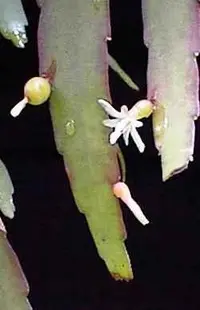
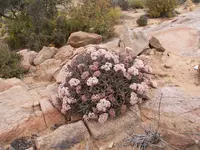
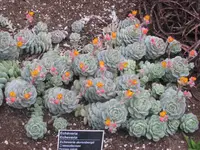
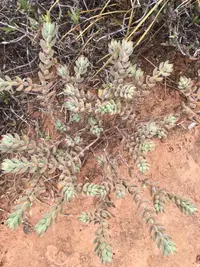
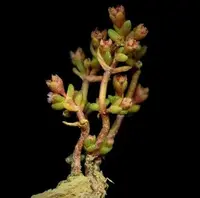
Crassula mesembryanthoides is a compact succulent shrub from arid regions of South Africa and Namibia. It forms dense clumps of short, upright stems covered in narrow, fuzzy leaves. The foliage often has a silvery or bluish tone, which helps the plant tolerate strong light and dry air. Small star-shaped flowers may appear at the tips of the stems in the right season.

This species is generally considered easy to grow for those familiar with succulents, as long as it receives bright light and very well-drained soil. Understanding how to care for Crassula mesembryanthoides mainly involves avoiding overwatering and prolonged cold, damp conditions.

Main Plant Requirements

Care Difficulty

Easy Care

Light Preference

Full Sun

Water Requirements

Low Water

Temperature Preference

Tropical / Frost Sensitive

Hardiness Zone

10–11

Soil Texture

Sandy, Loamy, Rocky

Soil pH

Slightly acidic (6.5–7.0), Neutral (7.0)

Soil Drainage

Well-drained

Fertilization

Minimal (feed rarely)

Get Personalized Care Plan

Scan your plant to receive care tips personalized for your specific plant

Available on iOS and Android

How to Care for the Crassula mesembryanthoides

This slow-growing succulent needs bright light but benefits from some protection during the harshest sun.

  • Provide 4–6 hours of direct sun daily, ideally gentle morning sun with bright, filtered light the rest of the day.
  • In hot, dry climates, shield from intense afternoon sun to prevent leaf scorch and faded color, especially in summer.
  • In lower-light spots, growth of Crassula mesembryanthoides becomes sparse; move gradually to a brighter position over 1–2 weeks.

This species prefers deep, infrequent watering and fast-drying soil.

  • Water only when the top 2–4 cm of soil are completely dry, then soak thoroughly until excess drains away.
  • In spring and summer, drying may take 7–14 days; in cooler or dimmer seasons, intervals often extend to several weeks.
  • Soft, yellowing, or translucent leaves indicate overwatering and possible root rot, while wrinkled, deflated leaves signal it has stayed dry too long.

This succulent prefers warm, dry conditions and does not tolerate hard frost.

  • Aim for 65–80°F (18–27°C) for active growth, with slightly cooler nights improving color and compact form.
  • Protect from temperatures below 40°F (4°C); brief drops to 32°F (0°C) may damage foliage and can kill roots if soil is wet.
  • In hot spells above 90°F (32°C), give light shade and good air movement to limit heat stress and sunscald on leaves.

This succulent prefers dry indoor air with low to moderate humidity around 30–40%.

  • Tolerates typical heated or air-conditioned rooms well and does not need extra humidity.
  • Watch for soft, pale, or blistered leaves, which can indicate excess humidity or poor air movement.
  • Ensure the plant has gentle airflow and avoid placing it in enclosed terrariums or near humidifiers.

This species needs a very fast-draining, gritty soil to prevent root rot.

  • Use a succulent or cactus mix based on coarse sand and fine gravel, not peat-heavy potting soil.
  • Aim for a loose, open texture that allows water to run through quickly while keeping air pockets around the roots.
  • A mix of 50–70% mineral components such as pumice, perlite, and coarse sand with 30–50% lean potting mix works well.
  • Keep pH slightly acidic to neutral (6.0–7.0) and avoid compacted, water-retentive or clay-heavy substrates that stay wet.

This compact succulent is well suited to container growing.

  • Choose a shallow, wide pot so the fibrous roots can spread without leaving large volumes of unused, wet mix at the bottom.
  • Unglazed terracotta works well because it allows moisture to evaporate faster, reducing the risk of rot in a dense planting.
  • Place the container where it cannot be knocked over easily, as the plant’s top growth can become slightly top-heavy over time.

This compact succulent benefits from light, targeted feeding rather than heavy fertilization.

  • Use a balanced liquid cactus or succulent fertilizer (around 10-10-10 or similar) diluted to 25–50% strength.
  • Feed Crassula mesembryanthoides every 4–6 weeks in spring and summer when actively growing.
  • Skip compost-rich mixes and avoid slow-release pellets that may stay too strong in small pots.
  • Stop feeding in fall and winter to match its slower growth and reduce root stress.

Pruning is useful to keep this small succulent dense, healthy, and well-shaped.

  • Carry out light pruning in late spring or early summer when growth is active.
  • Use clean, sharp scissors to remove dead, damaged, or shriveled stems and leaves on Crassula mesembryanthoides.
  • Trim back leggy shoots just above a node to encourage branching and a compact form.
  • Remove crowded inner stems to improve airflow and reduce the risk of rot.

This species prefers tight pots and only needs infrequent repotting to refresh the soil.

  • Check for roots circling the drainage holes, soil drying extremely fast, or slowed growth as signs it needs repotting.
  • Plan to repot Crassula mesembryanthoides every 2–3 years in late winter or early spring, just before active growth.
  • Move into a pot only 1–2 in wider, using a well-draining cactus mix to limit excess moisture.
  • Gently loosen the root ball, remove old compacted soil, and keep watering light for 1–2 weeks to reduce stress.

This plant is commonly propagated from stem cuttings taken from healthy, non-flowering shoots.

  • Take 5–8 cm stem cuttings in late spring or early summer, removing the bottom leaves.
  • Let cut ends dry and callus for 2–3 days to lower the risk of rot.
  • Insert cuttings into a gritty, barely moist cactus mix and keep in bright, indirect light.
  • Maintain warm conditions (68–75°F) with very light watering until roots form and new growth appears.

Winter care focuses on preventing cold damage and keeping the soil on the dry side.

  • Crassula mesembryanthoides is frost sensitive and should be kept above 40°F, ideally 50–60°F in winter.
  • Move container plants indoors to a bright windowsill before night temperatures drop near freezing.
  • Water sparingly, allowing the mix to dry almost completely between light waterings to avoid root rot.
  • In very bright indoor spots, rotate the pot occasionally to keep growth even and prevent stretching.

Care Tips

Rotate for symmetry

Turn the pot 90° every 2–3 weeks so stems develop evenly and do not lean or etiolated growth patterns toward the main light source.

Encourage compact growth

Pinch back the soft tips of overly long shoots in late spring to stimulate branching and maintain a dense, cushion-like form.

Dry-clean the foliage

Use a dry, soft brush or compressed air on low pressure to gently remove dust from the fine, hairy leaves so they can photosynthesize efficiently without damaging their surface.

Winter rest adjustment

In cooler months, move the plant to the brightest available spot and reduce disturbance so its semi-dormant growth phase remains stable and less prone to rot or stretching when growing Crassula mesembryanthoides.

Targeted pest checks

Inspect the leaf axils and lower stems every few weeks with a hand lens, and if mealybugs appear, spot-treat with a cotton swab dipped in 70% isopropyl alcohol rather than spraying the whole plant.

Common Pests and Diseases

Mealybugs

This pest is common on small-leaved Crassula species and often hides in the leaf axils and between dense, hairy stems. Symptoms include white cottony clusters, sticky honeydew, and gradual yellowing or distortion of new growth.

Solution

Remove visible insects with a cotton swab dipped in 70% isopropyl alcohol, then rinse the plant gently with lukewarm water to flush crevices. Isolate the plant, repeat alcohol spot-treatments weekly until no new insects appear, and improve light and air circulation as part of overall Crassula mesembryanthoides care instructions.

Spider mites

These insects favor the fine, hairy foliage of this species, especially in warm, dry indoor air. Symptoms include tiny pale speckling on leaves, slight webbing between stems, and a dull, dusty appearance of the plant.

Solution

Shower the plant with a firm but gentle stream of water, focusing on leaf undersides and stem joints, then allow it to dry in bright, airy conditions. For persistent infestations, apply a dilute insecticidal soap or horticultural oil to all plant surfaces every 5–7 days for several cycles while also slightly increasing humidity and reducing heat stress.

Soft scale

This pest appears as small, smooth, brown or tan bumps on stems and sometimes along the narrow leaves, and it can blend in with the plant’s natural texture. Symptoms include sticky honeydew, sooty mold growth on the honeydew, and slow decline of vigor.

Solution

Scrape or lift individual scales off with a fingernail or soft tool, and wipe affected areas with a cloth or cotton swab dipped in 70% isopropyl alcohol. After mechanical removal, monitor closely and use a couple of follow-up applications of insecticidal soap or horticultural oil, ensuring good light and avoiding overwatering to support recovery.

Edema

This disorder occurs when roots absorb water faster than the leaves can transpire, which is common in succulents kept too wet and cool. Symptoms include corky, blister-like spots or rough patches on leaves, especially on lower or shaded parts of the plant.

Solution

Allow the soil to dry more thoroughly between waterings, using a very free-draining succulent mix and a pot with drainage holes. Provide brighter light, avoid watering late in the day in cool conditions, and remove only the most damaged leaves once new growth appears healthy.

Fungal leaf spots

This disease can develop on dense, hairy foliage when moisture lingers on leaves and air circulation is poor. Symptoms include small brown or dark spots that can merge into irregular patches, sometimes with a slightly sunken or dry texture on the leaf surface.

Solution

Remove and discard affected leaves, then adjust care by watering at the soil line and keeping foliage as dry as possible. Improve airflow, provide bright light, and if spotting continues, apply a gentle, labeled fungicide suitable for succulents, following directions carefully and avoiding overwatering during treatment.

Interesting Facts

Leaf-hair sun shield

This species has dense, velvety hairs on its narrow leaves that help reflect intense sunlight and reduce water loss in its exposed, semi-arid habitats in South Africa.

Mesembryanthemum mimicry

The plant’s cylindrical, tapered leaves and overall tufted form resemble some mesembs (members of the Aizoaceae family), which is reflected in the species name mesembryanthoides, meaning mesembryanthemum-like.

Seasonal growth strategy

In its native environment it tends to grow most actively in the cooler, drier months, slowing or pausing growth during periods of intense summer heat to conserve moisture.

FAQs about Crassula mesembryanthoides

Brown leaves usually result from underwatering, intense sun scorch, or past overwatering that damaged roots. Check soil moisture, adjust watering, and remove only fully crispy leaves. If roots are mushy, repot into fresh, well‑draining mix.

Grow Healthy Plants with Botan Care

Keep your plants happy and healthy with plant identification, disease detection, and easy care guidance.

Botan plant care app — identify plants on mobile

Explore More Plants