Karoo Stonecrop Care (Crassula nudicaulis)

Karoo Stonecrop

About Karoo Stonecrop

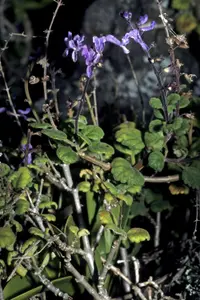
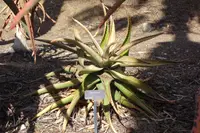
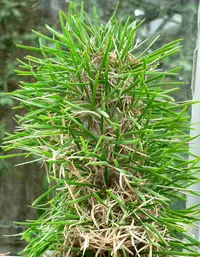
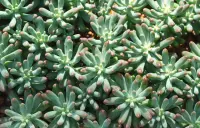
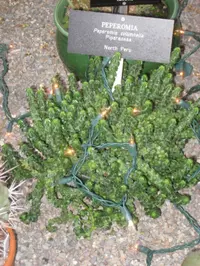
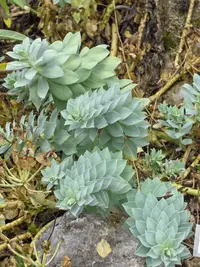
Karoo stonecrop (Crassula nudicaulis) is a small, low-growing succulent from arid regions of South Africa and Namibia. It forms tight clumps of narrow, fleshy leaves that store water.

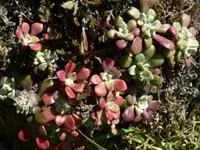
The plant often develops red or bronze tones in strong light and produces small, star-shaped flowers on short stems. Its compact growth makes it suitable for small pots, rock gardens, and mixed succulent containers.

This species is adapted to strong sun, well-drained, sandy soils, and long dry periods, which generally makes it resilient indoors if overwatering is avoided. Understanding how to care for Karoo Stonecrop mainly involves matching these dry, bright conditions in cultivation.

Main Plant Requirements

Care Difficulty

Easy Care

Light Preference

Full Sun

Water Requirements

Low Water

Temperature Preference

Tropical / Frost Sensitive

Hardiness Zone

9–11

Soil Texture

Sandy, Loamy, Rocky

Soil pH

Slightly acidic (6.5–7.0), Neutral (7.0)

Soil Drainage

Well-drained

Fertilization

Minimal (feed rarely)

Get Personalized Care Plan

Scan your plant to receive care tips personalized for your specific plant

Available on iOS and Android

How to Care for the Karoo Stonecrop

This compact succulent prefers bright, high-intensity light similar to its native South African habitats.

  • Provide 4–6 hours of direct morning sun plus bright light the rest of the day; east or southeast exposure suits Karoo Stonecrop well outdoors or near a window.
  • Allow light afternoon shade, especially in hot, dry climates, to prevent leaf scorch, red bleaching, or wrinkling from excessive sun and heat.
  • In winter, when days are shorter, move plants to a brighter spot or a south-facing exposure to maintain compact growth and avoid stretched, leggy stems.

This species prefers thorough but infrequent watering that allows the roots to dry between soakings.

  • Water only when the top 3–5 cm of soil are completely dry, then soak deeply so water drains freely away from the root zone.
  • In spring and summer, expect more frequent watering during active growth; in fall and winter, reduce frequency sharply as evaporation and growth slow.
  • Watch for soft, translucent, or blackening leaves as signs of overwatering, and for thin, wrinkled leaves or very light pots as signs that Crassula nudicaulis needs water.

This succulent handles a broad temperature range but grows best in mild, dry conditions.

  • Aim for 65–80°F (18–27°C) for strongest growth, keeping conditions on the drier side to match its semi-arid origin.
  • Short dips to 30–32°F (-1–0°C) may be survived if soil is dry, but extended frost or freezing, especially with wet soil, can damage roots and foliage.
  • In hot spells above 90°F (32°C), provide light afternoon shade and good air movement, and avoid watering during the hottest part of the day to limit stress.

This succulent tolerates a wide humidity range and rarely needs special humidity management indoors.

  • Aim for 30–50% humidity, similar to most heated or air-conditioned homes.
  • Dry air is usually tolerated; problems arise more from excess moisture than low humidity.
  • Watch for prolonged leaf softness or translucent patches as signs of too much humidity combined with poor air movement.

Crassula nudicaulis prefers a sharply draining, mineral-rich substrate that prevents waterlogging around its roots.

  • Use a gritty mix such as 60–70% inorganic material (pumice, perlite, coarse sand) blended with 30–40% lean potting mix or cactus mix.
  • Soil should feel loose, airy, and fast-draining, with no puddling after watering.
  • Aim for slightly acidic to neutral pH, roughly 6.0–7.0, which supports root function without nutrient lockout.
  • Avoid dense peat-heavy or clay-based mixes; if your mix compacts, amend with more coarse mineral material to improve aeration.

This species is well suited to container growing when drainage and root space are managed carefully.

  • Choose a shallow but wide pot to match the relatively shallow root system and allow spreading without deep, soggy soil columns.
  • Select unglazed terracotta if extra evaporation is needed to counter slow-drying mixes or cooler conditions.
  • Place the pot where excess water can drain away instantly and never sit in a cache saucer for longer than 10–15 minutes.

Crassula nudicaulis is a drought-adapted succulent that benefits from light, controlled feeding rather than heavy fertilization.

  • Use a balanced, low-strength liquid fertilizer (for example 10-10-10) diluted to 1/4–1/2 strength, or a very small amount of slow-release succulent food.
  • Feed once every 4–6 weeks during the active growing season in spring and summer only.
  • Do not fertilize in winter dormancy; growth is minimal and excess nutrients can cause weak, leggy stems or root burn.
  • Ensure soil is slightly moist before applying fertilizer to reduce the risk of salt buildup and root damage when caring for Karoo Stonecrop.

Pruning Crassula nudicaulis is mainly used to maintain compact shape and remove weak growth.

  • Best time for pruning is late winter to early spring, just before active growth resumes.
  • Remove dead, damaged, or shriveled leaves and any elongated, weak stems to encourage denser mounds.
  • Use clean, sharp scissors or small pruning shears to make precise cuts just above a node or branching point.
  • Light tip-pinching of young shoots can promote branching and a lower, more uniform form.

Crassula nudicaulis grows well in small containers and only needs infrequent repotting when clearly root-bound.

  • Check for roots circling the pot, slow growth, or water running straight through as signs it needs a larger container.
  • Plan repotting for spring, about every 2–3 years, when growth is starting and recovery is fastest.
  • Choose a shallow pot with drainage holes and a gritty cactus/succulent mix to prevent waterlogging.
  • Gently loosen the root ball, remove old soil, and water lightly after repotting to limit root stress and rot risk.

Crassula nudicaulis is commonly propagated from stem or leaf cuttings and by division of clumps.

  • Take healthy stem or leaf cuttings in late spring or early summer when growth is active.
  • Allow cut surfaces to dry and callus for 1–3 days to reduce rot, then place on or in barely moist gritty mix.
  • Keep cuttings in bright, indirect light at 68–77°F, watering very sparingly until roots form.
  • For division, gently separate offsets from the main clump, retain some roots, and replant each piece in well-drained soil.

Crassula nudicaulis has limited frost tolerance and benefits from protected conditions in cold climates.

  • In regions below 30°F, grow in containers and move plants indoors or into a frost-free greenhouse for winter.
  • Provide bright light and cool, dry conditions indoors, and reduce watering significantly to prevent root rot.
  • Outdoors in mild climates, use a very gritty soil and a light gravel mulch around the crown to keep the base dry in winter.

Care Tips

Seasonal light shift

Rotate outdoor containers or move indoor pots slightly closer to a bright window in late autumn to compensate for lower sun angles and reduce weak, stretched growth when growing Karoo Stonecrop.

Controlled clump division

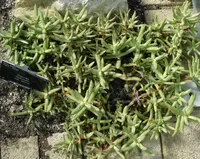
Every 2–3 years, lift and gently tease apart congested rosettes in spring, replanting only the firm, compact offsets to maintain an open, well-aerated clump and reduce rot risk at the crown.

Targeted pest inspection

Inspect the tight leaf bases and lower stems monthly with a hand lens, since mealybugs and scale often hide there first, and spot-treat early with a cotton swab dipped in 70% isopropyl alcohol before populations build.

Surface grit mulching

Top-dress the soil with a 0.5–1 cm layer of horticultural grit or small lava rock to keep leaf bases dry, prevent algae and moss on the soil surface, and stabilize shallow roots in small pots.

Cool-season rest

Provide a slightly cooler, drier period in winter by reducing watering and keeping the plant in a bright, cool room (around 50–60°F) to encourage tighter rosettes and better resilience in the next growth cycle.

Common Pests and Diseases

Mealybugs

This pest often hides in leaf bases and along stems, feeding on sap and causing dull, stunted growth and distorted new leaves. Symptoms include white, cottony clusters and sticky honeydew on or around the plant.

Solution

Isolate the plant, then dab visible insects with cotton swabs dipped in 70% isopropyl alcohol and repeat weekly until no new clusters appear. For larger infestations, rinse the plant under a gentle stream of lukewarm water, let it dry, then apply an insecticidal soap or neem oil spray labeled for succulents, ensuring good coverage of crevices.

Aphids

These insects cluster on tender new growth and flower stalks, sucking sap and causing curling, yellowing, and distorted leaves. Sticky honeydew and occasional sooty mold on nearby surfaces are common signs.

Solution

Move the plant to a sink or outdoors and wash colonies off with a firm but gentle stream of water, repeating every few days as needed. If aphids persist, apply insecticidal soap or a light neem oil spray to all above-ground parts, and reduce excess nitrogen fertilizer that encourages soft, aphid-prone growth.

Spider mites

This pest thrives on Karoo stonecrop in hot, dry conditions, causing fine stippling, a grayish cast on leaves, and very fine webbing between leaves and stems. Symptoms include slowed growth and premature leaf drop if the population becomes heavy.

Solution

Shower the plant thoroughly, focusing on the undersides of leaves, and repeat rinsing several times over 1–2 weeks to break the life cycle. In dry indoor air, slightly raise humidity around the plant without keeping soil wet, and use a horticultural oil or miticide labeled for spider mites if rinsing alone does not control the problem.

Edema

This physiological disorder develops when roots take up water faster than leaves can release it, especially in cool, low-light conditions. Symptoms include small, corky, tan or brown blisters or patches on leaves, often on plants kept too wet or in sudden shade after strong sun.

Solution

Allow the potting mix to dry more thoroughly between waterings, and provide bright light with some direct sun to match the water uptake. Ensure the container has good drainage, use a very gritty succulent mix, and avoid sudden shifts from strong outdoor sun to much lower indoor light without adjusting watering accordingly.

Leaf spot

This disease appears as small, circular to irregular brown or black spots on leaves, sometimes with yellow halos, and is favored by prolonged leaf wetness and poor air circulation. Symptoms include gradual cosmetic damage and occasional leaf drop, but stems usually remain healthy if the issue is caught early.

Solution

Remove and discard affected leaves and any plant debris from the soil surface, then adjust watering to keep foliage dry, especially in the evening. Improve airflow around the plant, avoid overhead watering, and if spots continue to spread, apply a broad-spectrum fungicide suitable for succulents according to label directions while monitoring new growth for clean leaves.

Interesting Facts

Leaf shape variability

This species shows marked leaf variation depending on habitat, forming narrow cylindrical leaves in drier, sunnier sites and broader, flatter leaves in slightly more sheltered or moister locations, an adaptation that helps balance water loss and light capture.

Seasonal color change

In strong light and drought, the normally green leaves often turn reddish or bronze, a stress response caused by protective pigments called anthocyanins that help shield leaf tissues from excess sunlight and UV radiation.

Rocky habitat specialist

In its native South African range, this plant often grows in shallow soil pockets among rocks or gravelly slopes, where its compact root system exploits brief rainfall and its succulent leaves store water between erratic precipitation events.

FAQs about Karoo Stonecrop

Browning leaves usually result from underwatering, intense direct sun scorch, or accumulated fertilizer salts at the roots. Check soil moisture, flush the pot occasionally with plain water, and remove dead foliage to reduce stress and prevent further damage.

Grow Healthy Plants with Botan Care

Keep your plants happy and healthy with plant identification, disease detection, and easy care guidance.

Botan plant care app — identify plants on mobile

Explore More Plants