Rotate For Symmetry
Turn the pot 90° every 2–3 weeks so the leaves develop evenly and the plant does not lean or twist toward a single light source.

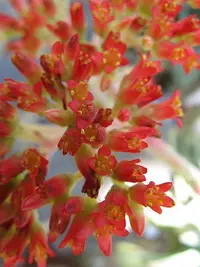
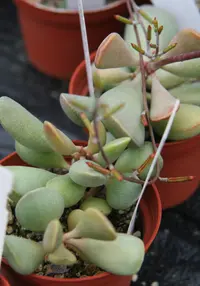
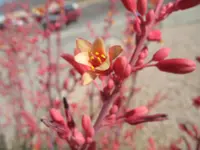
Propeller plant, Crassula perfoliata var. falcata, is a compact succulent shrub from arid regions of South Africa. It stores water in thick, gray-green, overlapping leaves shaped like airplane propellers. Mature plants may produce bright red, clustered flowers on tall stalks, adding strong vertical accents in containers or rock gardens. Growth is usually slow to moderate and remains tidy. This species suits beginners because it tolerates some neglect, provided it receives strong light and fast-draining soil. Understanding how to care for Propeller Plant mainly involves avoiding excess water and providing good airflow around the foliage.

Care Difficulty
Easy Care

Light Preference
Full Sun

Water Requirements
Low Water

Temperature Preference
Tropical / Frost Sensitive

Hardiness Zone
10–11

Soil Texture
Sandy, Loamy, Rocky

Soil pH
Slightly acidic (6.5–7.0), Neutral (7.0)

Soil Drainage
Well-drained

Fertilization
Minimal (feed rarely)
Scan your plant to receive care tips personalized for your specific plant
Available on iOS and Android
This succulent prefers bright, direct sun with some protection during the hottest hours.
This drought-tolerant succulent needs infrequent, deep watering and fast drainage.
This species prefers warm, dry conditions and is sensitive to frost and prolonged cold.
This succulent prefers dry indoor air and rarely needs extra humidity attention.
Use a very fast-draining, mineral-based mix to prevent root and stem rot.
This species is well suited to container cultivation.
This succulent has modest nutrient needs, but thoughtful feeding supports compact growth and flowering in Propeller Plant.
Light pruning keeps Crassula perfoliata var. falcata dense, tidy, and encourages better flowering over time.
Container-grown plants benefit from occasional repotting to refresh the mix and manage root health.
This species is commonly propagated to expand plantings or replace older, woody specimens.
This succulent is tender and requires thoughtful winter care in regions with cold winters.

Plant Health Check
Not sure what's wrong with your plant? Check your plant's health inside the app.
This species forms pairs of grey-green leaves that twist and overlap like airplane propeller blades, a growth pattern that inspired the common name propeller plant.
It uses crassulacean acid metabolism (CAM), opening stomata mainly at night to take in CO₂, which reduces water loss and helps it survive in its native arid habitats of South Africa and Mozambique.
Mature plants produce dense clusters of bright red, tubular flowers held on tall stems in summer, providing abundant nectar for local pollinators in its native range.

Historical records indicate that this species was already in European succulent collections by the early 18th century, making it one of the earlier South African crassulas to be cultivated and described by botanists.
Lack of flowers usually comes from insufficient light, too much nitrogen fertilizer, or winter temperatures that stay too warm. Provide strong light, a slight cool, dry rest in winter, and avoid heavy feeding to encourage buds.
Keep your plants happy and healthy with plant identification, disease detection, and easy care guidance.