Crassula tomentosa var. glabrifolia Care

Crassula tomentosa var. glabrifolia

About Crassula tomentosa var. glabrifolia

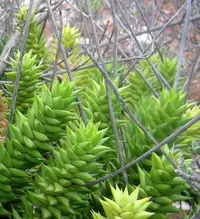
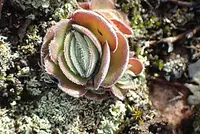
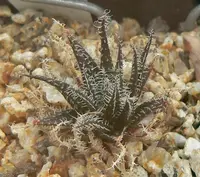
Crassula tomentosa var. glabrifolia is a small, compact succulent from arid regions of South Africa. It forms tight rosettes of fleshy, grey‑green leaves with a smooth, slightly powdery surface. New leaves stack neatly over older ones, creating a layered, architectural look that stays low and tidy in a pot.

This plant grows slowly and stays relatively small, which makes it suited to windowsills and small indoor collections. It is considered easy to manage if given bright light, very well-drained soil, and careful watering. Understanding how to care for Crassula tomentosa var. glabrifolia mainly comes down to avoiding excess moisture and providing enough sun.

Main Plant Requirements

Care Difficulty

Easy Care

Light Preference

Full Sun

Water Requirements

Low Water

Temperature Preference

Tropical / Frost Sensitive

Hardiness Zone

10–11

Soil Texture

Sandy, Loamy, Rocky

Soil pH

Slightly acidic (6.5–7.0), Neutral (7.0)

Soil Drainage

Well-drained

Fertilization

Minimal (feed rarely)

Get Personalized Care Plan

Scan your plant to receive care tips personalized for your specific plant

Available on iOS and Android

How to Care for the Crassula tomentosa var. glabrifolia

This compact succulent prefers bright, dry conditions with several hours of direct light each day.

  • Provide 4–6 hours of direct morning sun with bright, filtered light the rest of the day to keep rosettes compact and leaves well colored.
  • In very hot climates, give light shade from strong afternoon sun to prevent leaf scorch and pale, rough patches on the foliage.
  • Outdoors, adjust seasonally: move pots or choose a site with more sun in winter and slight afternoon shade in peak summer for Crassula tomentosa var. glabrifolia.

This species stores water in its leaves and needs infrequent, careful watering to avoid root problems.

  • Water only when the top 3–5 cm of soil are completely dry, then soak thoroughly and let excess drain away fully.
  • Reduce watering sharply in winter, sometimes to as little as once every 3–4 weeks, especially in cool, low-light conditions.
  • Watch for shriveling lower leaves as a sign of underwatering and for soft, translucent, or yellowing leaves as early signs of overwatering in Crassula tomentosa var. glabrifolia.

This succulent prefers warm, dry air and does best with mild temperatures and good airflow.

  • Aim for an active growth range of 65–80°F (18–27°C), avoiding sudden swings, especially when light levels are high.
  • Protect from cold below 40°F (4°C), as light frost can scar or kill the foliage and extended chill can damage roots.
  • In hot spells above 90°F (32°C), provide light afternoon shade and avoid reflected heat from walls or paving that can overheat the plant.

This succulent handles typical indoor humidity well and rarely needs adjustment.

  • Ideal humidity is 30–50%, matching most heated or air-conditioned homes.
  • Dry air is usually tolerated, but very low humidity combined with heat can cause leaf edges to crisp and wrinkle.
  • If air is extremely dry, place the pot on a pebble tray with water below the pot base, without wetting the roots.

This species prefers a very fast-draining, mineral-rich substrate that dries quickly between waterings.

  • Use a gritty mix such as 50–70% inorganic materials (pumice, coarse sand, perlite) with 30–50% cactus potting mix.
  • Aim for slightly acidic to neutral pH, around 6.0–7.0, which suits Crassula tomentosa var. glabrifolia roots well.
  • Ensure the mix feels loose and crumbly; large mineral particles improve aeration and reduce the risk of rot.
  • Avoid dense peat-heavy or clayey substrates that stay wet for more than 2–3 days after watering.

This compact succulent is very suitable for container growing.

  • Choose a shallow, wide pot so the fibrous root system can spread while the mix still dries rapidly.
  • Prefer unglazed terracotta in humid or cool climates to allow faster evaporation and reduce moisture retention.
  • Place the container where it cannot be easily knocked, since the rosette can become slightly top-heavy as it matures.

This compact succulent needs only light feeding to stay healthy in pots.

  • Use a balanced liquid fertilizer (around 10-10-10) diluted to 25–50% strength for caring for Crassula tomentosa var. glabrifolia in active growth.
  • Feed once every 4–6 weeks in spring and summer only, after watering the soil lightly.
  • Skip fertilizer in autumn and winter when growth slows and the plant rests.
  • Avoid rich compost or heavy slow-release products that keep soil too moist or cause soft, weak growth.

Pruning is minimal but helps maintain a compact, tidy form for this species.

  • Best time for light pruning is late spring to summer, when growth is strongest.
  • Pinch or clip off dead, shriveled, or damaged leaves at the base using clean scissors or fingers.
  • Remove elongated or crowded stems to improve air flow and keep Crassula tomentosa var. glabrifolia dense.
  • Discard pruned material and avoid cutting into the main stem unless removing clearly unhealthy tissue.

This succulent prefers a snug pot and only needs infrequent repotting.

  • Repot every 2–3 years in spring if roots circle the pot, emerge from drainage holes, or growth slows noticeably.
  • Choose a container just 1–2 in wider with excellent drainage and a gritty cactus mix to limit moisture stress.
  • Gently loosen circling roots, remove some old soil, and keep the original root ball mostly intact.
  • Water lightly after repotting Crassula tomentosa var. glabrifolia, then let the mix dry almost fully to reduce root stress.

This plant is commonly propagated from stem or leaf cuttings rather than seed.

  • Take healthy stem or firm leaf cuttings in late spring or summer when growth is active.
  • Allow cut surfaces to callus for 1–3 days in a dry, shaded place to reduce rot risk.
  • Place callused pieces on or slightly in a dry, gritty mix, then mist very lightly until roots form.
  • Provide bright, indirect light, warm temperatures around 70–80°F, and excellent air flow for reliable rooting.

This succulent is not frost hardy and needs protection in regions with cold winters.

  • Move container plants indoors before temperatures drop below 40°F, giving bright, cool, dry conditions.
  • Keep soil nearly dry in winter, watering just enough to prevent complete shriveling.
  • Avoid cold drafts and windowpanes that can cause leaf or stem damage from freezing.
  • Do not use mulch around pots; instead rely on a freely draining mix that dries between sparse winter waterings.

Care Tips

Protect fuzzy foliage

Keep leaves dry by bottom-watering or directing the stream only onto the soil, since prolonged moisture on the felted leaf surface encourages spotting and fungal issues.

Seasonal rest adjustment

In late fall and winter, reduce both watering volume and fertilizer to allow a light rest period, which supports compact rosette growth and better resilience the following season.

Rotate for symmetry

Rotate the pot 90° every 2–3 weeks during active growth so all sides receive similar light, preventing lopsided rosettes and helping the stacked leaves stay evenly spaced.

Tight-cluster repotting

When repotting, set offsets close together in a shallow, wide pot to mimic natural clumping, which stabilizes the plant’s top-heavy rosettes and reduces stem breakage.

Targeted pest checks

Inspect the leaf bases and between stacked leaves every few weeks for mealybugs or scale, using a cotton swab dipped in isopropyl alcohol to remove any pests before they spread when caring for Crassula tomentosa var. glabrifolia.

Common Pests and Diseases

Mealybugs

This pest appears as white, cottony clusters tucked between leaf pairs and along stems, often causing puckered or stunted new growth. Symptoms include sticky honeydew and sooty mold developing on the leaf surface over time.

Solution

Isolate the plant, then dab visible insects with cotton swabs dipped in 70% isopropyl alcohol and repeat weekly until no new clusters appear. For heavier infestations, rinse the plant thoroughly with lukewarm water, allow to dry in bright light, and use a labeled insecticidal soap or neem oil spray, focusing on tight leaf joints and the undersides of leaves.

Aloe mite (eriophyid mite)

This pest causes distorted, blistered, or tumor-like growths on leaves and at the growing point that do not rub off. Symptoms include thickened, rough, or warted tissue that slowly spreads across the rosette.

Solution

Remove and discard all affected leaves and rosettes well below the damaged tissue, using sterilized tools and avoiding contact with healthy plants. Severely distorted plants are best discarded; for valuable specimens, maintain strong light, excellent airflow, and strict quarantine while applying a sulfur-based miticide labeled for ornamental succulents according to directions.

Soft scale

These insects appear as small, dome-shaped brown or tan bumps along stems and leaf bases and do not move when touched. This pest feeds on sap, leading to pale foliage, honeydew, and eventual leaf drop if ignored.

Solution

Gently scrape or peel off individual scales with a fingernail or cotton swab, then wipe stems and leaf bases with diluted 70% isopropyl alcohol. Follow up with 2–3 applications of insecticidal soap or horticultural oil at 7–10 day intervals, keeping the plant in bright, airy conditions and avoiding overfertilizing, which encourages rapid, succulent growth that scale prefers.

Edema (oedema)

This physiological disorder produces corky, tan to brown raised spots on lower and older leaves caused by roots taking up water faster than leaves can transpire it. Symptoms include rough, scabby patches that remain even after watering is corrected but usually do not spread quickly once conditions stabilize.

Solution

Allow the soil to dry more thoroughly between waterings, especially in cool or low-light periods, and ensure the pot and mix drain rapidly. Provide stronger light, good airflow, and a slightly smaller pot with a very gritty, mineral substrate to reduce excess moisture uptake, which is a core part of Crassula tomentosa var. glabrifolia care instructions.

Fungal leaf spots

This disease shows as small, dark brown to black spots or patches on leaves, sometimes starting near old mechanical damage or water-sitting areas. Symptoms include slow-spreading lesions that may cause localized yellowing and occasional leaf drop in prolonged humid or poorly ventilated conditions.

Solution

Promptly remove and discard affected leaves, keep foliage dry, and increase airflow around the plant by spacing it away from others and avoiding overhead watering. If spotting continues to spread, treat with a sulfur or copper-based fungicide labeled for ornamental succulents, applying lightly and allowing leaves to dry fully in bright, indirect light.

Interesting Facts

Karoo cliff specialist

This variety is naturally restricted to rocky slopes and cliffs in the Little Karoo region of South Africa, where it grows in thin mineral soils with intense sun and large day–night temperature swings.

Velvet leaves turned smooth

Compared with the typical Crassula tomentosa, this variety has much less surface hair and a noticeably smoother leaf texture, a morphological change that is used by botanists to distinguish it within the species complex.

Stacked rosette architecture

Its leaves form tight, stacked rosettes along a short stem, an arrangement that shades lower leaves and reduces water loss in its arid habitat while still exposing enough surface for photosynthesis.

FAQs about Crassula tomentosa var. glabrifolia

Growth is relatively slow. Rosettes usually add only a few leaves per year and may take several seasons to form a clump. Limited root mass and drought-adapted physiology mean it will not fill a pot quickly.

Grow Healthy Plants with Botan Care

Keep your plants happy and healthy with plant identification, disease detection, and easy care guidance.

Botan plant care app — identify plants on mobile

Explore More Plants