


Use Sterile Substrate
Prepare hardwood-based substrate from well-aged sawdust or chips and sterilize or thoroughly pasteurize it to minimize competing fungi and bacteria before attempting to grow Crepidotus mollis.

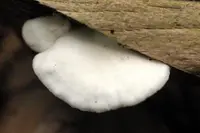
Peeling oysterling, Crepidotus mollis, is a small, soft, saprobic fungus that grows on decaying wood rather than in soil like typical houseplants. It forms overlapping, shell-like caps with a gelatinous, peeling surface, usually in beige to pale brown tones. The gills are light at first and darken as spores mature.
This species occurs widely in temperate forests, especially on fallen branches and dead trunks of broadleaf trees. It is not commonly cultivated, and attempts to care for Peeling Oysterling at home are experimental and suited mainly to advanced hobbyists.
In nature it prefers cool, shaded, consistently moist, well-ventilated conditions on thoroughly decomposed wood rather than standard potting mixes or containers.

Care Difficulty
Moderate Care

Light Preference
Shade

Water Requirements
Keep Soil Moist

Temperature Preference
Cool Climate

Hardiness Zone
Unknown

Soil Texture
Organic-rich, Loamy

Soil pH
Acidic (5.5–6.5)

Soil Drainage
Moist but well-drained

Fertilization
Minimal (feed rarely)
Scan your plant to receive care tips personalized for your specific plant
Available on iOS and Android
This saprophytic fungus prefers low to moderate light typical of shaded woodland environments.
This wood-inhabiting fungus needs consistently moist, not saturated, conditions around its host material to fruit well.
This species fruits best in cool to mild conditions and declines in very hot or freezing weather.
This wood-inhabiting fungus prefers consistently moist, humid air similar to a damp forest floor.
Crepidotus mollis grows on decaying wood, so it relies on a wood-based, organic substrate rather than mineral soil.
This species can be grown in containers only when they are used to hold inoculated wood or wood-based substrate rather than soil.
This wood-rotting fungus usually gains all nutrients from decaying wood and does not benefit from added fertilizer.
Pruning is not relevant for Crepidotus mollis, which is a short-lived fungus rather than a structural plant.
Transplanting is rarely appropriate because this fungus naturally colonizes decaying wood in situ.
Propagation of Crepidotus mollis for hobby culture is uncommon and technically demanding.
Outdoor colonies on logs typically need no dedicated winter care in temperate climates.

Plant Health Check
Not sure what's wrong with your plant? Check your plant's health inside the app.
The cap of this fungus becomes distinctly gelatinous and rubbery when moist, allowing it to tolerate repeated wetting and drying cycles on exposed decaying wood.
As it ages, the outer gelatinous layer of the cap often separates and curls back from the flesh, creating the characteristic peeling or lifting edge that gives the species its common name, peeling oysterling.
Unlike many oyster-like fungi with pale spore prints, this species produces a dull brown to rusty-brown spore deposit, which is a key microscopic and field character used by mycologists to confirm identification.

Crepidotus mollis often fruits directly from the bark of fallen broadleaf branches, forming overlapping, shell-like clusters that can quickly cover sections of decaying wood and accelerate the breakdown of lignin-rich tissues in temperate forests.
Identification of small brown wood-inhabiting fungi is difficult, and this species is not considered a recommended edible. It has insubstantial flesh and limited culinary value. For safety, it is best treated as non-edible in home settings.
Keep your plants happy and healthy with plant identification, disease detection, and easy care guidance.

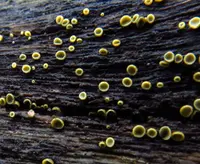
Chlorosplenium chlora
Chlorosplenium chlora
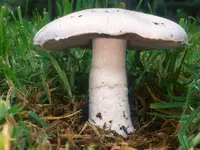
Meadow Mushroom
Agaricus campestris
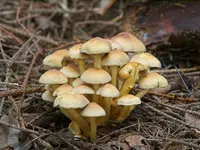
Sulphur Tuft
Hypholoma fasciculare
Panaeolus olivaceus
Panaeolus olivaceus
Franchet's Amanita
Amanita franchetii
Austropaxillus infundibuliformis
Austropaxillus infundibuliformis
Small Funnel-Veil Amanita
Amanita multisquamosa
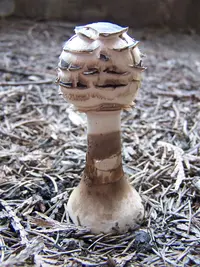
Shaggy Parasol
Chlorophyllum brunneum