
smooth hawksbeard Identification (Crepis capillaris)

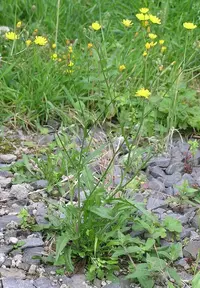
Recognize smooth hawksbeard by its low rosette of deeply lobed leaves and thin, branching stems that carry many small yellow flower heads.

Plants are usually 6 to 24 inches tall (15 to 60 cm), with mostly leafless upper stems and dandelion-like heads about 1/2 inch (1 cm) wide.

Crepis capillaris Identification

Check Your Plant with Botan

Check your plant ID by uploading a clear photo to Botan.

Clear images work best. Avoid photos taken too close or too far away

  • 1 free identification
  • No sign-up
  • 30,000+ plants in database

Check the plant’s flower heads, stems, and basal leaves first for Crepis capillaris.

  • Small yellow dandelion-like flower heads, usually about 1/2 inch (1.2 cm) across, sit singly on slender branch tips.
  • Stems are thin, much branched above, mostly leafless, and often carry a few small bracts near the flower heads.
  • Most leaves form a low basal rosette; they are narrow, deeply lobed or toothed, and taper toward the base.
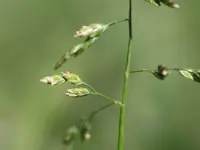
  • After flowering, the seed heads become small white puffballs with a neat, rounded outline.

A branched, airy top over a lobed basal rosette is a useful visual combination.

Crepis capillaris shows clear stage-based changes in leaf form, stem structure, and seed heads.

  • Juvenile plant: Begins as a low basal rosette with narrow, lobed leaves held close to the ground; no obvious upright flowering stem is present yet.
  • Mature plant: Forms a slender, branching plant about 6-24 inches (15-60 cm) tall, with smaller stem leaves and a much airier outline than the rosette stage.
  • Flowering stage: Branch tips carry many small yellow dandelion-like flower heads, each on thin stalks; the open, repeatedly forked top becomes the main identifying feature.
  • Fruiting stage: After flowering, heads turn into white, puff-like seed clusters; the plant looks finer and paler, with spent yellow heads replaced by parachute-tufted fruits.

In spring, Crepis capillaris appears first as a low rosette of narrow, toothed leaves. By late spring into summer, thin branched stems rise above the rosette and carry many small yellow dandelion-like flower heads. After flowering, the heads turn into round white seed tufts that stay visible for a time. This shift from flat rosette to airy flowering and seeding stems is a useful seasonal clue.

A few small yellow lawn daisies can be mistaken for smooth hawksbeard.

catsear(Hypochaeris radicata)

Both make yellow dandelion-like heads on leafless stems. Catsear has hairy leaves and branched stems with a few swollen joints; Crepis capillaris is usually much smoother, with finer stems and less obviously hairy foliage.

nipplewort(Lapsana communis)

Both can show many small yellow heads on branched stems. Nipplewort has broader, softer leaves and the flower heads do not turn into large white puffballs like the seed heads of Crepis capillaris.

Crepis capillaris is native to Europe and western Asia, and it is widely naturalized elsewhere. Its usual settings are disturbed, open places such as lawns, roadsides, pastures, waste ground, and cracks along paths. That habitat is useful for identification because this species often appears in short, frequently mown grass and compacted urban or farmed ground, rather than in woodland, wetlands, or dry rocky sites. Finding it in these everyday grassy settings helps narrow the options among small yellow daisy relatives.

Not Sure About the ID?

Use Botan to compare a photo and confirm the plant, which helps reduce mix-ups with similar-looking species.

FAQ

Look for a basal rosette of lobed leaves, many thin branching stems, and small yellow dandelion-like flower heads. For Crepis capillaris identification, the stems are usually smooth and carry numerous narrow heads in a loose spray.

More Plant Identification Guides

Identify It. Learn More About It.

Snap a photo with Botan to identify the plant, then get species-specific care information, safety notes, and common problems.

Botan app identifying a plant from a photo
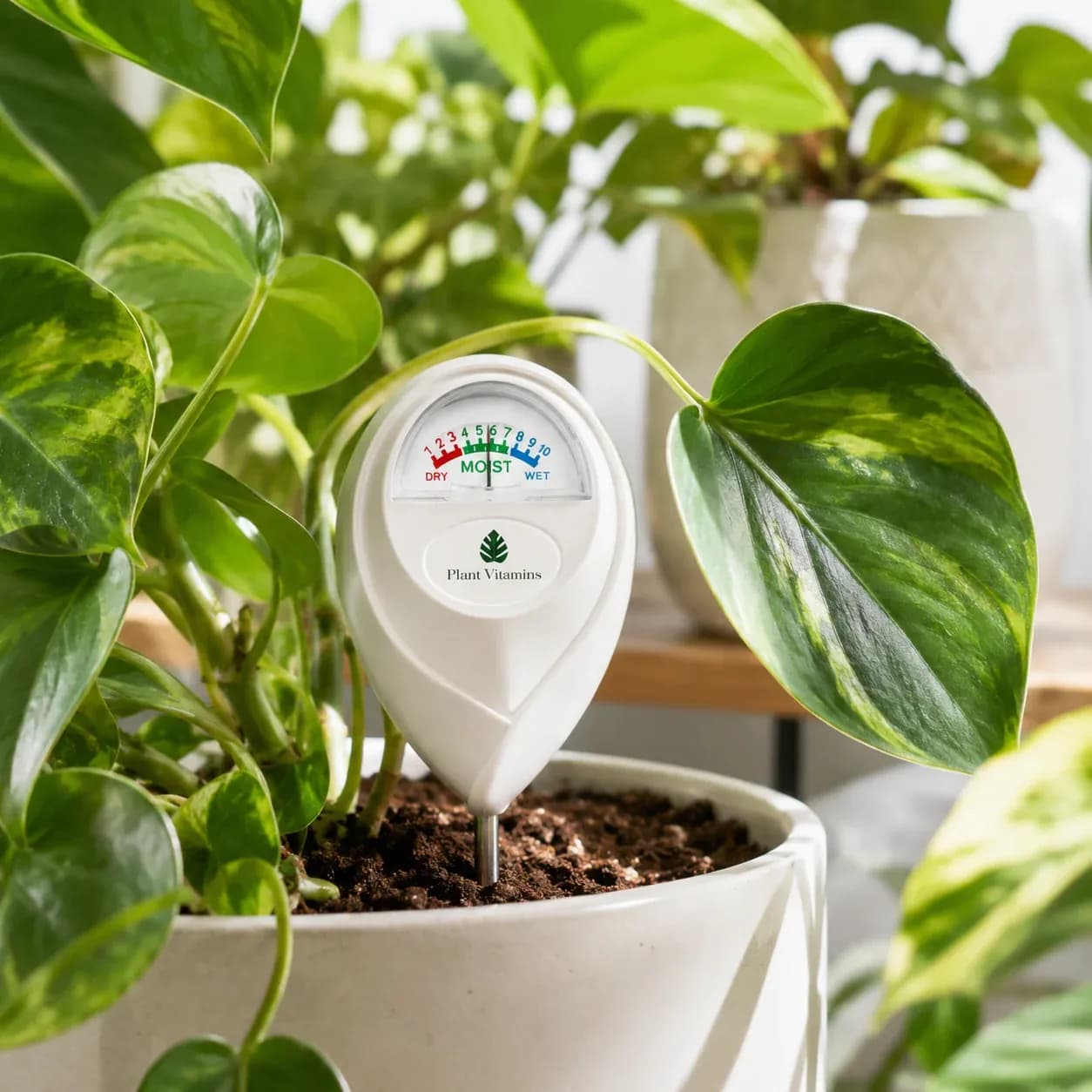
How to Use a Moisture Meter for Plants

5 min read · 4 Sept 2026

How to Use a Moisture Meter for Plants

Watering by feel kills plenty of houseplants. A moisture meter checks the soil for you, and takes the guesswork out of it. This guide will show you how to use it correctly, from the first touch to the final reading.

Beginner Guides

How to Use a Moisture Meter for Plants
12 Best Landscaping Trees for Your Garden

8 min read · 6 Oct 2026

12 Best Landscaping Trees for Your Garden

Choosing the landscape tree depends on what your garden needs most. These 12 options include compact flowering specimens, colorful deciduous trees, shade varieties, and evergreens suitable for screening and year-round structure.

Plant Recommendations
12 Best Landscaping Trees for Your Garden
Rice Water for Plants – Which Plants Love It and How to Make It

8 min read · 14 Jul 2026

Rice Water for Plants – Which Plants Love It and How to Make It

Rice water can be an ideal DIY solution for orchids, roses, or fruiting plants. It supports growth, leaf count, and height. We’ll share how to make and apply it correctly for your plant.

Plant Care
Rice Water for Plants – Which Plants Love It and How to Make It