smooth hawksbeard Care (Crepis capillaris)

smooth hawksbeard

About smooth hawksbeard

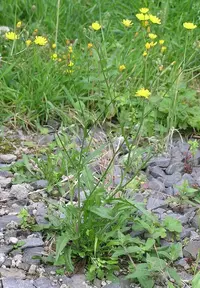
Smooth hawksbeard, Crepis capillaris, is a small annual herb in the daisy family, often seen in lawns, roadsides, and disturbed urban ground. It forms loose rosettes of narrow leaves and sends up thin, branching stems topped with many small yellow flower heads that resemble miniature dandelions. Seeds are wind-dispersed, so it can spread quickly and appear as a volunteer in gardens and containers. This species is adaptable, tolerating poor soils and irregular moisture, which makes basic care for smooth hawksbeard straightforward in most outdoor conditions. It generally prefers sunny, open sites with free-draining soil and does best when not heavily shaded or overwatered.

Main Plant Requirements

Care Difficulty

Easy Care

Light Preference

Full Sun

Water Requirements

Moderate Water

Temperature Preference

Cool Climate

Hardiness Zone

5–9

Soil Texture

Sandy, Loamy, Rocky

Soil pH

Slightly acidic (6.5–7.0), Neutral (7.0)

Soil Drainage

Well-drained

Fertilization

Minimal (feed rarely)

Get Personalized Care Plan

Scan your plant to receive care tips personalized for your specific plant

Available on iOS and Android

How to Care for the smooth hawksbeard

This annual wildflower prefers bright conditions with moderate direct sun exposure for strong growth.

  • Provide 4–6 hours of direct morning to early afternoon sun, with light afternoon shade in hotter regions to reduce leaf scorch risk.
  • It tolerates partial shade, especially in summer; 2–4 hours of sun plus bright open shade still supports flowering in smooth hawksbeard.
  • In spring and fall, allow more direct sun, but in mid-summer use nearby taller plants or structures to give filtered light during the hottest hours.

This species prefers evenly moist, well-drained soil and reacts quickly to prolonged dryness or saturation.

  • Water when the top 3–5 cm of soil feels dry, aiming for a thorough soak that moistens the root zone without leaving standing water.
  • In cool spring and fall, watering needs drop; in hot, windy summer weather, expect faster drying and check soil every 1–2 days instead of by calendar.
  • Watch foliage as a guide: limp, dull leaves signal thirst, while yellowing, soft stems or persistent wet soil indicate poor drainage and overwatering for Crepis capillaris.

This plant grows best in mild, temperate conditions and dislikes hard freezes and extreme heat.

  • Active growth is strongest at 60–75°F (16–24°C), with flowering supported by consistently cool to warm, not hot, conditions.
  • It tolerates light chills down to about 32°F (0°C), but repeated or hard frosts below 28°F (-2°C) can damage foliage and shorten its life cycle.
  • In hot spells above 85°F (29°C), growth can stall; combine light afternoon shade and consistent soil moisture to reduce heat stress and premature decline.

Humidity is not a major factor for Crepis capillaris, which adapts well to typical indoor and outdoor air conditions.

Crepis capillaris prefers light, well-drained mineral soils that do not stay wet for long.

  • Use a sandy or loamy mix with moderate organic matter to keep the structure open.
  • Blend roughly 60–70% standard potting mix with 30–40% coarse sand or fine grit for faster drainage.
  • Aim for slightly acidic to neutral pH around 6.0–7.0, avoiding very acidic or chalky extremes.
  • Avoid compacted, heavy clay or waterlogged sites, which reduce aeration and promote root rot.

This species can be grown in containers if drainage and root space are managed carefully.

  • Choose a pot at least 15–20 cm deep so the taproot can develop without curling tightly.
  • Select a slightly wider pot than the root mass to reduce rapid drying caused by thin, spreading roots.
  • Use a gritty mix and elevate the container on feet or bricks to prevent drainage holes from blocking.

Crepis capillaris is a light feeder that usually needs only modest nutrition in average garden soil.

  • Use a balanced NPK granular fertilizer or compost if growth appears weak or leaves pale.
  • Apply a light feeding once in early spring and again midseason during active growth.
  • Dilute liquid feeds to 1/2–1/4 strength to prevent soft, weak growth.
  • Stop feeding in late summer; do not fertilize during winter dormancy.

Pruning Crepis capillaris is mainly about tidiness and encouraging fresh, flowering growth.

  • Deadhead spent flower stems through the growing season to extend blooming and reduce self-seeding.
  • Cut back dead, damaged, or leggy shoots in late summer to maintain a compact habit.
  • Use clean, sharp scissors or hand pruners to make neat cuts just above a leaf node.
  • At season’s end, shear spent plants close to ground level if self-sowing is not desired.

This species is usually grown as a short-lived wildflower or self-seeding annual, so transplanting is simple and infrequent.

  • Transplant Crepis capillaris seedlings in spring once they have 2–3 true leaves and soil is workable.
  • Move plants if roots lightly fill the plug or small pot; avoid dense root circling to limit shock.
  • Lift with a small trowel, keeping as much soil around the roots as possible, and replant at the same depth.
  • Water gently after transplanting and keep soil evenly moist for 1–2 weeks to reduce stress.

Crepis capillaris is most commonly propagated from seed, which germinates quickly under basic conditions.

  • Sow seeds in early spring or fall on the soil surface or barely covered, as light helps germination.
  • Provide 60–70°F temperatures and consistently moist, well-drained substrate for 1–3 weeks.
  • Space or thin seedlings to avoid crowding and encourage stronger, more upright plants.
  • Allow some flower heads to mature and dry if self-sowing and naturalized spread are desired.

In most temperate climates, Crepis capillaris behaves as a hardy annual or short-lived perennial needing little winter care.

  • Mature outdoor plants tolerate light frosts, but hard freezes may kill foliage and crowns.
  • In colder zones, treat as an annual and rely on self-sown seed for next year’s plants.
  • For pots, move containers to a sheltered, unheated area to reduce freeze–thaw stress on roots.

Care Tips

Succession Sowing

For a continuous display, resow small patches every 2–3 weeks in the growing season so older plants can be removed as they become leggy or set seed heavily.

Timed Deadheading

If self-seeding is not desired, cut and remove flower stems as soon as most florets fade, before the seed heads fully fluff, to greatly reduce unwanted spread.

Controlled Self-Seeding

To maintain a naturalized look without overcrowding, allow seed heads to mature only on selected plants, then shake them gently over bare soil where new plants are desired and remove the rest.

Lean-Growth Management

In rich beds, reduce floppiness by growing smooth hawksbeard alongside slightly taller, sturdy annuals that act as informal supports instead of using stakes.

Dry-Site Establishment

When establishing in drier areas, lightly firm the soil around young plants and top-dress with a thin mineral mulch such as grit or fine gravel to reduce surface drying and improve seedling survival.

Everything About smooth hawksbeard

Common Pests and Diseases

Powdery mildew

This disease causes a white, powdery coating on leaves and stems, often in dense stands or humid, shaded sites. Symptoms include distorted, yellowing foliage and reduced vigor.

Solution

Remove heavily infected leaves to reduce spore load, thin nearby vegetation to improve light and airflow, and avoid overhead watering. If needed, apply a sulfur or potassium bicarbonate fungicide labeled for powdery mildew, following label directions carefully.

Downy mildew

This disease produces pale or yellow angular spots on the upper leaf surface with a gray to violet downy growth on the underside, especially in cool, moist conditions. Symptoms include leaf blight and premature leaf drop in crowded populations.

Solution

Space plants to reduce humidity around foliage, water at soil level in the morning, and remove infected leaves to limit spread. In persistent cases, use a phosphonate or copper-based fungicide appropriate for downy mildew, and avoid planting new smooth hawksbeard in low, poorly ventilated sites.

Aster yellows

This disease, caused by a phytoplasma spread by leafhoppers, leads to yellowing, stunted growth, and abnormal, sometimes leafy flower structures. Symptoms include distorted flower heads and poor seed set.

Solution

Promptly remove and destroy symptomatic plants to eliminate reservoirs of the pathogen and reduce spread to other composites. Manage surrounding weeds in the aster family that can host both the phytoplasma and leafhoppers, and where practical use fine mesh barriers or distance from susceptible ornamentals.

Aphids

These insects cluster on young stems and flower stalks, sucking sap and excreting sticky honeydew that can attract sooty mold. This pest can cause curling, yellowing, and distortion of foliage and flower buds.

Solution

Wash colonies off plants with a firm stream of water and pinch off heavily infested shoot tips. Encourage or introduce natural enemies such as lady beetles, and if populations remain high, use insecticidal soap or a light horticultural oil directed to the undersides of leaves and stems.

Leaf miners

These insects create pale, winding tunnels within leaves as the larvae feed between the upper and lower leaf surfaces. Symptoms include serpentine mines that can coalesce, reducing photosynthesis and weakening the plant in dense stands.

Solution

Remove and discard mined leaves as soon as damage appears to interrupt the life cycle. For recurring problems, encourage parasitoid wasps by avoiding broad-spectrum insecticides, and where necessary apply a systemic product labeled for leaf miners early in the infestation, targeting young larvae inside leaves.

Interesting Facts

Urban crack colonizer

This annual often germinates in tiny soil pockets of pavements, wall crevices, and compacted urban ground, thanks to its very small, wind‑blown seeds and shallow root system.

Highly variable leaves

Seedlings usually start with simple, narrow leaves, but later leaves on the same plant become deeply lobed and variable in shape, which can make early identification difficult for beginners.

Rapid life cycle specialist

In mild climates it can complete its life cycle in just a few weeks from germination to seed set, allowing several generations in one growing season and helping it persist as a common lawn and field weed.

Botan icon

Did you know?

Crepis capillaris acts as a useful indicator species in genetic and cytogenetic research, because its relatively large and clear chromosomes in root tip cells make it easier to study chromosome behavior under a microscope compared with many other small annual weeds.

FAQs about smooth hawksbeard

This species behaves mainly as an annual or short-lived biennial. In most gardens it completes its life cycle in 1–2 years, sets abundant seed, then new plants appear from self-sown seed the following season.

Grow Healthy Plants with Botan Care

Keep your plants happy and healthy with plant identification, disease detection, and easy care guidance.

Botan plant care app — identify plants on mobile

Explore More Plants