Winter Squash Care (Cucurbita maxima 'Red Kuri')

About Winter Squash

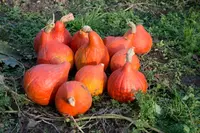
Cucurbita maxima 'Red Kuri' is an annual vining squash grown for its smooth, teardrop-shaped orange fruits and rich, nutty flesh. It belongs to the winter squash group and is typically grown outdoors in vegetable beds or larger containers.

This variety originates from cultivated forms of C. maxima, likely selected in Japan, and thrives in warm, frost-free conditions. Plants have a sprawling habit and need space, sun, and support or open ground.

It is considered moderately easy to grow if given full light, fertile well-drained soil, and consistent moisture. Understanding how to care for Winter Squash mainly involves managing space, feeding, and protection from cold and pests.

Main Plant Requirements

Care Difficulty

Moderate Care

Light Preference

Full Sun

Water Requirements

Regular Water

Temperature Preference

Tropical / Frost Sensitive

Hardiness Zone

3–10

Soil Texture

Loamy, Sandy, Organic-rich

Soil pH

Acidic (5.5–6.5), Slightly acidic (6.5–7.0)

Soil Drainage

Moist but well-drained

Fertilization

Moderate (every 2–4 weeks)

Get Personalized Care Plan

Scan your plant to receive care tips personalized for your specific plant

Available on iOS and Android

How to Care for the Winter Squash

Cucurbita maxima 'Red Kuri' needs strong, direct sun to form flavorful, well-ripened fruits.

  • Provide full sun for 6–8 hours daily, ideally with morning to early afternoon exposure and only light afternoon shade in very hot climates.
  • Plant in an open, unshaded site; vines grown in more than 3–4 hours of shade stretch, set fewer fruits, and stay more disease-prone, especially among Winter Squash types.
  • Watch for pale, thin vines and small fruits as signs of insufficient light, and for scorched, crisped leaves as a sign of reflected or intense late-afternoon sun on stressed plants.

Cucurbita maxima 'Red Kuri' requires consistent, deep moisture in well-drained soil to support rapid vine and fruit growth.

  • Before watering, check that the top 5–7 cm of soil has dried slightly; then soak the root zone so moisture reaches at least 15–20 cm deep.
  • Water at soil level, not on leaves, to reduce fungal problems; raised beds or mounded rows help excess water drain away after heavy rain.
  • In hot, dry weather, expect to water more often; wilting that recovers by evening suggests mild stress, while yellowing, limp stems and sour-smelling soil indicate overwatering and root decline.

Stable warmth is essential for strong growth, flowering, and fruit set in this warm-season squash.

  • Aim for a growing range of 70–85°F (21–29°C); growth slows below 65°F (18°C) and pollen viability drops above about 90°F (32°C).
  • Do not expose plants to frost; tissue damage begins near 32°F (0°C), so sow or transplant only after nights stay reliably above 55°F (13°C).
  • During heat waves above 95°F (35°C), expect reduced flowering and fruit set; use mulch to keep roots cooler and support evening recovery.

Humidity is not a critical factor for Cucurbita maxima 'Red Kuri', which thrives in typical outdoor ambient conditions.

Cucurbita maxima 'Red Kuri' produces best yields in deep, loose, fertile soil with strong drainage and steady moisture retention.

  • Use a loamy, organic-rich soil that crumbles easily in the hand, avoiding heavy, compacted clay that stays wet for long periods.
  • Aim for a slightly acidic to neutral pH of 6.0–7.0, adjusting with garden lime or elemental sulfur if a soil test shows strong imbalance.
  • Incorporate 5–10 cm of well-rotted compost or aged manure before planting to boost structure, water-holding capacity, and nutrient supply.
  • If drainage is slow, raise the planting area into low mounds or ridges and mix in coarse sand or fine gravel to improve aeration.

This winter squash can be grown in containers, but it requires large, stable setups to support vigorous vines and heavy fruit.

  • Choose a container at least 50–60 cm wide and deep so roots can spread and water does not fluctuate too rapidly.
  • Use a heavy, broad-based pot or secure the container with blocks so trailing vines and maturing fruit do not tip it over.
  • Position the container where vines can trail onto a sturdy surface, preventing fruit from hanging unsupported and stressing the stems.

Cucurbita maxima 'Red Kuri' benefits from modest but consistent nutrition during its fast summer growth.

  • Before planting, mix well-rotted compost or aged manure into the top 15–20 cm of soil to build baseline fertility.
  • During active growth, apply a balanced NPK fertilizer (around 10-10-10) every 3–4 weeks at half label strength.
  • Side-dress with compost or a slow-release organic fertilizer once vines start running and fruits begin to set for steady nutrients.
  • In late fall and winter dormancy, stop feeding Winter Squash and allow the soil to rest until the next growing season.

Pruning Cucurbita maxima 'Red Kuri' is mainly used to manage vine length and concentrate energy into fruit.

  • In mid to late summer, pinch back the main vine tip after 3–4 fruits have set to focus growth on ripening them.
  • Remove dead, yellowing, or damaged leaves with clean, sharp pruners to improve airflow and reduce disease risk.
  • Thin out crowded side shoots near the plant base so remaining vines get better light and space.
  • Avoid heavy cutting; take small sections at a time and never remove more than about 20–25% of healthy foliage.

This squash is usually started in small pots then transplanted outdoors once conditions are warm and stable.

  • Sow seeds in biodegradable or small plastic pots and transplant when roots hold the soil together but are not circling heavily.
  • Move seedlings outdoors after the last frost, when soil is at least 60°F and plants have 2–3 true leaves.
  • Space plants 90–150 cm apart, disturbing the root ball as little as possible to limit transplant shock.
  • Water thoroughly after transplanting, then keep soil evenly moist and shaded for 1–2 days if sun is intense.

New Cucurbita maxima 'Red Kuri' plants are almost always raised from seed rather than vegetative methods.

  • Sow seeds in late spring once soil reaches 60–70°F, either in pots under cover or directly in the ground.
  • Plant seeds 2–3 cm deep in loose, well-drained soil and keep evenly moist until germination in 7–10 days.
  • Provide full sun, moderate moisture, and good airflow so seedlings grow sturdy rather than tall and weak.
  • Use fresh seed each year, as stored seed gradually loses vigor and germination rate.

This warm-season annual squash dies back with frost, so winter care focuses on the soil and stored fruits rather than the plant itself.

  • Allow vines to be killed by the first hard frost, then remove and compost healthy plant debris to limit pests and disease.
  • Apply compost or mulch 5–8 cm deep over the bed for winter to protect soil structure and organisms.
  • Cure mature fruits in a warm, dry, ventilated place for 10–14 days, then store at 50–55°F in a cool, dry room.

Care Tips

Early vine training

When vines reach 30–40 cm, gently direct them along rows or away from pathways and anchor them with small soil mounds or U-shaped wire pins to keep fruit off high-traffic areas and improve air movement around foliage.

Fruit load management

Once each plant has 3–5 well-set fruits the size of a small fist, remove additional young fruits and flowers so the plant can concentrate energy on maturing a high-quality, evenly sized crop.

Targeted mulching zones

Place a 5–8 cm layer of clean straw or coarse mulch specifically under developing fruits to reduce rot, soil splash, and slug damage while leaving some bare soil between vines for easier monitoring and weed removal.

Timed pollination support

During peak flowering, hand-pollinate in the morning by brushing pollen from freshly opened male flowers onto female flowers with visible swollen bases to improve fruit set, especially in cool, wet, or low-pollinator conditions.

Pre-harvest curing prep

For 10–14 days before harvest, gradually reduce watering and ensure good sun exposure so skins harden and stems dry slightly, which improves storage life and simplifies caring for Winter Squash after curing.

Common Pests and Diseases

Squash vine borer

This pest tunnels inside stems, causing sudden wilting and collapse of otherwise well-watered plants. Symptoms include frass (sawdust-like droppings) and swollen, split stem sections near the soil line.

Solution

Cut affected stems longitudinally at the entry point, remove the caterpillar, then mound soil over the wounded section to encourage new rooting. To prevent further damage, place row covers over young plants until flowering, destroy infested vines at season’s end, and time planting so main vine growth avoids peak borer flight in early to mid-summer.

Squash bugs

These insects feed on leaves and stems, causing yellow spotting that turns brown and crispy, and can lead to plant decline. Nymphs and adults cluster on the undersides of leaves and along stems, often accompanied by bronze-colored egg masses.

Solution

Handpick adults and nymphs, crush egg clusters on the undersides of leaves, and remove plant debris where they hide. Use floating row covers before flowering, place boards or shingles near plants as traps and remove bugs each morning, and focus chemical controls, if chosen, on nymph stages while protecting pollinators.

Powdery mildew

This disease produces white, powdery patches on leaves and petioles, often starting on older foliage and spreading rapidly in warm, dry conditions with high humidity at night. Symptoms include reduced vigor, premature leaf death, and sunscald on exposed fruits.

Solution

Remove and dispose of heavily infected leaves to lower spore load, and space plants to improve airflow and leaf drying. Apply protectant fungicides such as sulfur or potassium bicarbonate products at first signs of infection, avoid overhead watering in the evening, and grow Cucurbita maxima 'Red Kuri' in full sun with good air movement to reduce susceptibility.

Downy mildew

This disease causes yellow angular spots on upper leaf surfaces with gray to purplish fuzzy growth underneath in humid conditions. Symptoms include rapid leaf blighting, leading to defoliation and poor fruit development.

Solution

Promptly remove and discard infected leaves, avoid wetting foliage, and water at the base early in the day. Use resistant or tolerant squash types when possible, monitor regional disease alerts, and apply appropriate downy mildew fungicides preventively or at first symptoms while rotating modes of action to slow resistance.

Cucumber beetles

These insects chew small holes in leaves and flowers and can scar developing fruits; more importantly, they transmit bacterial wilt in susceptible cucurbits. Symptoms include stunted growth, ragged foliage, and potentially wilted vines if disease is introduced.

Solution

Use floating row covers on young plants and remove them at flowering, and place yellow sticky traps near plantings to monitor populations. Handpick beetles in small gardens, use mulch or reflective plastic to discourage landing, and remove and destroy any vines that show rapid, irreversible wilt to limit spread of bacterial wilt in future plantings.

Interesting Facts

Teardrop rind color change

The fruits mature from deep green to a uniform orange to reddish-orange rind, which signals both full carotenoid development and peak eating quality for this specific cultivar.

Dry, chestnut-like flesh

Its dense, dry flesh has an unusually high dry matter content for a squash, giving it a chestnut-like texture and making it particularly suited to purees, baking, and long-simmered dishes.

Long-keeping winter fruit

When cured properly and stored in cool, dry conditions, the fruits typically keep for several months, allowing reliable off-season use compared to many thinner-skinned squashes.

Botan icon

Did you know?

This cultivar is believed to have originated in Japan, where it is often called uchiki kuri or onion squash, and it played a notable role in popularizing small, single-family winter squash types in European and North American markets in the late 20th century.

FAQs about Winter Squash

Yellowing leaves often result from nutrient deficiency (especially nitrogen or magnesium), natural aging of older foliage, waterlogging, or root damage. Check soil drainage, avoid soggy conditions, and use a balanced fertilizer according to label directions to correct deficiencies.

Grow Healthy Plants with Botan Care

Keep your plants happy and healthy with plant identification, disease detection, and easy care guidance.

Botan plant care app — identify plants on mobile

Explore More Plants