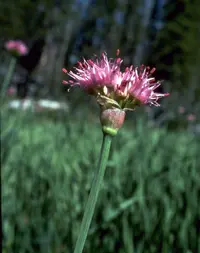
Encourage Larger Tubers
Pinch off most flower buds once the plants begin to bolt so more carbohydrates are directed to underground tuber development rather than seed production when growing Tuberous Lettuce.

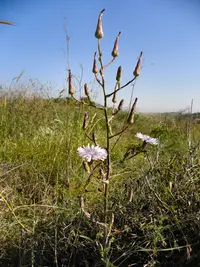
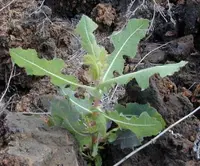
Tuberous lettuce, Lactuca tuberosa, is a perennial wild lettuce with a thickened underground rootstock and a leafy rosette that sends up flowering stems. It typically bears narrow leaves and small, dandelion-like flower heads that show its link to the daisy family.
This species is native to parts of Europe and western Asia, where it grows in dry grasslands, rocky slopes, and light scrub. It generally prefers sun to light shade, moderate moisture, and well-drained, often calcareous, soils.
Its tuberous root helps it survive drought and poor conditions, which can make it relatively resilient once established. Gardeners who want to care for Tuberous Lettuce should note that it behaves more like a wildflower than a typical salad lettuce and may not suit very wet or heavily fertilized beds.

Care Difficulty
Moderate Care

Light Preference
Full Sun

Water Requirements
Regular Water

Temperature Preference
Cool Climate

Hardiness Zone
6–9

Soil Texture
Loamy, Silty, Organic-rich

Soil pH
Acidic (5.5–6.5), Slightly acidic (6.5–7.0)

Soil Drainage
Moist but well-drained

Fertilization
Moderate (every 2–4 weeks)
Scan your plant to receive care tips personalized for your specific plant
Available on iOS and Android
This species prefers bright outdoor conditions with protection from harsh midday sun.
This plant needs steadily moist but not saturated soil for healthy tuber and leaf development.
This cool-season species grows best in mild, stable temperatures without frost or extreme heat.
This species handles average outdoor humidity well and rarely needs special adjustment.
This species prefers loose, nutrient-rich, well-drained soil to develop both leaves and tuberous roots efficiently.
This plant can be grown in containers if the pot is large enough for its tuberous root system.
This species is adapted to lean soils and usually needs only light feeding in cultivation.
Lactuca tuberosa needs only light pruning to keep plants tidy and productive.
This species is more often transplanted outdoors than kept long term in containers.
Lactuca tuberosa is usually propagated from seed under controlled conditions.
This temperate species is moderately cold hardy and often needs only simple winter care in the ground.

Plant Health Check
Not sure what's wrong with your plant? Check your plant's health inside the app.
This species forms small underground tubers that are starchy and edible, a contrast to most lettuce relatives where the main harvested part is the leaf rosette.
Lactuca tuberosa is naturally distributed around dry, open habitats of the Mediterranean region, where it is adapted to poor, stony soils and seasonal drought.
It belongs to the same genus as cultivated lettuce, Lactuca sativa, and is studied as a wild gene source that may help improve stress tolerance and disease resistance in crop breeding.

Botanists have used Lactuca tuberosa in comparative studies of root and tuber formation within the daisy family, because its combination of lettuce-like shoots and true underground tubers is unusual in this plant group.
Yellowing leaves usually come from natural aging, nutrient deficiency, or prolonged soil moisture, rather than light issues. Check for compacted or soggy soil, fertilize moderately, and remove the oldest yellow leaves to reduce stress and disease risk.
Keep your plants happy and healthy with plant identification, disease detection, and easy care guidance.