Staggered Succession Sowing
Sow small batches every 10–14 days under similar conditions so plants mature in waves, preventing the entire crop from bolting or becoming bitter at the same time.


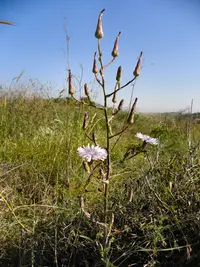
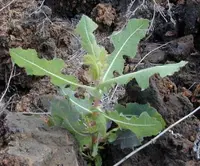
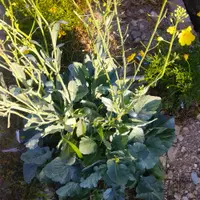
Lactuca tenerrima is a delicate wild lettuce species in the daisy family, valued mainly by botanists and specialist growers rather than general gardeners. It is typically a small, herbaceous plant with finely textured leaves and a light, airy growth habit.
This species occurs naturally in parts of southern Europe, often in rocky or open habitats with good drainage. It tends to favor sunny positions and relatively lean, mineral soils, which can make it less suited to rich, constantly wet garden beds.
Because it is adapted to specific conditions, it can be somewhat challenging to establish outside its native climate. Gardeners who want to learn how to care for Lactuca tenerrima should focus on providing sharp drainage and avoiding prolonged soil saturation.

Care Difficulty
Moderate Care

Light Preference
Partial Sun

Water Requirements
Moderate Water

Temperature Preference
Warm Climate

Hardiness Zone
Unknown

Soil Texture
Loamy, Sandy, Organic-rich

Soil pH
Acidic (5.5–6.5), Slightly acidic (6.5–7.0)

Soil Drainage
Well-drained

Fertilization
Light (every 4–6 weeks)
Scan your plant to receive care tips personalized for your specific plant
Available on iOS and Android
This species prefers cool, bright conditions with protection from harsh midday sun.
Watering should keep the soil consistently moist but never saturated.
This plant grows best in cool, mild temperatures and struggles in heat or hard frost.
This species grows best in moderate outdoor humidity and usually does not need special humidity management.
This plant prefers loose, moist, well‑drained soil that supports shallow, fibrous roots.
This species is suitable for container growing when moisture and root space are carefully managed.
This wild lettuce is adapted to low-nutrient soils, so use light feeding only to support growth in poor substrates.
Pruning needs are minimal and focus on hygiene and maintaining a compact form.
This species is usually treated as a short-lived perennial or biennial and is more often transplanted outdoors than long-term potted.
Propagation is most practical from seed, using fresh material and mild temperatures.
In mild climates this plant usually needs little dedicated winter care when grown in the ground.

Plant Health Check
Not sure what's wrong with your plant? Check your plant's health inside the app.
This wild lettuce is naturally restricted mainly to limestone cliffs and rocky slopes in the eastern Iberian Peninsula and nearby Balearic Islands, where it anchors in narrow crevices with very shallow, alkaline soils.
It forms compact leaf rosettes pressed close to rock surfaces, an adaptation that helps reduce water loss and withstand strong sun and wind exposure on near-vertical habitats.
Botanists consider it a narrow endemic of Mediterranean Spain and adjacent islands, and its fragmented distribution on cliffs suggests a relict status linked to past climatic conditions rather than a wide, continuous range.
This species is generally regarded as an ornamental or wild lettuce relative, not a salad crop. Parts may contain bitter latex and variable secondary compounds, so routine consumption is not recommended without reliable, region-specific ethnobotanical or toxicological information.
Keep your plants happy and healthy with plant identification, disease detection, and easy care guidance.