

Monitor substrate decay
Inspect the woody substrate every few months and replace pieces that have turned soft, sour-smelling, or visibly moldy with fresh, clean hardwood to maintain good aeration and stable nutrition when growing Cyanosporus alni.

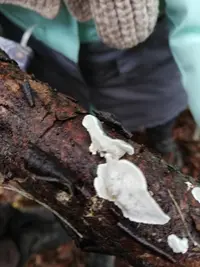
Cyanosporus alni is not a typical leafy houseplant but a wood-inhabiting fungus associated mainly with alder and other broadleaf trees. It forms crust-like, often bluish to gray fruiting bodies on dead or decaying wood rather than in soil-filled pots.
This species occurs mostly in temperate regions, usually in moist forests or along streams where host trees grow. It plays a role in wood decomposition, breaking down tough plant material.
For anyone wanting to care for Cyanosporus alni in cultivation, it is usually maintained on sterilized wood or nutrient media, making it more suitable for experienced growers than beginners.

Care Difficulty
Moderate Care

Light Preference
Partial Shade

Water Requirements
Moderate Water

Temperature Preference
Warm Climate

Hardiness Zone
Unknown

Soil Texture
Loamy

Soil pH
Slightly acidic (6.5–7.0)

Soil Drainage
Well-drained

Fertilization
Minimal (feed rarely)
Scan your plant to receive care tips personalized for your specific plant
Available on iOS and Android
This fungus prefers moderate, stable light conditions typical of shaded woodland habitats.
Moist, but not waterlogged, conditions are essential for healthy development.
This species favors cool to mild conditions similar to those in temperate woodlands.
This species tolerates a wide humidity range but grows best in moderately moist air.
Cyanosporus alni prefers moist, airy, and well-drained substrates rich in decaying wood or organic matter.
This species can be grown in containers when they mimic a moist, well-aerated woodland substrate.
This species is usually self-sufficient on moderately fertile soil, so added feeding is only useful on poor or exhausted sites.
Pruning is generally light and focused on maintaining a healthy, stable framework.
This species is mainly grown in the ground, so management centers on careful transplanting rather than routine repotting.
Propagation of this species is possible but usually slow and best suited to patient, experienced growers.
This is a cold-hardy species that usually needs minimal winter attention once established in the landscape.

Plant Health Check
Not sure what's wrong with your plant? Check your plant's health inside the app.
This fungus is found almost exclusively on dead or dying wood of alder trees (Alnus species), reflecting a strong ecological specialization in riparian and wet woodland habitats.
The pore-bearing underside of the fruiting body typically starts whitish to pale and can slowly discolor with age and exposure, a useful trait for separating it from some visually similar polypores.
The fruiting bodies usually form as thin, crust-like patches closely attached to the substrate rather than as thick brackets, which aligns with its role as a subtle but efficient wood decomposer on alder logs and branches.
Growth is generally slow to moderate, depending on moisture, temperature, and substrate quality. Expect noticeable size increase over several months rather than weeks. Stable conditions and consistent nutrition support steadier development for this fungus-like organism.
Keep your plants happy and healthy with plant identification, disease detection, and easy care guidance.

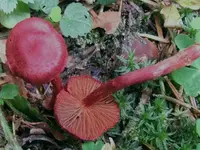
bloodred webcap
Cortinarius sanguineus
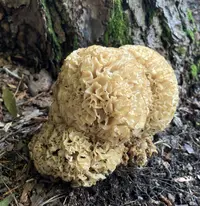
American cauliflower mushroom
Sparassis americana
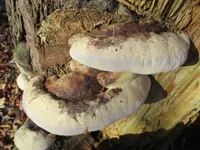
American Brown Fomitopsis
Fomitopsis ochracea
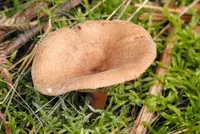
Fenugreek milkcap
Lactarius helvus
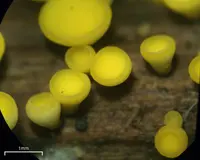
Yellow Fairy Cups
Bisporella citrina
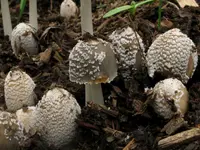
flocculose inkcap
Coprinellus flocculosus
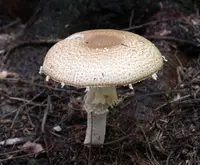
The Prince
Agaricus augustus
Tufted Wood Mushroom
Agaricus impudicus