Cyathea multiflora Care

Cyathea multiflora

About Cyathea multiflora

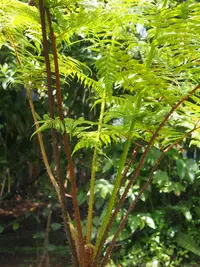
Cyathea multiflora is a tropical tree fern known for its upright trunk and graceful, feather-like fronds that form a soft, arching crown. It develops a woody stem over time and can become a striking vertical accent in shaded gardens or spacious indoor spaces.

This species is native to humid tropical forests of Central and South America, where it grows under high canopy shade with consistently moist conditions. It prefers cool to warm, stable temperatures, high humidity, and evenly moist, rich, well-drained soil, so understanding how to care for Cyathea multiflora is important before planting.

Main Plant Requirements

Care Difficulty

Hard Care

Light Preference

Partial Shade

Water Requirements

Keep Soil Moist

Temperature Preference

Tropical / Frost Sensitive

Hardiness Zone

10–11

Soil Texture

Loamy, Peaty, Organic-rich

Soil pH

Strongly acidic (4.5–5.5), Acidic (5.5–6.5)

Soil Drainage

Moist but well-drained

Fertilization

Light (every 4–6 weeks)

Get Personalized Care Plan

Scan your plant to receive care tips personalized for your specific plant

Available on iOS and Android

How to Care for the Cyathea multiflora

This tree fern prefers bright, filtered light that mimics a humid forest understory.

  • Provide 3–5 hours of gentle morning sun with bright, dappled or filtered light the rest of the day, protected from harsh midday and afternoon sun.
  • Cyathea multiflora tolerates partial to full shade, but in deep shade fronds become thin, pale, and sparse over time.
  • In hot summers, increase shade or use shade cloth; in cooler seasons, allow slightly more indirect light while still avoiding direct midday exposure.

This species needs consistently moist, never soggy soil around its fibrous root zone and trunk base.

  • Water when the top 2–3 cm of soil feels just barely dry, aiming for evenly moist soil rather than cycles of wet then dry.
  • Ensure excellent drainage with rich, organic soil; standing water, sour smell, and blackened roots indicate overwatering and poor aeration.
  • In hot, windy, or dry weather, expect more frequent watering and watch for drooping or crisping frond tips as signs the plant is drying out too much.

This fern thrives in mild, frost-free climates with stable, humid air.

  • Ideal growth occurs at 65–80°F (18–27°C), with steady moisture and protection from drying winds.
  • Avoid temperatures below 40°F (4°C); light frost damages fronds, and hard freeze can kill the crown and growing tip.
  • Cyathea multiflora tolerates short heat spells up to about 90°F (32°C) if shaded and well watered, but prolonged heat with low humidity stresses and scorches fronds.

This fern requires consistently high humidity to keep fronds healthy and prevent drying of new growth.

  • Aim for 60–80% humidity; prolonged exposure below 50% often leads to crisping frond tips and edges.
  • Dry indoor air causes pale, curling pinnae and stalled frond expansion, indicating humidity stress rather than underwatering.
  • Increase humidity with grouped plants, a room humidifier, or a wide pebble tray under (not touching) the pot.

Cyathea multiflora prefers a loose, organic-rich, evenly moist but well-drained substrate that mimics forest floor conditions.

  • Use a mix of roughly 50% fine pine bark or coco husk, 30% peat or coco coir, and 20% perlite to combine moisture retention with air spaces.
  • Aim for slightly acidic pH around 5.5–6.5, which supports nutrient availability and discourages some root problems.
  • Improve aeration by including chunky materials like bark chips and avoiding heavy, compacted garden soil or straight peat.
  • Do not allow the mix to become waterlogged; standing water and dense clay-based media quickly lead to root and trunk rot.

This species can be grown in large containers when provided with deep, stable pots and careful moisture management.

  • Choose a tall, heavy pot to support the developing trunk and prevent the plant from tipping in wind or when fronds are wet.
  • Use a pot slightly wider than the root ball to keep the mix from staying saturated for too long after watering.
  • Select thicker-walled clay or ceramic containers if cooler root temperatures and faster moisture loss are needed in very humid, warm locations.

This tree fern benefits from light, consistent feeding rather than heavy applications.

  • Use a balanced, dilute liquid fertilizer (around 10-10-10) at 1/4–1/2 strength during spring–summer for Cyathea multiflora.
  • Apply every 4–6 weeks, directing solution onto moist soil, not directly into the crown.
  • Incorporate a thin layer of fine compost over the root zone once or twice each growing season.
  • Reduce feeding to once in late autumn or stop entirely in winter when growth slows.

Pruning focuses on hygiene and safety rather than reshaping this tree fern.

  • In late winter or early spring, remove dead, yellowing, or diseased fronds at the base with clean, sharp pruners.
  • Cut away damaged or broken fronds promptly to reduce pest and fungal issues on Cyathea multiflora.
  • Thin only severely crowded lower fronds to improve air flow, keeping the natural, arching form.
  • Disinfect tools before and after use, especially when removing diseased tissue.

Movement of this fern should be infrequent and planned, as the trunk and roots are sensitive.

  • Look for roots circling the pot, water running straight through, or stunted growth as signs a container plant needs a larger space.
  • Transplant or shift to a bigger container in early spring, before strong new frond growth begins.
  • For in-ground plants, transplant only when young, choosing a shaded, sheltered, consistently moist site for Cyathea multiflora.
  • Keep the original soil around the root ball intact, water thoroughly, and shade the plant for several weeks to limit transplant shock.

Propagation of this species is specialized and usually handled by experienced growers or nurseries.

  • Spore propagation is standard but slow; collect mature brown spores from frond undersides in late summer.
  • Sow spores on sterile, finely textured, moist peat-based mix, kept at 70–75°F with high humidity and no direct sun.
  • Maintain a covered container or propagation dome to keep conditions evenly moist until gametophytes and then tiny ferns appear.
  • Division of trunks is risky and often unsuccessful, so is generally avoided for home Cyathea multiflora care.

This species is sensitive to cold and needs protection in climates with cool or freezing winters.

  • Avoid exposure below about 40°F; sustained frost can kill the crown of Cyathea multiflora.
  • In marginal climates, mulch 5–10 cm around the root zone with bark or leaf mold, keeping mulch off the trunk.
  • Wrap the trunk and crown with breathable frost cloth during cold nights to reduce freezing injury.
  • Move container-grown plants indoors or into a frost-free greenhouse with bright, filtered light for winter.

Care Tips

Protective trunk mulching

Build a 5–8 cm deep ring of fine bark or leaf mold around the trunk base, keeping it 3–5 cm away from the stem, to keep the root zone evenly cool and moist while reducing weed competition.

Crown hydration routine

In warm weather, gently pour clean, chlorine-free water into the crown once or twice a week so the developing fronds and central growing point do not dry out, avoiding strong jets that can damage young tissue.

Wind and frond support

In exposed sites, stake a discreet central support and loosely tie the main frond cluster with soft ties to prevent wind rock, which can loosen the root system and cause new fronds to snap.

Gradual seasonal shifts

When moving the plant between indoor and outdoor conditions, shift it over 7–10 days by slowly adjusting light, airflow, and temperature to limit shock to the fronds and growing tip.

Moisture and salt monitoring

Periodically test the planting area for drainage and salt buildup, flushing the root zone thoroughly with low-salinity water if leaf tips brown despite good watering, which supports healthier long-term Cyathea multiflora care.

Common Pests and Diseases

Scale insects

These insects attach to fronds and stems, sucking sap and causing yellowing, stunting, and sticky honeydew that can lead to sooty mold on the delicate fern foliage.

Solution

Remove heavily infested fronds, then wipe remaining scale off ribs and stipes with a cotton pad dipped in diluted alcohol or insecticidal soap; repeat every 7–10 days and keep humidity high but foliage dry to reduce stress while caring for Cyathea multiflora.

Spider mites

These pests thrive in warm, dry air, causing fine speckling, dull fronds, and in severe cases thin webbing on the undersides of leaflets.

Solution

Rinse fronds thoroughly with lukewarm water, focusing on the undersides, then use an insecticidal soap or horticultural oil labeled for ferns and raise humidity while improving gentle air movement to discourage reinfestation.

Fungal leaf spot

This disease causes small dark or tan spots on fronds that may enlarge and merge, leading to premature browning and drop of the highly divided foliage.

Solution

Remove and discard affected fronds, avoid overhead watering, increase air circulation around the crown, and if needed apply a fern-safe fungicide according to label directions while keeping the soil evenly moist but not waterlogged.

Rhizome and crown rot

This disease affects the central growing point and underground rhizome, leading to soft, dark, foul-smelling tissue, collapse of new fronds, and slow decline of the plant.

Solution

Improve drainage, reduce watering frequency, and never allow water to pool in the crown; if caught early, cut away all soft tissue with sterile tools, dust cut surfaces with a fungicide, and replant in fresh, airy, well-drained medium.

Nematode leaf blight

Symptoms include irregular brown patches between veins or along the midrib of pinnae, often starting on older fronds and progressing upward, with affected areas becoming thin and papery.

Solution

Remove and dispose of all damaged fronds, avoid splashing water on foliage, and do not share tools or divisions from suspect plants; severely affected plants are best discarded, and future plantings should use clean stock and well-drained, pasteurized substrate.

Interesting Facts

Moss-loving tree fern

This species is often naturally covered in epiphytic mosses, liverworts, and filmy ferns along its trunk, forming a miniature vertical ecosystem in humid tropical forests of Central and South America.

Cloud forest specialist

Cyathea multiflora is typically found in mid- to high-elevation cloud forests, where it tolerates cool, very humid, and low-light environments that many other tropical ferns cannot handle.

Distinctive trunk scales

The trunk and frond bases are lined with narrow, often bicolored scales, which help protect young tissues from moisture loss and herbivores and are a key feature used by botanists to distinguish it from related tree ferns.

Botan icon

Did you know?

In parts of its native range, especially in Andean cloud forests, the oldest individuals of this tree fern can form small, scattered groves that act as structural keystone plants, providing shade, moisture retention, and perches for epiphytic plants and invertebrates far above the forest floor.

FAQs about Cyathea multiflora

Growth is moderate. In suitable, consistently moist, frost-free conditions, this tree fern may add roughly 15–30 cm of trunk per year, slowing as it ages. Poor moisture, low humidity, or cool temperatures reduce growth significantly.

Grow Healthy Plants with Botan Care

Keep your plants happy and healthy with plant identification, disease detection, and easy care guidance.

Botan plant care app — identify plants on mobile

Explore More Plants