

Substrate rotation
If culturing on decaying plant material, rotate in small fresh pieces every 2–3 weeks so the fungus has an ongoing supply of suitable substrate and old material can be safely discarded to limit contaminant buildup.

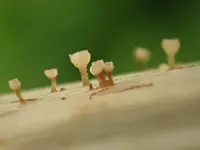
Cyathicula cyathoidea is a tiny cup fungus rather than a typical leafy plant. It forms small, shallow yellowish cups on decaying plant material, often in moist woodland habitats. The fruiting bodies are usually clustered and short-lived, appearing briefly when conditions are suitable.
This species is saprophytic, meaning it feeds on dead organic matter and plays a role in nutrient recycling. It is not grown as a conventional ornamental or houseplant, and information on how to care for Cyathicula cyathoidea is limited because it has very specific microhabitat needs that are difficult to recreate reliably in cultivation.

Care Difficulty
Moderate Care

Light Preference
Partial Shade

Water Requirements
Moderate Water

Temperature Preference
Warm Climate

Hardiness Zone
Unknown

Soil Texture
Loamy

Soil pH
Slightly acidic (6.5–7.0)

Soil Drainage
Well-drained

Fertilization
Minimal (feed rarely)
Scan your plant to receive care tips personalized for your specific plant
Available on iOS and Android
This fungus prefers soft, indirect light conditions that mimic a shaded woodland edge.
Moisture management focuses on keeping the substrate evenly damp without waterlogging.
Stable, cool to mild temperatures support reliable development of this fungus.
This species has modest humidity needs but reacts to very dry air.
Soil conditions should prioritize drainage and air space around the fine root system.
This species can be maintained in containers when moisture and drainage are carefully controlled.
This species is typically a wild, substrate-specific fungus and does not benefit from routine fertilization in cultivation.
Pruning is not applicable, as Cyathicula cyathoidea is a small cup fungus that completes its life cycle on decaying plant material.
This fungus is not managed through standard repotting or transplanting, since it grows on natural substrates rather than in pots.
Propagation of this species is not typically done in home or garden settings and is mainly of interest for specialist mycological work.
Dedicated winter care is not needed, as this cup fungus persists in natural cycles on its substrate rather than as a garden or houseplant.

Plant Health Check
Not sure what's wrong with your plant? Check your plant's health inside the app.
This species produces very small, cup-shaped fruiting bodies (apothecia) on decaying plant material, a typical feature of many discomycete fungi where spores are released from the exposed upper surface.
Cyathicula cyathoidea is most often recorded on dead herbaceous stems and other small plant debris in forests that include conifers, indicating a preference for cool, moist woodland microhabitats.
The species is saprotrophic, meaning it feeds on dead organic matter and contributes to nutrient recycling in forest ecosystems by breaking down fine plant litter.
This species is a short-lived, microscopic cup fungus that functions effectively as an annual, completing its life cycle within a single season. It persists in an area through recurring spore production rather than long-lived individual structures.
Keep your plants happy and healthy with plant identification, disease detection, and easy care guidance.

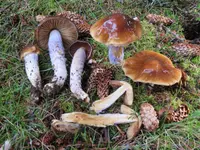
Cortinarius seidliae
Cortinarius seidliae
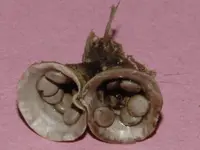
field bird's nest fungus
Cyathus olla
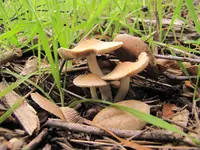
Coprinopsis uliginicola
Coprinopsis uliginicola
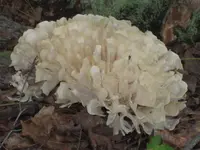
Eastern cauliflower mushroom
Sparassis spathulata
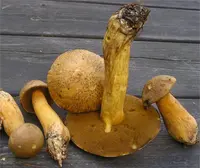
Velvet Bolete
Suillus variegatus
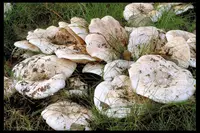
Blushing Milkcap
Lactarius controversus
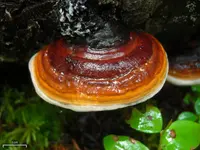
Red-banded polypores
Fomitopsis pinicola
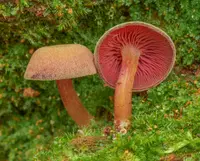
Purple-edged Lute
Callistosporium purpureomarginatum