

Substrate refresh cycles
Replace or top up the organic substrate every 3–6 months to maintain an active layer of fresh, clean plant debris or wood chips that supports reliable fruiting and reduces buildup of competing molds.

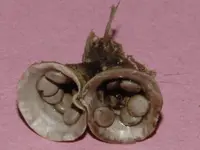
Field bird's nest fungus, Cyathus olla, is not a true plant but a small cup-shaped fungus often found on wood chips, mulch, or decaying organic debris. The fruiting bodies look like tiny nests filled with grey or brown egg-like structures, which are actually spore-containing bodies. It occurs widely in temperate regions, especially in gardens, paths, and landscaped areas with rich organic matter. This species typically appears on its own when conditions are right, so gardeners do not usually cultivate it intentionally or actively care for field bird's nest fungus. It prefers moist, nutrient-rich substrates and partial shade, and tends to disappear when the weather becomes very dry.

Care Difficulty
Moderate Care

Light Preference
Partial Shade

Water Requirements
Regular Water

Temperature Preference
Cool Climate

Hardiness Zone
Unknown

Soil Texture
Loamy, Silty, Organic-rich

Soil pH
Slightly acidic (6.5–7.0), Neutral (7.0)

Soil Drainage
Moist but well-drained

Fertilization
Minimal (feed rarely)
Scan your plant to receive care tips personalized for your specific plant
Available on iOS and Android
This fungus prefers soft, indirect light similar to bright woodland edges rather than full, exposed sun.
This fungus needs consistent surface moisture around its substrate rather than deep soaking.
This species favors mild, temperate conditions and shows best development in cool to warm weather.
Cyathus olla forms best in consistently moist, moderately humid conditions around 50–70% humidity.
Cyathus olla develops reliably on moist, organic-rich, well-aerated substrates rather than dense mineral soil.
This species can be grown in shallow containers that mimic decaying organic ground layers.
Cyathus olla is a saprophytic fungus that usually gains enough nutrients from decaying organic matter and seldom needs additional fertilizer.
Pruning Cyathus olla is not part of normal care, as individual fruiting bodies are short-lived and naturally replaced.
Transplanting is rarely needed, since this fungus spreads where organic debris and moisture are suitable.
Cyathus olla is usually left to self-spore and spread naturally, so intentional propagation is uncommon and technically demanding.
This outdoor saprophytic fungus is naturally cold tolerant in many temperate climates and usually needs no specific winter care.

Plant Health Check
Not sure what's wrong with your plant? Check your plant's health inside the app.
This species relies on raindrops striking the cup interior to eject spore-filled packets called peridioles several tens of centimeters away, an adaptation that improves dispersal in low-growing litter habitats.
Each peridiole is attached to a thin cord-like structure that can snag on twigs or plant stems when flung outward, helping the spores remain elevated and better positioned for later spread.
Cyathus olla commonly colonizes straw, wood chips, and other plant debris in gardens and agricultural settings, where it contributes to breaking down lignocellulosic material and nutrient recycling in the soil.

Molecular studies place Cyathus olla among the bird’s nest fungi in the family Nidulariaceae, a group that evolved an unusual cup-and-egg fruiting body form multiple times as a specialized adaptation to rain-mediated spore dispersal on decaying plant matter.
This species spreads locally as spores splash from the cups onto nearby organic debris. It is not considered aggressive. Growth remains patchy and small-scale, especially if mulch layers are thin and decomposing material is limited.
Keep your plants happy and healthy with plant identification, disease detection, and easy care guidance.

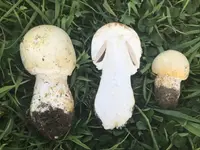
Agaricus crocodilinus
Agaricus crocodilinus
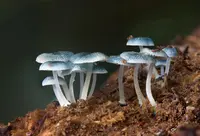
Pixie's Parasol
Mycena interrupta
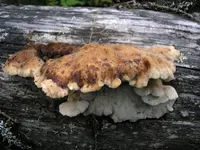
Amylocystis lapponica
Amylocystis lapponica
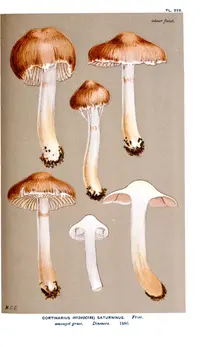
Cortinarius saturninus
Cortinarius saturninus
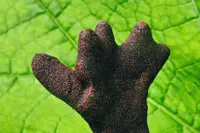
dead man's fingers
Xylaria polymorpha
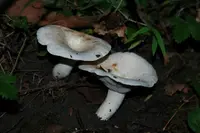
Peppery Milkcap
Lactifluus piperatus
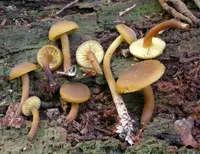
Olive Lute
Callistosporium luteo-olivaceum
Salt-loving Agaricus
Agaricus bernardi