Cyprus Cyclamen Care (Cyclamen cyprium)

Cyprus Cyclamen

About Cyprus Cyclamen

Cyprus cyclamen, Cyclamen cyprium, is a small tuberous perennial from the eastern Mediterranean, especially found in woodlands and rocky slopes of Cyprus. It grows from a rounded underground tuber that rests during summer and then produces fresh leaves and flowers in the cooler months.

The plant carries delicate nodding flowers, usually white to pale pink with a sweet scent, above patterned heart-shaped leaves. It stays compact, which makes it suitable for pots and small shaded garden spaces.

Its seasonal dormancy and dislike of waterlogged soil can make it slightly challenging for beginners, but it is long-lived when kept dry in summer and cool and sheltered in growth. Understanding how to care for Cyprus Cyclamen starts with respecting its natural Mediterranean rhythm of dry summers and mild, moist winters.

Main Plant Requirements

Care Difficulty

Moderate Care

Light Preference

Partial Shade

Water Requirements

Moderate Water

Temperature Preference

Cool Climate

Hardiness Zone

7–9

Soil Texture

Loamy, Rocky, Organic-rich

Soil pH

Acidic (5.5–6.5), Slightly acidic (6.5–7.0)

Soil Drainage

Well-drained

Fertilization

Minimal (feed rarely)

Get Personalized Care Plan

Scan your plant to receive care tips personalized for your specific plant

Available on iOS and Android

How to Care for the Cyprus Cyclamen

This Mediterranean woodland species prefers bright but softened light rather than intense direct sun.

  • Aim for 2–4 hours of gentle morning sun with bright dappled or filtered light the rest of the day for Cyprus Cyclamen.
  • Provide partial shade under shrubs or trees; avoid harsh midday and afternoon sun that can scorch leaves and fade flowers.
  • In summer dormancy, tubers tolerate more shade; in active growth (fall–spring), ensure brighter positions to prevent weak, stretched stems.

Moist but never waterlogged soil is essential for healthy Cyclamen cyprium growth.

  • Water when the top 2–3 cm of soil feels dry, directing water to the soil surface and keeping the crown and leaves as dry as possible.
  • Ensure sharply drained, humus-rich soil so excess water runs off quickly, reducing risk of tuber rot and yellowing, mushy leaves from overwatering.
  • Reduce watering drastically during summer dormancy when leaves die back, then increase gradually as new autumn growth emerges to avoid shriveling tubers.

This species prefers cool, mild conditions and dislikes both hard frost and intense heat.

  • Optimal active-growth temperatures are 45–65°F (7–18°C), typical of cool autumn to early spring woodland conditions.
  • Tolerates brief dips to around 28°F (-2°C) if soil is well drained, but sustained freezes below this can damage tubers and flower buds.
  • In hot summers above 80°F (27°C), the plant enters dormancy; keep tubers shaded and dry in the ground to prevent heat and rot stress.

This species prefers moderately moist, cool air and reacts to very dry indoor conditions.

  • Aim for 40–60% humidity, which usually matches most temperate indoor environments in fall and winter.
  • Dry air can cause leaf edges to crisp and flower stalks to droop even when soil moisture is correct.
  • Increase humidity with a pebble tray or grouping plants nearby, but avoid misting foliage to reduce fungal risk for Cyprus Cyclamen.

This species performs best in loose, rocky, humus-rich soil that drains very rapidly.

  • Use a mix such as 40% fine bark, 30% gritty sand or small gravel, and 30% compost or leaf mold for Cyclamen cyprium.
  • Ensure the mix is free-draining so water passes through in seconds, leaving the tuber in slightly moist, never waterlogged, conditions.
  • Aim for a slightly alkaline to neutral pH around 7.0–7.5, adding a little garden lime if your base mix is very acidic.
  • Avoid heavy clay, peat-only mixes, or dense potting composts that stay wet and exclude air around the tuber.

This species adapts well to container growing when drainage and tuber position are managed carefully.

  • Choose a wide, shallow pot so the tuber sits near the surface and excess mix does not trap moisture around it.
  • Select unglazed terracotta if extra evaporation is needed, especially in cool, damp climates where mix can stay wet too long.
  • Raise the container slightly on feet or spacers outdoors to keep drainage holes clear and prevent water pooling under the pot.

Feeding supports compact growth and steady flowering in Cyclamen cyprium grown in containers.

  • Use a balanced liquid fertilizer (around 10-10-10 or 20-20-20) diluted to 1/4–1/2 strength for active plants.
  • Apply every 2–3 weeks during the main leafy and flowering period, avoiding dry soil before feeding.
  • Reduce to very light feeding or stop entirely when foliage yellows and the tuber enters summer dormancy.
  • In rich, well-prepared garden soil, additional fertilizer is often unnecessary for established plants.

Pruning needs are minimal, focusing on cleanliness and encouraging continued flowering in Cyclamen cyprium.

  • Throughout the flowering season, twist and pull spent flower stems from the base to reduce disease risk.
  • Remove yellowing or damaged leaves at the base to improve air flow and keep the crown visible.
  • Use clean fingers or small scissors; disinfect blades if cutting diseased tissue.
  • Light grooming maintains a neat, low mound but does not significantly change overall plant shape.

Repotting or transplanting is infrequent, as Cyclamen cyprium prefers to stay slightly crowded and undisturbed.

  • Check for roots circling the pot drainage holes, compacted soil, or reduced vigor as signs it may need a larger container.
  • Plan any repotting or outdoor transplanting for late summer to early fall, just before new roots and leaves emerge.
  • Repot every 2–3 years at most, setting the tuber with its top just at or slightly above the soil surface.
  • Handle the tuber gently, keep as much root ball intact as possible, water lightly, and shade for a few days to limit stress.

Propagation of Cyclamen cyprium is usually done from seed rather than by tuber division.

  • Sow fresh seed in late summer to early fall in a shallow tray with well-drained, gritty mix.
  • Provide 60–68°F, bright indirect light, and consistently moist but not waterlogged substrate for germination.
  • Cover seeds lightly and keep the tray shaded from strong sun; germination may take several weeks to months.
  • Leave seedlings crowded their first year, then transplant carefully while dormant to individual small pots or a nursery bed.

Outdoor Cyclamen cyprium in mild climates needs only light winter care, while container plants benefit from extra attention.

  • In USDA zones around 7–9, the tubers tolerate typical winter lows if soil drains well.
  • Apply a thin mulch layer over the root zone in cold snaps, keeping material off the crown to avoid rot.
  • Move pots near a sheltered wall or into a cold, bright porch where temperatures stay above hard frost levels.
  • Avoid waterlogged soil in winter, as saturated conditions greatly increase tuber rot risk.

Care Tips

Summer dormancy handling

Mark the tuber location before leaves die back, then keep the pot barely dry and shaded through summer dormancy so roots are not disturbed or accidentally overwatered while inactive.

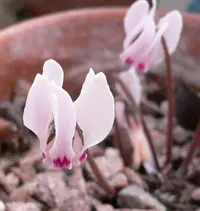
Rocky planting pockets

Outdoors, tuck the tuber into a narrow crevice or behind a rock, with the crown just below surface level, to mimic its natural limestone habitats and protect it from temperature swings and heavy rain impact.

Leaf and debris control

Gently remove fallen tree leaves and heavy mulch from around the plant in autumn so the small flowers and foliage are not smothered and air can circulate around the crown.

Seedling colony management

If self-sown seedlings appear, thin or lift and replant them at 10–15 cm spacing while small so a few strong clumps develop instead of a crowded patch competing for moisture and nutrients.

Snail and slug barriers

In damp, shaded sites, protect emerging buds and young leaves with physical barriers such as copper tape on pots or sharp mineral grit around plants to reduce snail and slug damage without using harsh chemicals when growing Cyprus Cyclamen.

Common Pests and Diseases

Cyclamen mite

This pest is a microscopic mite that distorts new growth, causing stunted, twisted leaves and deformed flower buds that fail to open properly.

Solution

Isolate the plant, remove and discard badly affected leaves and buds, and keep humidity on the lower side; for severe infestations use a miticide labeled for cyclamen mites and follow the label strictly, and avoid overhead misting to reduce reinfestation risk.

Botrytis blight

This disease is a gray mold that affects flowers, leaves, and petioles, causing soft brown spots covered with fuzzy gray growth, especially in cool, humid conditions.

Solution

Remove and dispose of all affected plant parts, improve airflow around the plant, avoid wetting leaves and flowers, and water early in the day so surfaces dry quickly; in persistent cases, use a fungicide labeled for Botrytis on ornamentals.

Cyclamen aphid

These insects cluster on young stems and flower stalks, sucking sap and causing curling leaves, sticky honeydew, and slow, weak growth.

Solution

Wash colonies off with a firm stream of water or gently wipe them off with a damp cloth, then use insecticidal soap or a ready-to-use horticultural oil on all above‑ground parts, repeating weekly until no aphids are seen.

Violet virus complex

This disease is caused by plant viruses that lead to mottled, streaked, or yellowed leaves, malformed flowers, and general decline over time.

Solution

Remove and discard (do not compost) infected plants, disinfect cutting tools with 70% alcohol between plants, and control sap‑sucking insects such as aphids that spread viruses to maintain healthy growing Cyprus Cyclamen.

Fusarium wilt

This disease is a soilborne fungus that infects the corm and vascular tissue, leading to yellowing, unilateral wilting of leaves, and eventual collapse of the plant despite seemingly adequate watering.

Solution

Discard severely affected plants and any surrounding contaminated soil, avoid reusing pots without thoroughly cleaning and disinfecting them, and use only fresh, well‑drained, sterile potting mix for new cyclamen to reduce future infections.

Interesting Facts

Endemic to Cyprus

This species is naturally found only in Cyprus, mainly in the Troodos and Kyrenia mountain ranges, where it grows in rocky, shaded woodland and limestone habitats.

Autumn-flowering habit

Unlike many garden cyclamen that bloom in winter or spring, this species typically flowers in autumn, producing pale pink to white, sweetly scented blooms before or as new leaves appear.

Distinctive leaf marbling

Its rounded, sometimes kidney-shaped leaves often have intricate silver or pale green marbling patterns that are highly variable between individual plants, making wild populations visually diverse.

Botan icon

Did you know?

In its native range, this species has been selected as the national plant of Cyprus, reflecting its strong association with the island’s natural heritage and its prominence in local botanical identity.

FAQs about Cyprus Cyclamen

Lack of flowering often comes from too-warm conditions, deep planting of the tuber, or using high-nitrogen fertilizer. Provide a cool rest period, keep the top of the tuber just above soil, and use balanced feed sparingly.

Grow Healthy Plants with Botan Care

Keep your plants happy and healthy with plant identification, disease detection, and easy care guidance.

Botan plant care app — identify plants on mobile

Explore More Plants