Rhizome Division Timing
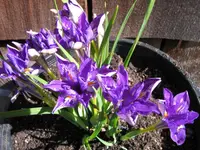
Divide clumps every 3–5 years in late summer after flowering, replanting only the firm outer rhizomes to maintain vigor and flower production.

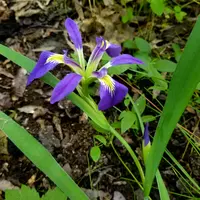
Zigzag iris, Iris brevicaulis, is a low-growing perennial iris native to moist prairies, stream banks, and wetlands in central and eastern North America. It forms clumps of narrow, arching leaves and distinctive zigzag, often leaning flower stems.
The plant produces blue to violet beardless flowers close to the ground, giving a tidy, informal look suitable for naturalistic gardens and rain gardens. Its rhizomes spread slowly, creating stable patches over time.
This species is generally considered durable and forgiving, which makes it easier to care for zigzag iris than some taller, showier irises. It prefers sun to light shade, consistent moisture, and well-drained but not dry soil.

Care Difficulty
Moderate Care

Light Preference
Full Sun

Water Requirements
Keep Soil Moist

Temperature Preference
Cold Hardy

Hardiness Zone
4–9

Soil Texture
Loamy, Clay, Organic-rich

Soil pH
Acidic (5.5–6.5), Slightly acidic (6.5–7.0)

Soil Drainage
Waterlogged tolerant

Fertilization
Minimal (feed rarely)
Scan your plant to receive care tips personalized for your specific plant
Available on iOS and Android
This species prefers full sun but tolerates light shade, especially in hotter regions.
This moisture-loving iris performs best in consistently damp to wet soil, especially during the growing season.
This species is hardy and adapted to temperate climates with cold winters and warm summers.
Humidity is rarely a concern for Iris brevicaulis, which adapts well to typical outdoor air in most regions.
Iris brevicaulis prefers moist, rich, and heavy soil that still allows some air around the roots.
This species can be grown in containers, but it performs best in large, heavy pots that stay evenly moist outdoors.
Iris brevicaulis is a low-maintenance native that benefits from modest feeding on poorer soils during the growing season.
Iris brevicaulis responds well to light, targeted pruning that keeps clumps tidy and flowering well.
Transplanting zigzag iris focuses on dividing and resetting crowded clumps rather than frequent container repotting.
Iris brevicaulis is most commonly propagated by division, with seed used mainly for breeding or naturalizing.
Iris brevicaulis is cold hardy in much of the US and usually needs minimal winter care in the ground.

Plant Health Check
Not sure what's wrong with your plant? Check your plant's health inside the app.
This species is considered the shortest native iris in eastern North America, with flowering stalks often only 10–25 cm tall, an adaptation to frequent flooding and water movement in its habitats.
Iris brevicaulis commonly grows in seasonally flooded bottomlands and along stream margins, where its thick rhizomes anchor it in shifting, silty soils that may be underwater for part of the spring.
The characteristic bent or zigzag flowering stem likely helps keep individual flowers above shallow water or debris, spreading blooms along the stem so not all are damaged by the same disturbance.

Iris brevicaulis is an important wild parent in several beardless iris breeding lines, contributing genes for compact height, tolerance of wet soils, and reliable flowering in humid, warm-summer climates.
Lack of blooms often comes from too little sun, overcrowded rhizomes, or nutrient‑poor soil. Divide clumps every 3–4 years, remove heavy shade, and use a balanced, low‑nitrogen fertilizer to support flowering.
Keep your plants happy and healthy with plant identification, disease detection, and easy care guidance.