Select host logs
Use fresh, disease-free hardwood logs from hosts like beech or other compatible broadleaf trees, cut within the last 2–4 weeks so the wood still has high moisture and available nutrients for the mycelium.

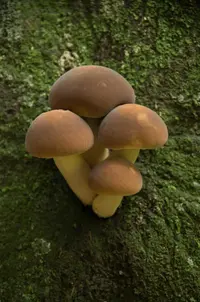
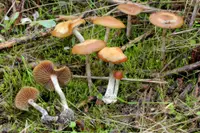
Tawaka, Cyclocybe parasitica, is a wood-loving mushroom rather than a leafy plant. It forms thick, pale to tan caps with sturdy stems that grow in clusters. In nature it is native to New Zealand and parts of Australia, usually found on dead or dying broadleaf trees such as beech.
This fungus has a relatively specific habitat and prefers cool, moist, shaded conditions, which makes it less straightforward to cultivate than common culinary mushrooms. Those who want to learn how to care for tawaka need to mimic its natural wood-based environment and stable moisture levels.
In general, tawaka performs best on suitable hardwood logs or prepared woody substrates, with consistent humidity and protection from strong sun and drying winds.

Care Difficulty
Hard Care

Light Preference
Partial Shade

Water Requirements
Keep Soil Moist

Temperature Preference
Warm Climate

Hardiness Zone
Unknown

Soil Texture
Loamy, Organic-rich

Soil pH
Acidic (5.5–6.5)

Soil Drainage
Moist but well-drained

Fertilization
Minimal (feed rarely)
Scan your plant to receive care tips personalized for your specific plant
Available on iOS and Android
This wood-inhabiting fungus prefers gentle, indirect light rather than strong, direct sun.
Cyclocybe parasitica relies on consistently moist, not waterlogged, wood or substrate to fruit well.
This species prefers mild, stable conditions for colonization and fruiting.
This wood-inhabiting fungus needs fairly moist air to form consistent fruiting bodies.
Cyclocybe parasitica does not grow in soil but on hardwood, so focus on substrate rather than ground preparation.
This species can be grown in containers if the setup allows stable, moist, and well-aerated woody substrate.
Cyclocybe parasitica grown on logs or living hosts rarely needs added fertilizer, as it feeds from woody tissue.
Cyclocybe parasitica does not require true pruning, but harvest hygiene is useful when managing fruiting bodies.
Cyclocybe parasitica is typically established on logs or standing trees, so care focuses on positioning rather than classic repotting.
Cyclocybe parasitica is usually propagated using spawn rather than by traditional horticultural cuttings or seed.
Cyclocybe parasitica on hardy host trees usually tolerates typical temperate winters with minimal intervention.

Plant Health Check
Not sure what's wrong with your plant? Check your plant's health inside the app.
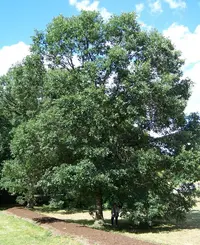
This wood-decay mushroom is naturally restricted to New Zealand, where it grows primarily on living and dead native broadleaf trees such as tawa (Beilschmiedia tawa), kohekohe, and mahoe.
It was long known under the name Agrocybe parasitica, but molecular phylogenetic studies that compared DNA sequences with related fungi led to its reclassification into the genus Cyclocybe.
The species forms dense clusters of caramel‑brown caps on trunks and large branches, often emerging from the same point year after year on the same host tree.

In traditional Māori knowledge, this fungus is one of the few native New Zealand wood mushrooms historically recognized as edible, and it has been collected from tawa trees for generations, which is why it is often referred to simply as tawaka.
Yes, this wood-loving mushroom is considered edible and is traditionally eaten cooked. It should always be harvested from clean, uncontaminated hosts and thoroughly cooked to reduce digestive upset and potential pathogens, as with most wild fungi.
Keep your plants happy and healthy with plant identification, disease detection, and easy care guidance.