Wiggins' cholla Care (Cylindropuntia echinocarpa)

Also known as: Silver Cholla, Golden Cholla
Wiggins' cholla

About Wiggins' cholla

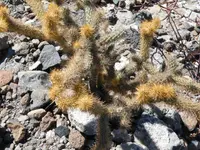
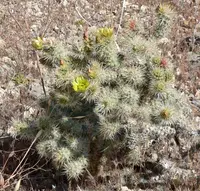
Wiggins' cholla (Cylindropuntia echinocarpa) is a shrubby desert cactus native to the Mojave and Sonoran deserts of the southwestern United States and northwestern Mexico. It forms dense, many-branched clumps covered in overlapping, sharp spines that strongly deter animals and humans from close contact. Segmented cylindrical stems can break off and root, allowing the plant to spread slowly over rocky or sandy ground. This species thrives in full sun, very well-drained mineral soils, and dry conditions with minimal supplemental water. For anyone learning how to care for Wiggins' cholla, its main challenges are handling the spines safely and avoiding excess moisture or heavy, compacted soil.

Main Plant Requirements

Care Difficulty

Easy Care

Light Preference

Full Sun

Water Requirements

Low Water

Temperature Preference

Warm Climate

Hardiness Zone

8–11

Soil Texture

Sandy, Rocky, Loamy

Soil pH

Slightly acidic (6.5–7.0), Slightly alkaline (7.0–7.5)

Soil Drainage

Well-drained

Fertilization

Minimal (feed rarely)

Get Personalized Care Plan

Scan your plant to receive care tips personalized for your specific plant

Available on iOS and Android

How to Care for the Wiggins' cholla

This desert cactus thrives in strong, direct sun but needs gradual acclimation in less intense climates.

  • Provide 6–10 hours of full sun daily; open ground in unobstructed southern or western exposures suits Wiggins' cholla best.
  • In very hot regions, allow some light afternoon shade to reduce stem scorching, especially for young or recently transplanted plants.
  • In cooler seasons, maximize direct sun by avoiding shade from buildings or trees, as low light leads to elongated, weak stems.

This species prefers very dry conditions and is highly sensitive to excess moisture.

  • Water only when the soil is completely dry to at least 5–10 cm depth; in native-style, in-ground settings this may mean no irrigation outside prolonged drought.
  • Use fast-draining, gritty soil so water runs through within seconds; standing water or sticky, compacted soil often leads to root rot in Cylindropuntia echinocarpa.
  • In the growing season, a deep soak followed by full drying is sufficient; shriveling joints suggest long-term drought, while yellowing, soft pads indicate overwatering.

This cactus is adapted to hot, arid climates and tolerates a wide temperature range when kept dry.

  • Optimal growth occurs around 70–95°F (21–35°C), with strong light and low humidity enhancing stem firmness and spine development.
  • Mature plants tolerate brief drops near 15–20°F (-9 to -6°C) if the soil is dry; prolonged wet cold greatly increases rot risk.
  • In extreme heat above 105°F (41°C), ensure soil drainage is excellent and avoid reflected heat from walls that can overheat roots.

This desert cactus handles very low humidity and rarely needs humidity adjustment indoors.

  • Target 20–40% relative humidity, similar to heated indoor air or arid outdoor conditions.
  • Dry air is well tolerated; problems usually come from excess moisture rather than from low humidity.
  • True humidity stress appears as soft, waterlogged segments from overly humid, stagnant air; improve air flow instead of adding humidity.

This cactus requires very fast-draining, mineral-based soil to prevent root and stem rot.

  • Use a coarse, sandy or gritty mix with 60–80% inorganic material such as pumice, coarse sand, and small gravel.
  • Aim for slightly acidic to neutral pH around 6.0–7.5, avoiding strongly acidic or alkaline extremes.
  • Increase aeration by using large particle sizes and avoiding peat-heavy mixes that hold water around the roots.
  • For Cylindropuntia echinocarpa outdoors or in pots, avoid compacted clay or low spots where water collects after rain.

This species can be grown in containers if the pot is chosen and managed for stability and rapid drainage.

  • Use a wide, heavy container to counterbalance the tall, branching, spiny stems and reduce tipping in wind.
  • Select unglazed clay if extra evaporation is needed, since it allows moisture to leave the root zone faster than plastic.
  • Raise the pot slightly on feet or bricks so drainage holes clear quickly after watering or rainfall, avoiding standing water under the base.

This desert cactus needs very modest feeding, as Wiggins' cholla is adapted to nutrient-poor soils.

  • Use a low-strength, balanced liquid fertilizer (around 10-10-10) at 1/4–1/2 label strength during active growth in spring–early summer.
  • Feed at most 1–2 times per growing season in containers; in-ground plants usually need no fertilizer.
  • Avoid organic compost and rich soils that retain moisture, which can cause root rot.
  • Stop feeding in late summer and do not fertilize in fall or winter to allow proper dormancy.

Pruning Cylindropuntia echinocarpa is mainly for safety, shape control, and removal of damaged tissue.

  • Best time is late winter to early spring, before strong new growth begins.
  • Remove dead, diseased, storm-damaged, or crossing segments with long-handled loppers or a pruning saw.
  • Thin crowded branches at the base to maintain a single main clump and reduce breakage risk.
  • Disinfect tools before and after use and handle segments carefully to avoid spreading unwanted pieces.

This species is more often transplanted outdoors than grown long term in containers.

  • Transplant or up-pot in late spring once nights stay above 50°F and soil is warming.
  • Look for roots circling the pot, water rushing straight through, or stalled growth as signs it needs more space.
  • Typically transplant only every 3–5 years, using a very fast-draining cactus or mineral-grit mix.
  • Minimize root disturbance, keep the root ball slightly dry, and shade lightly for 3–5 days after moving to reduce stress.

Cylindropuntia echinocarpa is commonly propagated from stem cuttings and sometimes from seed.

  • Take healthy stem segments in late spring–early summer, using tongs and clean, sharp pruners.
  • Allow cut surfaces to callus in a dry, shaded spot for 7–14 days before planting.
  • Set cuttings upright in coarse, barely moist cactus mix, then water sparingly until roots form.
  • For seeds, provide warm temperatures (70–80°F), strong light, and very gritty, shallowly filled trays.

This cactus is fairly cold hardy but still benefits from thoughtful winter care in colder regions.

  • Mature plants tolerate brief drops near 10–15°F in dry conditions, but wet cold increases damage risk.
  • In-ground plants in marginal climates benefit from a 5–8 cm gravel mulch to keep the root zone drier.
  • For container plants, move pots under a dry roof or indoors to an unheated, very bright, cool area.
  • Keep soil almost completely dry in winter to prevent root rot during cold spells.

Care Tips

Use deep containers

For container plants, choose a pot at least 30–40 cm deep with heavy sides or a wide base so the top-heavy stems do not tip the plant over in strong wind or after rapid growth.

Gravel collar barrier

After planting, top-dress the soil surface with a 3–5 cm layer of coarse gravel around the base to keep stems off wet soil, reduce rot risk, and discourage weeds right at the crown.

Safe handling setup

Before any work, place the pot on a waist-high bench and handle pads with rigid tongs while wearing thick, smooth-surfaced gloves so the fine spines and glochids do not penetrate and transfer to skin or tools.

Wind-hardening outdoors

If moving a plant from indoors to a windy, sunny site, increase wind exposure gradually over 7–10 days so the joints and roots adapt and the plant does not snap or lean.

Lean and offset control

If stems start to lean or offsets crowd the base, remove only the weakest or most awkward segments with clean tongs and a sterile knife, which helps maintain a stable, balanced framework when caring for Wiggins' cholla.

Common Pests and Diseases

Cochineal scale

This pest forms white, cottony clusters on stems and pads and feeds on plant sap, causing yellowing and weakened segments. Symptoms include sticky residue and sometimes pink to red staining when insects are crushed.

Solution

Physically remove infested segments or spray pads thoroughly with a strong jet of water to dislodge insects, then allow the plant to dry in good airflow. For persistent infestations on outdoor plants, spot-treat remaining colonies with an isopropyl alcohol and water solution (about 1:1) applied directly to the scale, avoiding repeated wetting of the same tissue to prevent sunburn.

Cactus longhorn beetle

This pest chews deep wounds into stems and pads, and larvae can tunnel inside, leading to collapsed or dead sections. Symptoms include notched, gnawed areas and black frass near entry points.

Solution

Hand-pick and destroy adult beetles at dusk or early morning, when they are slow and easier to see, and remove and dispose of any heavily tunneled segments to limit larval development. Maintaining plants in full sun with good vigor and avoiding unnecessary wounding reduces attractiveness and helps them compartmentalize damage more effectively.

Soft scale

These insects appear as small, dome-shaped brown or gray bumps attached firmly to stems, often accompanied by sticky honeydew and sooty mold growth. This pest weakens the plant by sucking sap and can slow growth of new joints.

Solution

Gently scrub affected areas with a soft brush or cloth dipped in diluted isopropyl alcohol, then rinse with water and let the plant dry fully. For ongoing problems on outdoor specimens, encourage natural predators like lady beetles and avoid broad-spectrum insecticides that disrupt beneficial insects, using a light horticultural oil spray only in cooler hours and only when the plant is dry.

Fungal stem canker

This disease causes dark, sunken, or corky lesions on stems and joints, sometimes with cracking or oozing when humidity is high. Symptoms include gradual drying, yellowing, and eventual death of affected segments above the lesion line.

Solution

Cut out infected joints well into healthy tissue using a sterile knife, then discard affected material in the trash rather than compost. Improve sun exposure, avoid overhead watering, and keep the plant in a fast-draining mineral substrate to reduce surface moisture that favors infection, which is central to Cylindropuntia echinocarpa plant care in wetter climates.

Interesting Facts

Joint-shedding defense

This cholla readily sheds entire stem joints when animals or people brush against it, a mechanical defense that both deters herbivores and helps the plant spread vegetatively when the fallen joints root in new spots.

Harsh desert specialist

It is especially common on rocky, dry slopes and alluvial fans of the Mojave and Sonoran deserts, where its dense spines and small, drought-adapted stems reduce water loss and protect tissues from intense solar radiation.

Spines with detachable barbs

The spines have microscopic barbs that make them grip firmly into skin or fur, which increases the chance that detached joints are carried away and deposited, aiding in growing Wiggins' cholla across harsh, open terrain.

Botan icon

Did you know?

This species often forms nearly pure, spiny thickets known as cholla gardens, which can dominate large patches of desert landscape and strongly influence where small mammals, reptiles, and even people are able to move.

FAQs about Wiggins' cholla

This species performs far better outdoors in full sun, heat, and very sharp drainage. Indoors, light is usually insufficient and humidity too high. Wiggins' cholla indoor care is possible only in very bright, dry, cool conditions.

Grow Healthy Plants with Botan Care

Keep your plants happy and healthy with plant identification, disease detection, and easy care guidance.

Botan plant care app — identify plants on mobile

Explore More Plants