


Glove and Tool Handling
Use long, thick gloves and long-handled tongs to move or reposition the plant, and keep a dedicated pair of tools for this cactus to reduce the risk of spreading glochids or pathogens between plants.

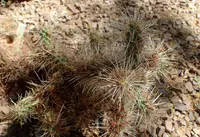
Blue Diamond cholla, Cylindropuntia multigeniculata, is a shrubby, branching cactus known for its blue-green joints and dense armor of sharp spines. It often forms low, irregular clumps that stand out strongly in dry landscapes.
This species is native to arid regions of the southwestern United States, where it thrives in rocky, well-drained soils. It is highly drought tolerant and slow growing, which generally makes it low maintenance once established.
The plant prefers strong sun, minimal watering, and gritty, fast-draining soil. Understanding how to care for Blue Diamond cholla mainly involves preventing excess moisture and providing enough light to keep growth compact and healthy.

Care Difficulty
Moderate Care

Light Preference
Full Sun

Water Requirements
Low Water

Temperature Preference
Cold Hardy

Hardiness Zone
5–9

Soil Texture
Sandy, Loamy, Rocky

Soil pH
Slightly acidic (6.5–7.0), Slightly alkaline (7.0–7.5)

Soil Drainage
Well-drained

Fertilization
Minimal (feed rarely)
Scan your plant to receive care tips personalized for your specific plant
Available on iOS and Android
This cactus thrives in intense sun but benefits from gradual exposure to prevent scorch.
This drought-adapted cactus needs infrequent, deep watering in very well-drained soil.
This species is adapted to hot, dry climates but has notable cold tolerance when kept dry.
This cactus prefers dry air and rarely needs humidity adjustment indoors or outdoors.
This desert cactus needs very fast-draining, mineral-based soil to prevent root rot.
This species is suitable for container growing when stability and rapid drainage are prioritized.
This desert cactus needs minimal feeding, but light nutrition can support container-grown Blue Diamond cholla in active growth.
Pruning Cylindropuntia multigeniculata is mainly for safety, size control, and plant health rather than flowering.
This cactus is more often transplanted in arid gardens than repotted, and it dislikes frequent disturbance.
Propagation of this species is commonly done from stem cuttings, with seeds used mainly for larger-scale growing.
This cactus is relatively cold hardy in dry conditions but benefits from simple winter precautions, especially in wetter climates.

Plant Health Check
Not sure what's wrong with your plant? Check your plant's health inside the app.
This species is native to high-elevation sites in the central Rocky Mountains, often growing around 1,800–2,700 m where winters are cold and dry but sunlight is intense.
The stems often develop a bluish to bluish-green cast, especially in strong light and dry conditions, which helps distinguish it from many other chollas with more uniformly green joints.
Its many-jointed stems break off readily and root in suitable conditions, a clonal reproduction strategy that allows rapid local spread on disturbed, rocky slopes.
Lack of flowers usually comes from insufficient maturity, too little direct sun, or stress from recent transplanting or pruning. Ensure stable, lean conditions, avoid excess fertilizer, and allow the plant to age before expecting regular flowering.
Keep your plants happy and healthy with plant identification, disease detection, and easy care guidance.

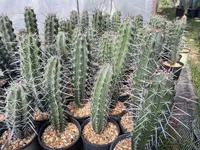
Stenocereus chacalapensis
Stenocereus chacalapensis
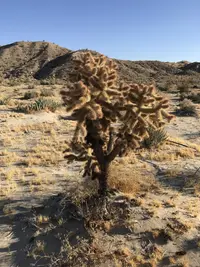
Hoffmann's teddybear cholla
Cylindropuntia fosbergii
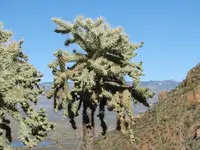
jumping cholla
Cylindropuntia fulgida
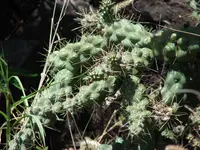
Chain-link Cholla
Cylindropuntia cholla
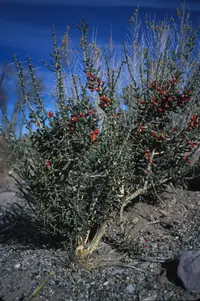
Christmas cactus
Cylindropuntia leptocaulis
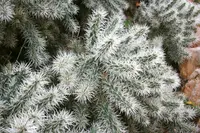
thistle cholla
Cylindropuntia tunicata

tree cholla
Cylindropuntia imbricata
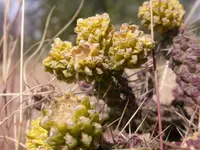
Whipple cholla
Cylindropuntia whipplei