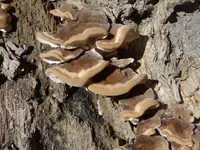
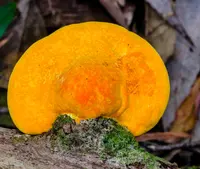
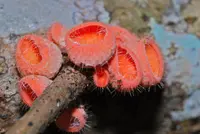
leathery goblet Care (Cymatoderma elegans)

leathery goblet

About leathery goblet

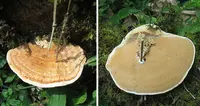
Cymatoderma elegans, often called leathery goblet, is a bracket fungus rather than a leafy plant. It forms firm, cup- or vase-shaped fruiting bodies with a distinctive layered, leathery surface.

This species typically grows on decaying wood in tropical and subtropical forests, helping break down dead trees and recycle nutrients. It is not a common choice for casual home cultivation.

Those who try to care for leathery goblet usually focus on providing consistently damp, woody substrate and stable humidity, similar to its forest habitat. Its need for specific host material and moisture levels makes it more suitable for advanced fungal growers than beginners.

Main Plant Requirements

Care Difficulty

Hard Care

Light Preference

Partial Shade

Water Requirements

Keep Soil Moist

Temperature Preference

Warm Climate

Hardiness Zone

Unknown

Soil Texture

Loamy, Peaty, Organic-rich

Soil pH

Acidic (5.5–6.5)

Soil Drainage

Moist but well-drained

Fertilization

Minimal (feed rarely)

Get Personalized Care Plan

Scan your plant to receive care tips personalized for your specific plant

Available on iOS and Android

How to Care for the leathery goblet

This fungus prefers low, forest-floor light rather than direct sun exposure.

  • Provide bright to medium shade under trees or shrubs, with dappled light for 2–4 hours, similar to a woodland understory.
  • Avoid direct midday and afternoon sun, which can dry the substrate and damage the leathery goblet fruiting bodies; early morning sun is acceptable if filtered.
  • In summer, increase shade or leaf-litter cover; in winter, protect from exposure if overhead canopy thins and light becomes too intense for the moist substrate.

Moist, well-drained, organic-rich substrate is essential for stable fruiting of this woodland fungus.

  • Maintain evenly moist conditions in leaf litter or wood-based substrate, allowing only the top 2–3 cm to slightly dry before re-moistening.
  • Use loose, well-draining organic matter such as decomposing wood and leaves, avoiding standing water or waterlogged soil that causes rot and collapse of fruiting bodies.
  • In warmer months, monitor more often for drying edges or shrinking texture as a sign of underwatering; in cooler seasons, reduce added moisture if the substrate stays wet for more than 2–3 days.

This species favors mild, consistently cool to warm conditions typical of shaded woodland habitats.

  • Target 60–77°F (16–25°C) for active development, with best stability in the cooler part of this range under shaded, humid conditions.
  • Protect from temperatures below 40°F (4°C), as repeated cold snaps and frost can damage tissue and reduce future fruiting.
  • Limit exposure above 86°F (30°C); in hot spells, increase shade, humidity, and organic mulch depth to buffer substrate temperatures and moisture loss.

This species prefers moist, humid air, so humidity management is important.

  • Aim for 70–90% humidity, as leathery goblet naturally develops in very damp, forest-floor conditions.
  • Low humidity causes dull, brittle surfaces and slowed growth; extreme dryness may halt formation of new tissue.
  • Increase humidity with frequent misting of the surrounding area, pebble trays under nearby plants, or a room humidifier.

Cymatoderma elegans develops best on consistently moist, airy, organic-rich substrate that mimics decaying forest litter.

  • Use a loose, fibrous mix such as 50% fine bark or wood chips, 30% leaf mold or compost, and 20% coarse sand or perlite.
  • Ensure rapid drainage so water does not stagnate; the medium should feel springy rather than compact when pressed.
  • Aim for slightly acidic to neutral conditions around pH 5.5–7.0, avoiding strongly alkaline materials like heavy lime or concrete rubble.
  • Avoid dense clay, peat-only, or waterlogged substrates, which restrict air flow and increase the risk of rot and competing molds.

This fungus can be grown in containers when the substrate, moisture, and stability are carefully controlled.

  • Choose a wide, shallow container that supports lateral spread of the substrate rather than deep root penetration.
  • Select a heavy or low-profile pot to prevent tipping if the fruiting bodies develop unevenly on one side.
  • Use a container material that retains some moisture, such as glazed ceramic or thick plastic, but still allows quick drainage through multiple holes.

Cymatoderma elegans (leathery goblet) is usually self-sufficient on naturally rich, undisturbed woodland soil and rarely needs supplemental fertilizer.

Cymatoderma elegans does not need shaping, but light hygiene pruning maintains a healthier colony and better appearance.

  • Carry out any pruning at the end of the main fruiting period so the structure can regenerate before the next season.
  • Remove only decayed, insect-damaged, or structurally unstable fruiting bodies, leaving firm and uninjured tissue intact.
  • Use clean, sharp scissors or a knife and make smooth cuts close to the base without tearing the surrounding mycelium.
  • Avoid heavy removal in a single season, which can stress the underlying fungal network and reduce future fruiting.

This species is a wood-decay fungus that is not suited to conventional repotting, but it can be moved by relocating its substrate with care.

  • Consider transplanting only when the colonized log or woody substrate must be relocated or is breaking down completely.
  • Move the fungus during mild, moist weather in spring or early fall to reduce desiccation stress on the mycelium.
  • Transfer the entire colonized wood piece to a new shaded site with similar moisture and organic matter levels.
  • Handle gently, disturbing the substrate as little as possible so the internal mycelial network stays intact and resumes growth.

Propagation of Cymatoderma elegans is specialized and usually left to experienced growers or researchers rather than casual home cultivation.

Cymatoderma elegans in the ground is generally cold tolerant within its natural range and needs little targeted winter care.

  • Leave fallen leaves or add a light mulch layer over the colonized wood to buffer moisture and soil temperature fluctuations.
  • Avoid frequent disturbance of the site in winter so the mycelial network remains stable and undamaged.
  • Container-grown cultures, if attempted, should be overwintered in a cool, frost-free, shaded space with slightly moist but not waterlogged substrate.

Care Tips

Stable microclimate

Place the culture chamber or terrarium away from vents, exterior doors, and heaters to avoid rapid swings in temperature and airflow, which can cause malformed or prematurely dried fruiting bodies.

Gentle air exchange

Provide slow, diffuse air movement using a small fan pointed away from the culture so fresh air is exchanged without directly blowing on the developing structures, which reduces contamination risk and desiccation.

Sanitary handling

Always disinfect tools, containers, and work surfaces with 70% isopropyl alcohol before handling substrate or cultures to minimize bacterial and mold contamination that can outcompete Cymatoderma elegans.

Substrate depth control

Maintain a relatively shallow, even substrate layer, around 3–5 cm, to encourage uniform colonization and more consistent fruiting rather than deep pockets that stay anaerobic and invite rot.

Harvest timing

Harvest fruiting bodies when edges are firm and color is fully developed but before noticeable drying or darkening occurs, which supports repeated, healthier flushes when caring for leathery goblet over time.

Common Pests and Diseases

Fungal cap blight

This disease affects the leathery cap surface, leading to water-soaked, dark, or sunken patches that may later crack or collapse. Symptoms include loss of structural firmness and rapid decay of the fruiting body in warm, moist conditions.

Solution

Remove and discard affected fruiting bodies promptly to reduce spore spread, and improve air movement around the colony by thinning surrounding vegetation or adjusting enclosure ventilation. Avoid overhead watering or direct wetting of the caps, and maintain moderate humidity with good airflow to support stable Cymatoderma elegans care.

Bacterial soft rot

This disease causes localized soft, slimy, and foul-smelling areas, especially at the base where the fruiting body meets the substrate. Symptoms include rapid tissue breakdown and collapse in overly wet, warm environments.

Solution

Discard all visibly affected tissue and any adjacent decayed substrate, then reduce moisture levels and ensure the substrate drains or dries between misting or watering cycles. Improve hygiene by using clean tools, avoiding contaminated water, and increasing airflow to keep surfaces just slightly moist rather than saturated.

Mite infestation

These insects, often appearing as tiny moving dots, feed on fungal tissue and spores, leading to pitted, discolored, or roughened cap surfaces. Symptoms include slowed growth, deformed margins, and fine debris or frass around the base.

Solution

Physically remove heavily infested fruiting bodies and clean the growing area, then lightly rinse remaining structures and surrounding surfaces with clean water to dislodge mites. For persistent problems, introduce predatory mites suited to fungal systems or use a gentle, labeled miticide away from direct contact with the fruiting bodies, while also reducing excess organic debris that shelters pests.

Fungus gnat larvae damage

This pest problem occurs when larvae feed in the moist substrate and on developing fungal tissue, causing stunted or deformed caps and unstable attachment to the base. Symptoms include thinning at the base, collapse of young structures, and visible small larvae in the substrate.

Solution

Allow the substrate surface to dry slightly between misting, and use fine mesh or physical barriers to limit adult gnats from laying eggs. Remove infested substrate layers and replace with fresh, pasteurized material, and consider biological controls such as Bacillus thuringiensis israelensis (Bti) applied according to label directions for targeted larval reduction.

Interesting Facts

Fan-shaped fruiting body

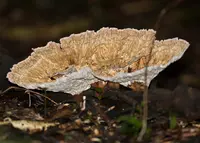
This species forms a thin, fan- or goblet-shaped fruiting body with a distinctly wrinkled and ridged surface, which increases the area available for spore production.

Unusual pore surface

Instead of having gills like many mushroom-forming fungi, it develops a hymenial surface with small pores and folds on the underside, reflecting its placement among pore-bearing fungi.

Tropical forest specialist

Cymatoderma elegans is typically found on decaying wood in warm, humid tropical forests, where it contributes to wood decomposition and nutrient cycling in the ecosystem.

FAQs about leathery goblet

Yes, this fungus can be cultivated in containers using a well‑drained, moisture‑retentive substrate rich in decaying wood. Shallow, wide containers work best. Avoid waterlogging, and maintain steady humidity to prevent the fruiting bodies from drying or collapsing.

Grow Healthy Plants with Botan Care

Keep your plants happy and healthy with plant identification, disease detection, and easy care guidance.

Botan plant care app — identify plants on mobile

Explore More Plants