Copper Brittlegill Care (Russula decolorans)

Copper Brittlegill

About Copper Brittlegill

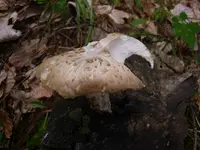
Copper brittlegill, Russula decolorans, is a wild mushroom-forming fungus rather than a traditional garden plant. It produces firm, brittle caps in warm orange to copper tones, with pale gills that slowly gray as it ages.

This species typically grows on the ground in coniferous forests, especially among pines, in cool temperate regions of Europe, Asia, and parts of North America. It forms a mycorrhizal partnership, meaning its underground filaments exchange nutrients with tree roots, so it cannot be grown like a normal potted plant.

Because of this close tree association, attempts to care for Copper Brittlegill at home are usually unsuccessful. In nature it prefers moist, well-drained, acidic forest soils with consistent shade and organic leaf litter.

Main Plant Requirements

Care Difficulty

Hard Care

Light Preference

Partial Shade

Water Requirements

Keep Soil Moist

Temperature Preference

Cool Climate

Hardiness Zone

Unknown

Soil Texture

Loamy, Sandy, Organic-rich

Soil pH

Strongly acidic (4.5–5.5), Acidic (5.5–6.5)

Soil Drainage

Moist but well-drained

Fertilization

Minimal (feed rarely)

Get Personalized Care Plan

Scan your plant to receive care tips personalized for your specific plant

Available on iOS and Android

How to Care for the Copper Brittlegill

This woodland mushroom prefers cool, dappled light similar to conifer forest floors.

  • Aim for bright shade or filtered light under trees, with only 1–3 hours of soft morning sun and no direct afternoon sun to prevent drying of the fruiting zone.
  • Copper Brittlegill forms best under partial shade where surrounding vegetation blocks 50–80% of direct light, maintaining moist, humus-rich soil.
  • In summer, protect sites from strong sun exposure that overheats the top 2–5 cm of soil; in cooler seasons, slightly more open canopy still suits healthy mycelium activity.

This ectomycorrhizal mushroom relies on consistently moist, not waterlogged, forest soil.

  • Maintain soil that feels evenly moist in the top 2–5 cm, never cracked-dry; natural rainfall under conifers is usually sufficient unless drought persists for 7–10 days.
  • Ensure the growing site drains freely; standing water for more than 24 hours can suffocate Russula decolorans mycelium and reduce or prevent fruiting.
  • Signs of underwatering include hardened, dusty litter and brittle surface mycelial threads, while overwatering shows as sour odor, slimy litter, and reduced mushroom diversity around the patch.

This species fruits best in cool to mild conditions typical of northern conifer woods.

  • Optimal fruiting temperatures are around 55–68°F (13–20°C), with steady soil moisture and shade from surrounding trees supporting stable mycelium growth.
  • The mycelium tolerates cool conditions down to about 32°F (0°C) in soil, but repeated hard frosts below 28°F (-2°C) during fruiting can damage caps and shorten lifespan.
  • Heat above 77–82°F (25–28°C), especially combined with dry air and sun-exposed litter, often halts fruiting; cooler nights later in the season usually restore better conditions.

Humidity is not a significant factor for Russula decolorans, which grows outdoors in natural forest air conditions.

Russula decolorans fruits best in specific forest-type soils rather than standard garden beds.

  • Provide a loose, well-drained, sandy to sandy-loam soil with plenty of decomposing conifer needles or leaf litter.
  • Aim for slightly acidic conditions around pH 4.5–6.0 to mimic typical conifer forest substrates.
  • Mix in coarse sand and fine bark pieces to improve structure, drainage, and air spaces around the fungal mycelium.
  • Avoid compacted, waterlogged, or heavily fertilized soils, which suppress mycorrhizal development and fruiting.

This species is not suitable for container growing because it relies on mycorrhizal partnership with living trees in the ground.

Russula decolorans, a forest mycorrhizal fungus, gains nutrients mainly via its tree partners and usually needs no direct fertilization.

Pruning is not applicable to Russula decolorans, as it is a wild mushroom rather than a managed ornamental plant.

This mycorrhizal mushroom is rarely grown in containers; transplanting focuses on preserving its association with host tree roots.

  • Attempt moves only when relocating young host trees with intact root balls and associated soil.
  • Transplant in cool, moist conditions in early spring or fall to limit stress.
  • Keep the original forest soil around roots; avoid washing or breaking fine roots.
  • Water the transplanted tree well and maintain even moisture while mycelium re-establishes.

Propagation of Russula decolorans is specialized and usually left to natural spore dispersal in suitable forests.

Copper Brittlegill is naturally cold hardy in its native forests and does not require specific winter care from gardeners.

Care Tips

Soil host management

Maintain or plant suitable conifer hosts such as pine, spruce, or fir nearby, since this mycorrhizal fungus depends on their living roots rather than rich composted beds.

Leaf litter layering

Leave a thin, undisturbed layer of conifer needles and light leaf litter over the fungal area to protect fine mycelium threads while still allowing gas exchange and water infiltration.

Foot traffic control

Mark off fruiting zones and avoid walking, raking, or using heavy equipment over them, because soil compaction can crush mycelium and sharply reduce future mushroom production.

Targeted moisture zones

Use low, gentle sprinklers or drip lines under host trees during dry spells to keep the upper 5–10 cm of soil evenly moist without soaking or eroding the litter surface, which supports growing Copper Brittlegill in a controlled setting.

Harvesting hygiene

Cut mushrooms at the base with a clean knife and avoid disturbing the surrounding soil or pulling up clumps, so the underground mycelium remains intact and able to fruit again in future seasons.

Common Pests and Diseases

Mycophagous slugs

This pest feeds directly on mushroom caps and stems, leaving large irregular holes and slime trails on fruiting bodies of Russula species. Symptoms include hollowed caps, missing gill sections, and rapid degradation of young mushrooms.

Solution

Hand-pick slugs during evening or early morning, remove nearby debris that provides shelter, and place coarse barriers such as crushed eggshells or sharp gravel around fruiting zones. In severe situations, use iron phosphate slug baits placed away from children and pets, and avoid overwatering or dense groundcover that keeps the site constantly damp.

Fungus gnats

These insects are attracted to moist, organic-rich substrates where Russula decolorans forms fruiting bodies, and larvae may tunnel into stems and gills. Symptoms include weakened or collapsing mushrooms and visible small black flies hovering near the cluster.

Solution

Reduce excess surface moisture around fruiting bodies, improve air circulation, and avoid standing water in nearby containers or low spots. Sticky traps can help reduce adult populations, and a targeted drench with Bacillus thuringiensis var. israelensis (BTI) in highly managed beds can reduce larvae without harming most other organisms.

Parasitic Hypomyces

This disease is caused by parasitic fungi such as Hypomyces species that overgrow Russula caps and gills with a white to yellow felt-like layer. Symptoms include distorted, thickened, or chalky fruiting bodies that lose normal color and spore production.

Solution

Remove and discard all affected mushrooms and nearby decaying material to reduce spore load, and avoid disturbing infected specimens to limit spread. Maintain good spacing and airflow in any managed mushroom bed and do not consume distorted or overgrown fruiting bodies, as edibility can change.

Maggot infestation

This pest problem comes from fly larvae that burrow inside caps and stems, creating tunnels and soft, water-soaked areas. Symptoms include tiny entry holes, spongy or collapsing tissue, and visible white larvae when the mushroom is cut open.

Solution

Harvest mushrooms promptly when firm and healthy, and discard any fruiting bodies that show tunneling or larval activity. Covering small cultivation beds with fine mesh or netting during peak fly periods and removing overly old or decaying mushrooms quickly can reduce egg laying and infestation.

Bacterial blotch

This disease develops on moist mushroom surfaces, leading to yellow to brown, greasy or water-soaked spots on caps. Symptoms include localized soft patches that may merge, making fruiting bodies unattractive and prone to faster decay.

Solution

Limit overhead wetting of caps, ensure good air movement around fruiting areas, and avoid handling mushrooms with dirty or wet hands to reduce bacterial spread. Remove and discard heavily spotted specimens and, in managed environments, keep tools and harvesting containers clean and dry to prevent new infections; this is an important aspect of Russula decolorans care instructions.

Interesting Facts

Cap color transformation

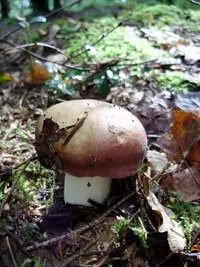
The cap of this mushroom often starts orange to copper-red and gradually fades to pale yellow or gray as it ages, a feature reflected in the name decolorans, meaning losing color.

Blue-black bruising flesh

When the stem or gills are handled or cut, the whitish flesh typically develops gray to blue-black discoloration, which helps distinguish it from similar orange-capped Russula species.

Strong conifer association

This species forms ectomycorrhizal partnerships with conifer trees, especially pines and spruces, exchanging mineral nutrients and water from the soil for sugars produced by the host tree.

Botan icon

Did you know?

Russula decolorans is considered a good edible mushroom in several northern European countries, where it is traditionally collected in conifer forests and valued despite its tendency to blacken when cooked.

FAQs about Copper Brittlegill

This mushroom is generally considered edible when young and correctly identified, but it can be confused with inedible or mildly toxic Russula species. Only experienced foragers should consume it, and specimens must always be well cooked.

Grow Healthy Plants with Botan Care

Keep your plants happy and healthy with plant identification, disease detection, and easy care guidance.

Botan plant care app — identify plants on mobile

Explore More Plants